Clear Sky Science · en
TuberIndex 1.0, a dataset of ecological interactions from five centuries of French literature on Tuberaceae
Why Hidden Gourmet Treasures Matter
Truffles are among the world’s most luxurious foods, but they are also key players in the underground life of forests and farms. For more than 200 years, growers, naturalists and scientists in France have carefully observed how these fungi interact with trees, shrubs and other organisms. Much of that knowledge is scattered across obscure reports, old manuals and local newsletters. This article presents TuberIndex 1.0, a large open dataset that digs through five centuries of French writing to rescue, organize and share what people have learned about truffle ecology and cultivation.
Digging Through Centuries of Stories
The researchers set out to track down every French-language document focused on true truffles—those belonging to the Tuberaceae family, which includes famous black and white truffles. They cast a wide net: national library catalogues, university archives, online collections, Google Scholar, and even private holdings from truffle growers. The final collection spans from the 1600s to today and gathers 493 documents of many kinds, from scientific papers and theses to technical manuals and growers’ bulletins. By treating both scholarly works and so‑called “grey” and “white” literature as equally valuable, the team captured a richer, more realistic picture of how people have understood truffles over time.
Turning Old Knowledge into Usable Data
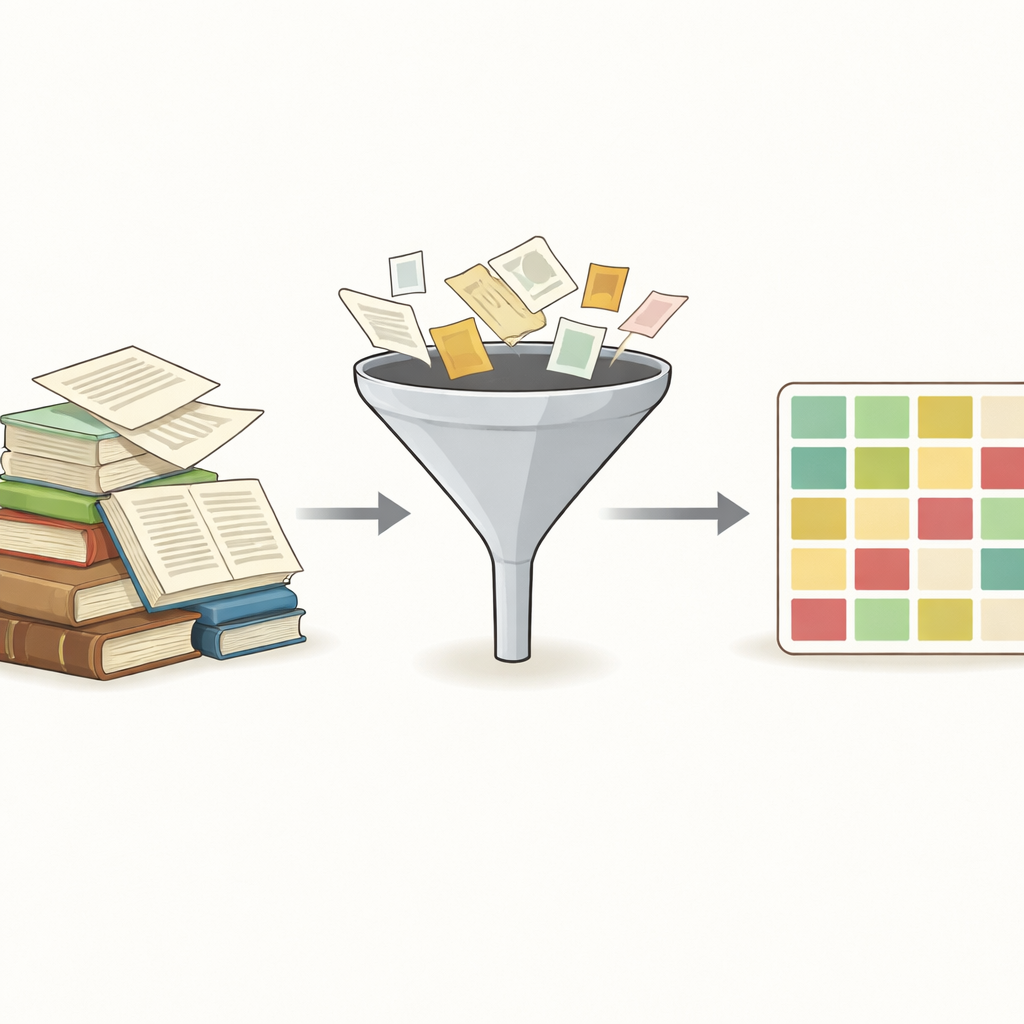
From this library, the team focused on sources that actually mention interactions between truffles and other living things, such as plants and fungi. Cookbooks, novels, poems and dog‑training guides were set aside, while books, journal and newspaper articles were combed for specific observations. For each mention of an interaction—for example, a shrub said to favor truffle production or a fungus thought to compete with truffles—the researchers recorded who was involved, whether the effect on truffles seemed positive, negative or neutral, and under what farming or environmental conditions it occurred. They assigned each observation an “evidence level,” distinguishing carefully documented results from anecdotal or doubtful claims.
Putting Names on Underground Partners
Because authors over the centuries used local or changing common names, the team then had to translate those names into modern scientific ones. They built a separate table that links each everyday name (like a type of oak or herb) to its most likely scientific identity, using context such as where the plant grows in France. They also graded how confident that match was and documented their reasoning. To ensure consistency, they checked all names against major taxonomic databases and harmonized different naming systems. This painstaking work allows users to compare records reliably across time and sources, instead of being confused by shifting terminology.
What the Dataset Reveals
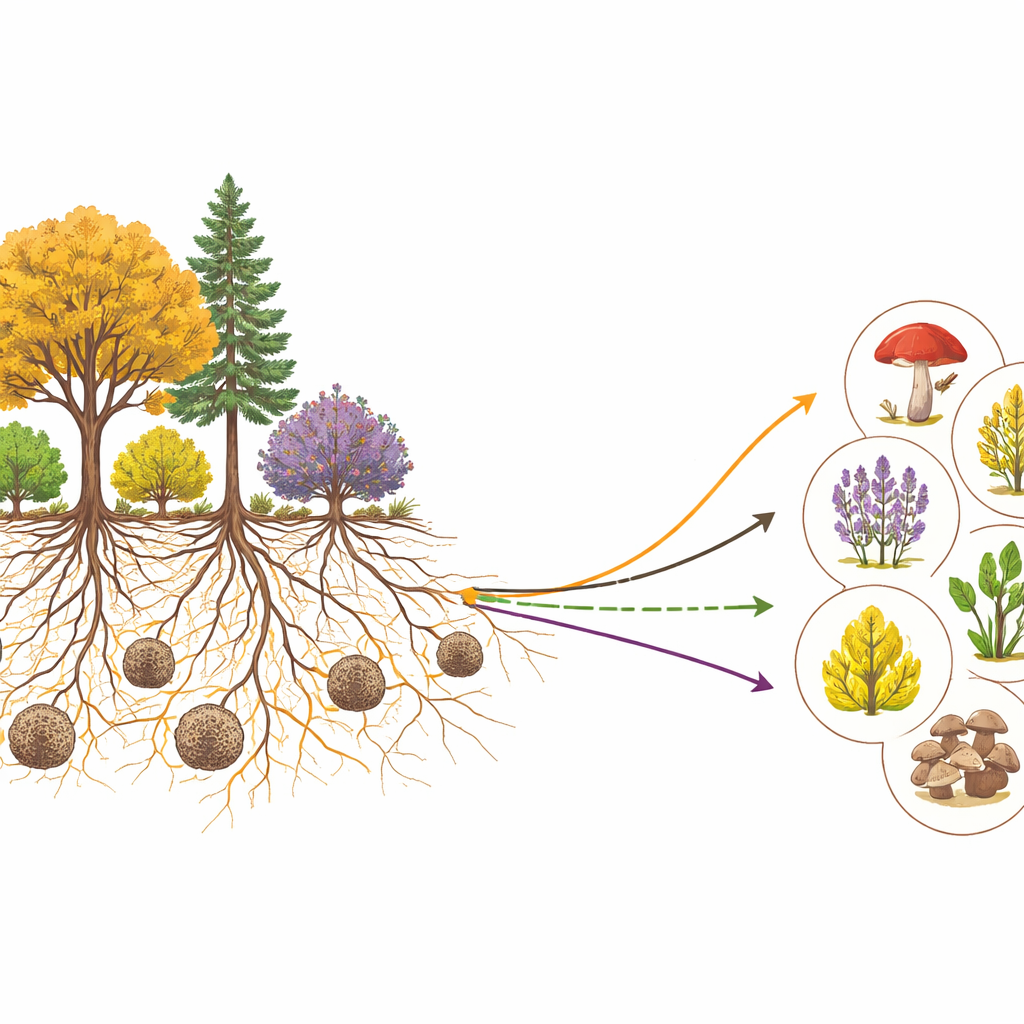
The resulting TuberIndex 1.0 dataset includes 3,508 recorded interactions involving 26 truffle types, 418 plant taxa and 53 fungal taxa. It shows, for instance, that truffles associate with a wide variety of trees and shrubs, and that many plants are described as “companion” species that may help truffles thrive without directly hosting them. The dataset captures both supportive and harmful relationships, from trees that form tight partnerships with truffle roots to other fungi that may crowd them out. Because each record is tied to a specific source, place and time, users can explore how ideas and practices around truffle growing have changed and which ones might be worth testing in modern orchards.
From Forest Wisdom to Future Farms
For non‑specialists, the key takeaway is that truffle success depends on an entire living community, not just the prized fungus itself. By turning scattered notes, field wisdom and historical texts into a structured, open database, TuberIndex 1.0 makes centuries of experience available to scientists, growers and curious readers. This resource can guide new experiments, inspire more nature‑friendly farming methods and help refine truffle cultivation worldwide. In short, the project transforms buried knowledge about underground mushrooms into a practical tool for future forests and farms.
Citation: Gautier, M., Taschen, E., Lescureux, N. et al. TuberIndex 1.0, a dataset of ecological interactions from five centuries of French literature on Tuberaceae. Sci Data 13, 471 (2026). https://doi.org/10.1038/s41597-026-07097-3
Keywords: truffles, mycorrhiza, ecological interactions, agroforestry, biodiversity