Clear Sky Science · en
Isotope dataset for archaeological biological remains in China
Reading Ancient Lives from Tiny Clues
What did people in ancient China eat, how far did they travel, and how did their lives change over thousands of years? This study gathers those answers from an unexpected source: the chemical fingerprints locked inside old bones, teeth, hair, and seeds. By pulling scattered measurements into one carefully checked database, the authors offer a new way for anyone studying the past to explore diet, farming, and movement across China’s long history.
Why Ancient Remains Hold Hidden Stories
When humans, animals, and plants grow, they absorb slightly different forms of common elements such as carbon, nitrogen, oxygen, sulfur, and strontium from food and water. These forms, called isotopes, stay preserved in hard tissues like bone and tooth enamel, and sometimes in hair or plant remains. By comparing the mix of isotopes, researchers can tell whether diets relied more on millet or rice, land animals or fish, and whether a person likely grew up on local soil or came from far away. Until now, however, isotope results from China were scattered across hundreds of separate reports, making big-picture comparisons difficult.
Bringing Four Decades of Data Together
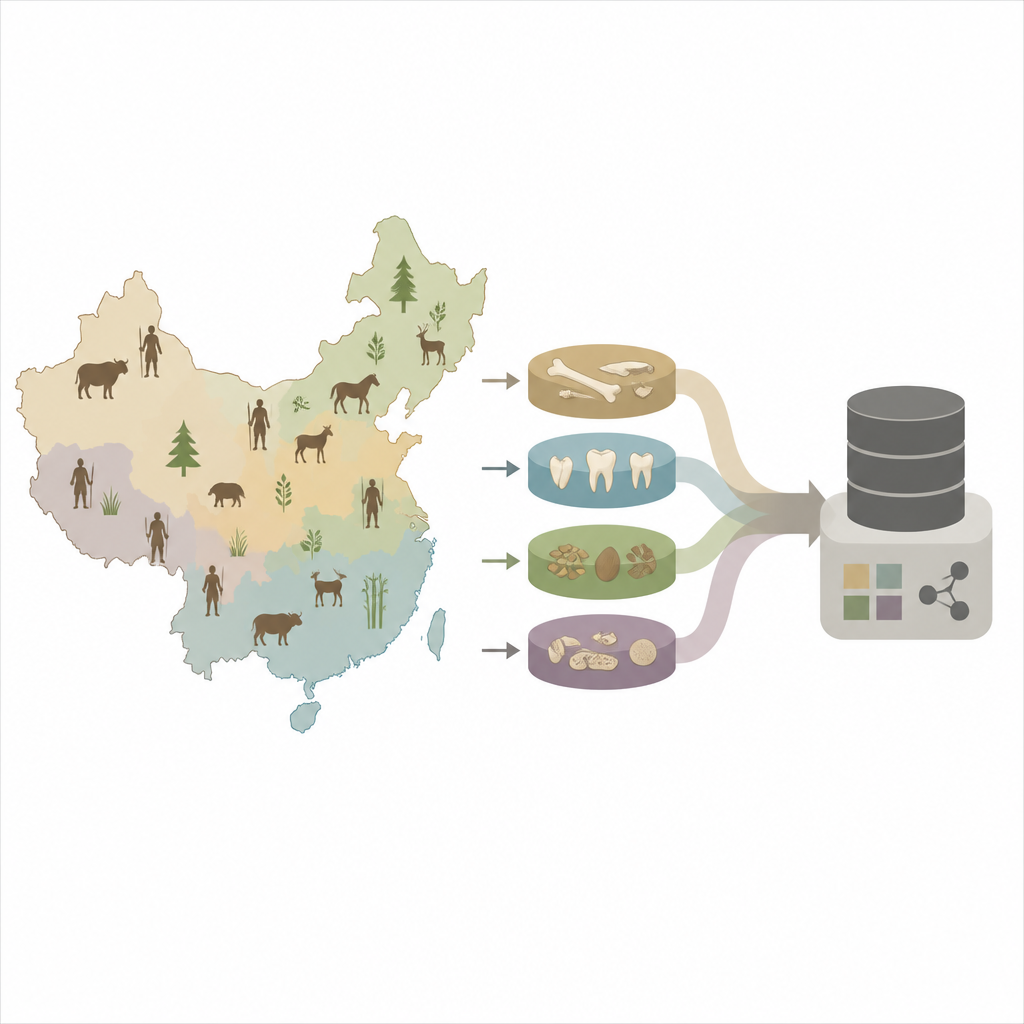
The new Isotope Dataset for Archaeological Biological Remains in China pulls together nearly 20,700 individual measurements published between 1984 and 2026. These come from roughly 11,400 human samples, 8,450 animal samples, and 850 plant samples, spread across major archaeological regions and time periods from the Palaeolithic to historic times. The records cover several isotopes that relate to food, water, and place, and they include many kinds of tissues, from bones and dentine to tooth enamel, hair, and seeds. Alongside the numbers, each entry stores details such as the archaeological site, cultural period, burial information when known, and references to the original studies.
How the Team Collected and Checked the Information
To build this resource, the authors searched widely across scientific databases and libraries in Chinese, English, and Japanese, and then read each chosen publication by hand. Only studies that reported original isotope measurements were accepted; figures without underlying data, preprints, and unpublished theses were left out. For every sample, the team recorded the material, tissue type, isotope values, reported uncertainties, and any quality indicators used to judge preservation. Geographical coordinates were added using published site information, online maps, or satellite tools, and all radiocarbon ages were recalibrated with standard software so that dates could be compared on the same scale.
Making the Data Reliable and Reusable
Because ancient tissues can change after burial, the authors paid close attention to signs of damage. For collagen and sulfur measurements, they noted widely used thresholds for acceptable carbon, nitrogen, and sulfur contents and atomic ratios. Instead of discarding questionable samples, they tagged each one as clearly acceptable, likely altered, or lacking enough information to decide. They also checked for inconsistent units, mixed-up isotope definitions, or impossible values, and visually inspected site locations on maps to catch obvious errors. This careful approach lets future users apply their own filters without losing access to the underlying information.
A New Map of Food and Movement in the Past
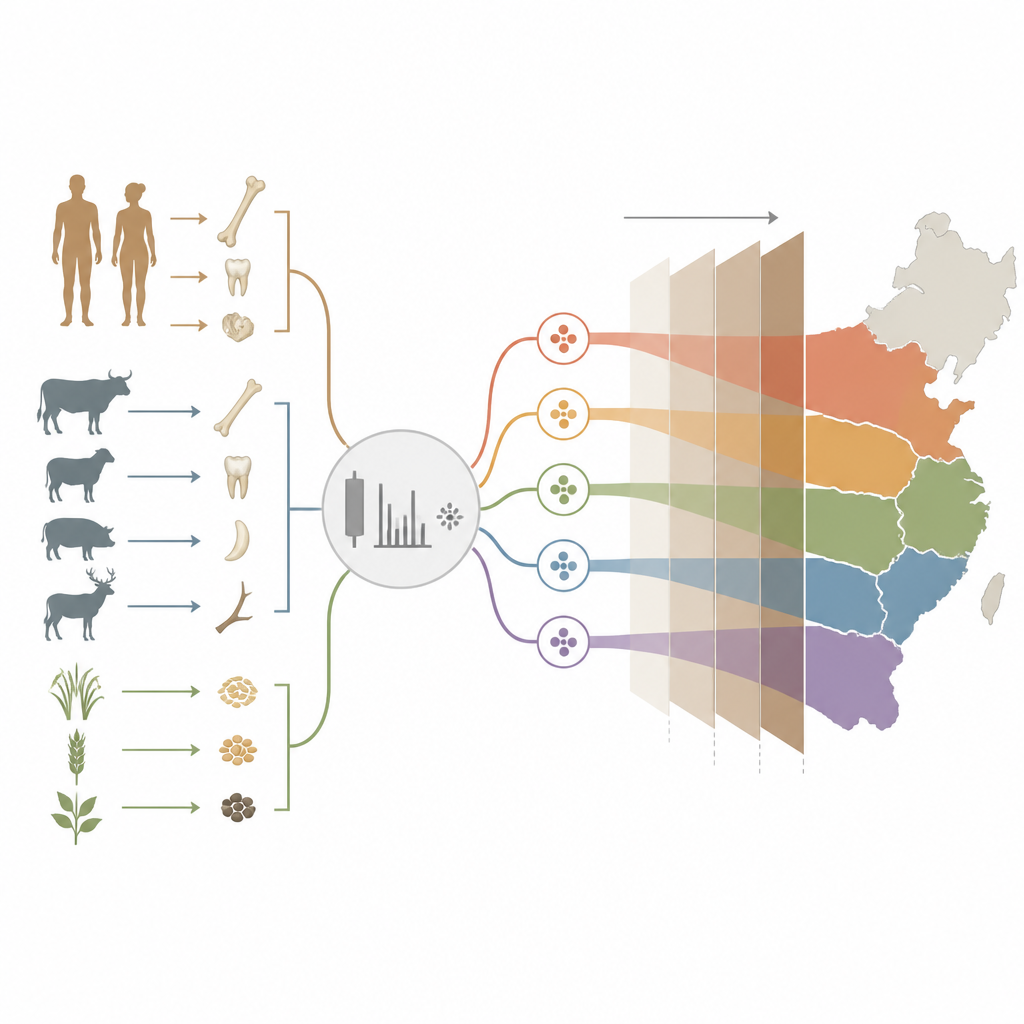
The finished dataset, hosted openly on the Zenodo platform, gives researchers a single entry point to explore how diets, farming systems, animal keeping, and mobility changed across China and through time. It supports questions about the spread of millet and rice farming, the rise of mixed farming and herding, the movement of people along routes such as the Silk Roads, and differences in diet tied to age, gender, or social status. By uniting thousands of small chemical clues, this work turns scattered findings into a powerful tool for understanding how ancient communities lived, moved, and adapted to their landscapes.
Citation: Zhang, Y., Wang, X. Isotope dataset for archaeological biological remains in China. Sci Data 13, 745 (2026). https://doi.org/10.1038/s41597-026-07089-3
Keywords: archaeology, stable isotopes, ancient diet, human mobility, China