Clear Sky Science · en
A chromosomal-level genome assembly of Phoxinus grumi (Cypriniformes: Leuciscidae)
A tiny fish in a harsh desert world
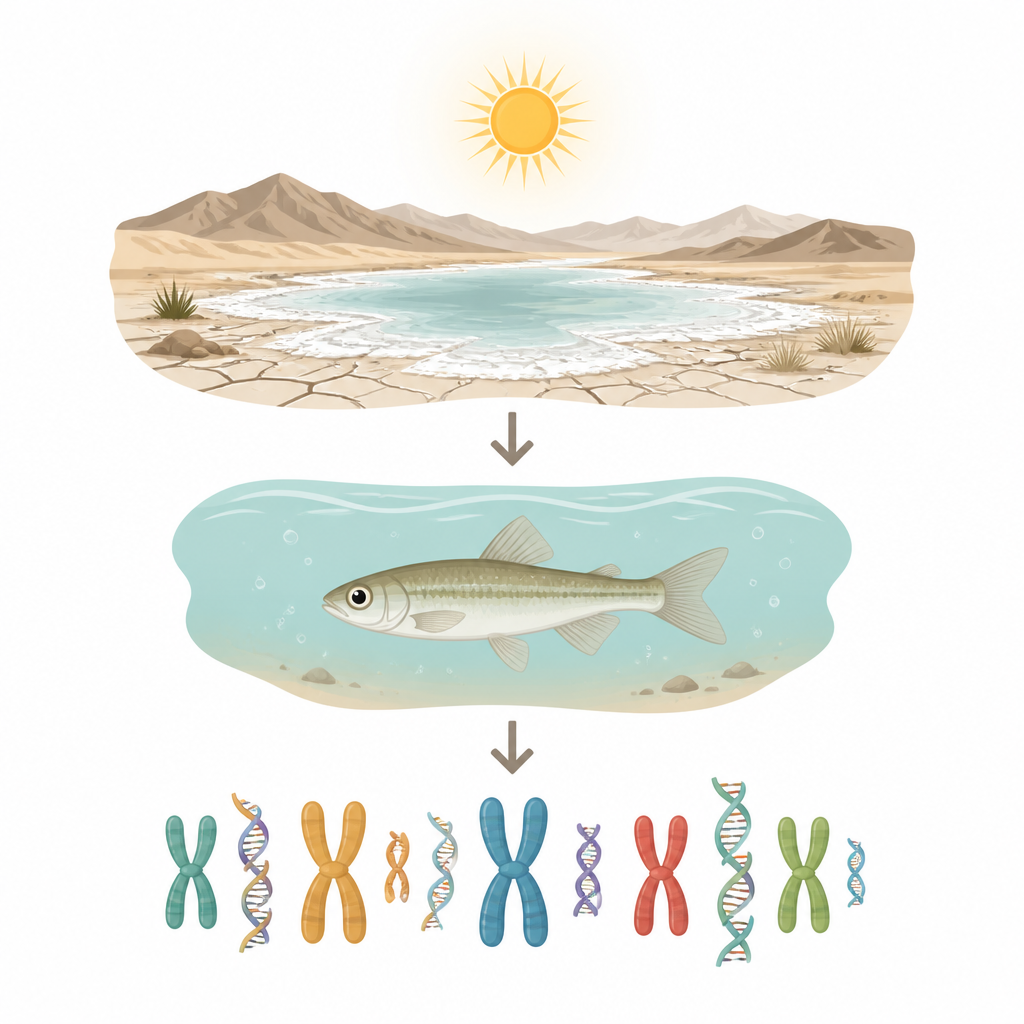
In one of the driest, hottest places in China, a small fish called the Turpan minnow survives in shallow, salty lakes that are shrinking under climate change and heavy water use. This species lives nowhere else on Earth, yet scientists knew surprisingly little about its genetic makeup. In this study, researchers built a detailed genetic blueprint of the Turpan minnow, giving conservationists and evolutionary biologists a new window into how life can adapt to extreme environments.
Why this rare desert fish matters
The Turpan minnow inhabits the Turpan Basin in Xinjiang, an enclosed landscape marked by intense heat, strong sunlight, and salty, alkaline waters. These lakes and streams are under pressure from agriculture, groundwater pumping, and habitat fragmentation, while introduced fish species add new competition and predators. Although the minnow is officially protected, its numbers, genetic diversity, and ability to cope with rapid environmental change were poorly understood. A high quality genome was needed to answer basic questions about its evolution and to guide protection efforts.
Untangling a confusing family tree
The Turpan minnow belongs to a group of small freshwater fishes spread across Eurasia and North America. For decades, scientists have debated how to divide these fishes into genera and species, because many look alike and their evolutionary branches are tangled. Earlier work using pieces of mitochondrial DNA showed that the Turpan minnow clusters with other Eurasian minnows and that two named genera, Phoxinus and Rhynchocypris, are not clearly separated. The new study reinforces that mitochondrial data alone cannot fully resolve these relationships and that full genomes are needed to sort out hidden diversity and clarify where the Turpan minnow fits on the fish family tree.
Building a complete genetic blueprint
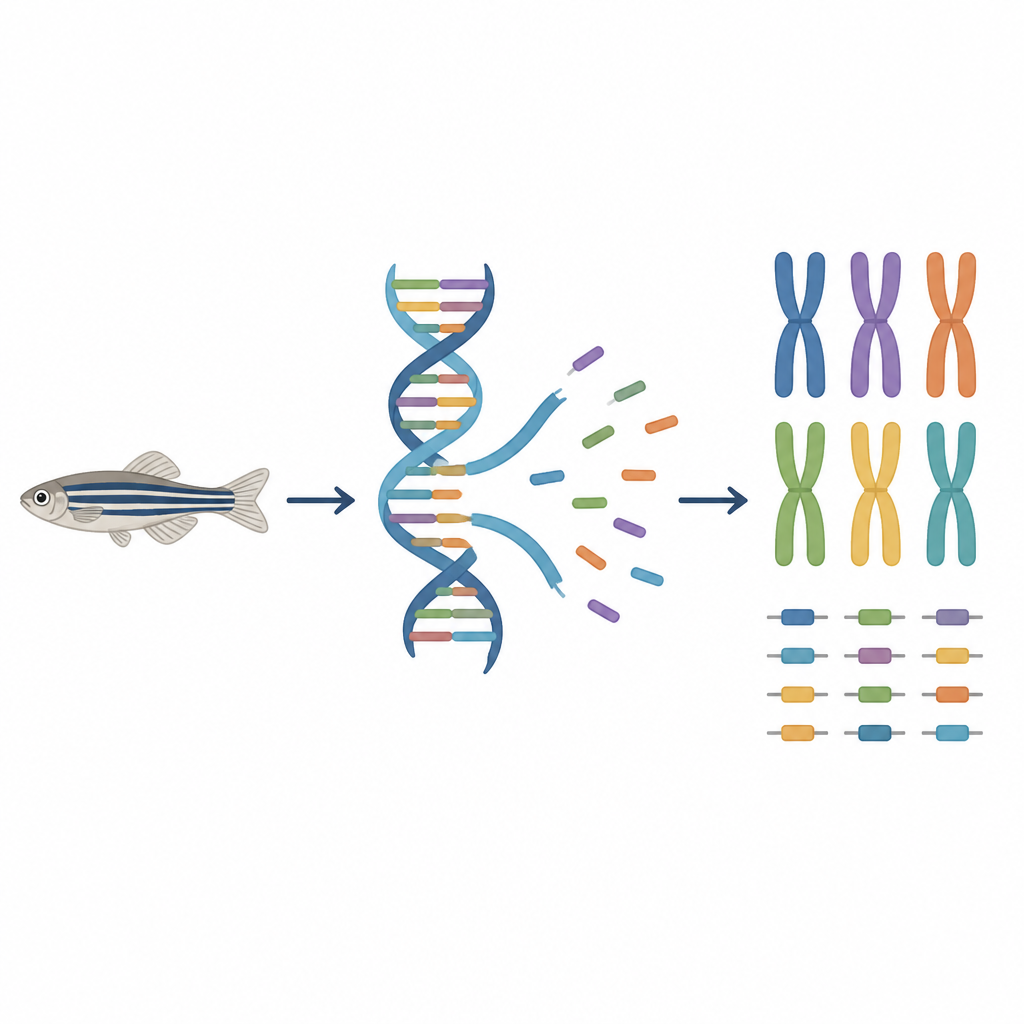
To create this blueprint, the team collected a single adult female Turpan minnow from Dacao Lake and extracted DNA and RNA from multiple tissues. They combined several cutting edge sequencing approaches: accurate long reads, short reads, three dimensional DNA contact maps, and RNA sequencing to capture active genes. Using specialized software, they stitched these data into long stretches of DNA and then used the contact maps to arrange them into 25 chromosomes. The final genome spans about 900 million DNA letters, with nearly all of it assigned to chromosomes, and independent quality checks show that it is highly complete and accurate.
What the genes reveal
The researchers identified 24,224 protein coding genes and found that almost all could be matched to known genes in public databases or placed into biological pathways. Nearly half of the genome consists of repeated DNA, a common feature in vertebrates that can shape genome size and flexibility. The team also cataloged more than 70,000 non coding RNA genes, which help control when and how other genes are used. Structural comparisons with related fish species suggest that the Turpan minnow genome is broadly similar in gene layout and size, providing a solid basis for future studies of which specific genes help it tolerate heat, salt, and strong ultraviolet light.
A genetic toolkit for saving a desert survivor
By delivering a chromosome level genome for the Turpan minnow, this study turns a little known desert fish into a powerful model for understanding adaptation in harsh, drying landscapes. The new data will allow scientists to trace the species' evolutionary history, measure genetic health in wild populations, and search for genetic traits linked to survival in hot, salty, and fragmented habitats. In practical terms, this genome acts as a reference manual for conservation, helping managers design better strategies to protect and restore this unique fish and the fragile desert waters it calls home.
Citation: Wang, J., Chang, H., Yang, P. et al. A chromosomal-level genome assembly of Phoxinus grumi (Cypriniformes: Leuciscidae). Sci Data 13, 729 (2026). https://doi.org/10.1038/s41597-026-07087-5
Keywords: Turpan minnow, genome assembly, desert freshwater fish, conservation genetics, environmental adaptation