Clear Sky Science · en
Database of Speech and Language Affected by Mild Cognitive Impairment
Why our voices can reveal changes in memory
Mild forgetfulness is often seen as a normal part of getting older, but for some people it can signal the early stages of more serious brain conditions, such as Alzheimer’s disease. Long before clear memory problems appear, small changes can already be heard in the way a person speaks. This article introduces ALOIS-DB, a large collection of Slovak speech recordings designed to help researchers build tools that listen for these early warning signs, with the hope of enabling earlier, easier checks of brain health.
Early memory problems and everyday life
Mild Cognitive Impairment, or MCI, describes a middle ground between healthy aging and dementia. People with MCI notice changes in their thinking, and careful testing confirms that at least one thinking ability has declined more than expected for their age. Yet they usually remain independent in daily life. Importantly, MCI does not always get worse; some people stay stable or even improve, depending on causes and treatment. Being able to spot MCI early, and to tell it apart from normal aging or mood problems like anxiety and depression, is therefore crucial for guiding care and monitoring who might be at higher risk of developing dementia later on.
How speech starts to change
Decades of research show that people with MCI can sound different from healthy older adults, even when casual conversation still seems normal. They may use fewer precise words, repeat themselves more, rely on vague terms like “thing” or “it,” and pause longer while searching for names. Their speech may be slower, less fluent, or include more hesitations and sound errors. When telling a story or describing a picture, they often provide less information, jump between topics, or lose the thread of what they wanted to say. Subtle changes in voice quality and pronunciation can also appear. These patterns suggest that close analysis of speech could offer a sensitive way to detect early cognitive decline.
Building a carefully designed speech collection
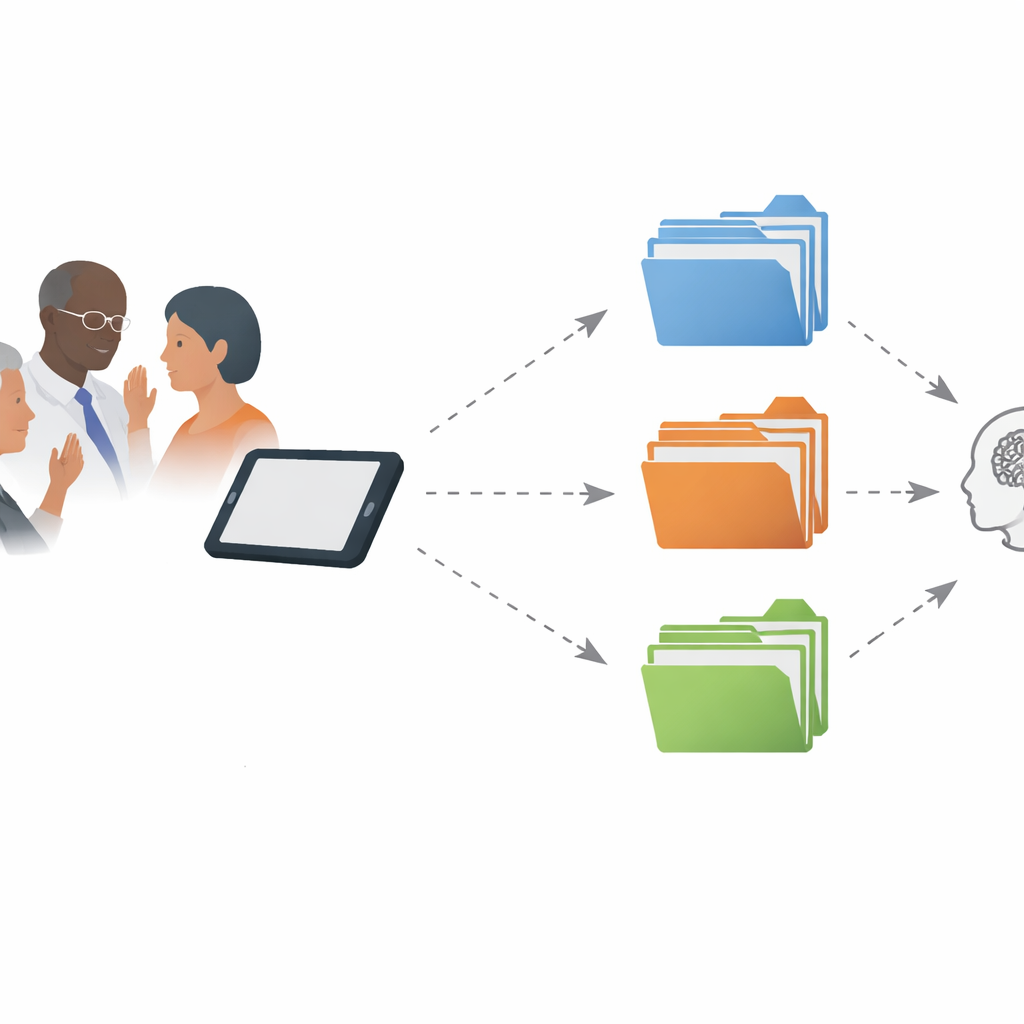
To turn these insights into practical tools, scientists need high-quality recordings from many people, collected in a consistent way. The ALOIS project recruited 258 Slovak-speaking adults, including 102 diagnosed with MCI and 156 cognitively healthy volunteers. All participants were thoroughly checked using standard memory and thinking tests, as well as questionnaires for anxiety and depression, to make sure that speech differences truly reflected cognitive status rather than other health issues. The recording sessions were run through a custom tablet application that guided both the examiner and the participant through a fixed set of tasks while saving clean, uncompressed audio together with basic background information such as age, education level, and test scores.
What people were asked to say
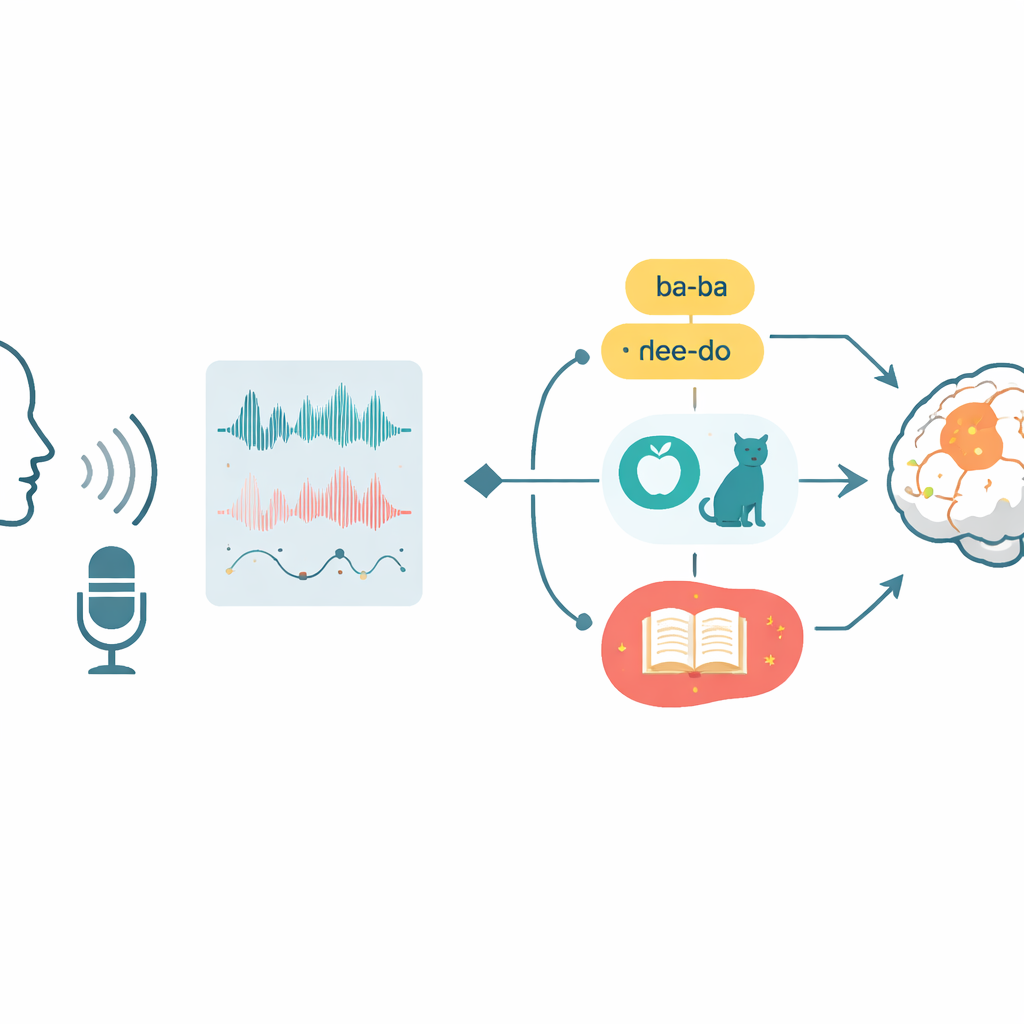
The researchers designed nine speech and language tasks to probe different abilities. Some were quick word-list tasks, where participants had one minute to say as many words as possible starting with a given sound, or to switch back and forth between categories such as first names and fruits. Others involved naming objects and actions shown in photographs, or listing everything they could see in a busy room scene. Two tasks required describing well-known pictures, including a classic kitchen scene and a colorful holiday drawing tailored to Slovak culture. Participants also explained how to prepare a cup of tea, and produced short sound samples by holding a vowel and rapidly repeating simple syllables. Together, these tasks capture vocabulary, grammar, storytelling, planning, and fine details of voice production.
From raw sound to research-ready data
Each full session was recorded as a single audio file, then split into labeled time segments for each task. The speech was first processed by an automatic recognition system and then carefully corrected by trained annotators, who also marked pauses, overlapping speech with the examiner, and other relevant events. For every participant, three linked files were created: the audio recording, a detailed transcript with labels, and a metadata file containing demographic information and numerous computer-extracted speech and language features. The database is organized into three groups—healthy controls, confirmed MCI cases that meet strict test-score criteria, and a smaller “MCI non-eligible” subgroup used mainly for exploratory work—allowing researchers to choose exactly which recordings best fit their study questions.
What this means for future brain health checks
The ALOIS-DB collection offers a rich, openly accessible resource for scientists who want to develop and test systems that detect early cognitive changes simply by listening to speech. Although the dataset is limited to Slovak speakers and has more women than men, it still fills a major gap for this language and provides a carefully documented benchmark for future studies. In the long run, research built on this kind of data could support quick, low-cost screening tools used in clinics or even at home, where a short conversation with a computer might help flag subtle changes in thinking years before traditional tests would.
Citation: Rusko, M., Brandoburová, P., Kevická, V. et al. Database of Speech and Language Affected by Mild Cognitive Impairment. Sci Data 13, 700 (2026). https://doi.org/10.1038/s41597-026-07071-z
Keywords: mild cognitive impairment, speech analysis, early dementia detection, language changes in aging, speech database