Clear Sky Science · en
Metagenome Sequencing and Recovery of 52 Microbial Genomes from Plastic-Polluted Coastal Sediment
Why tiny life in dirty sand matters
Plastic waste does not just float on the ocean surface; much of it sinks and gets buried in coastal sands and mud. In these hidden layers of sediment, countless microbes live on and around plastic pieces, quietly shaping how long this pollution lasts. This study explores who these tiny residents are in a heavily littered stretch of coast in India and what genetic tools they may hold for breaking plastics apart.
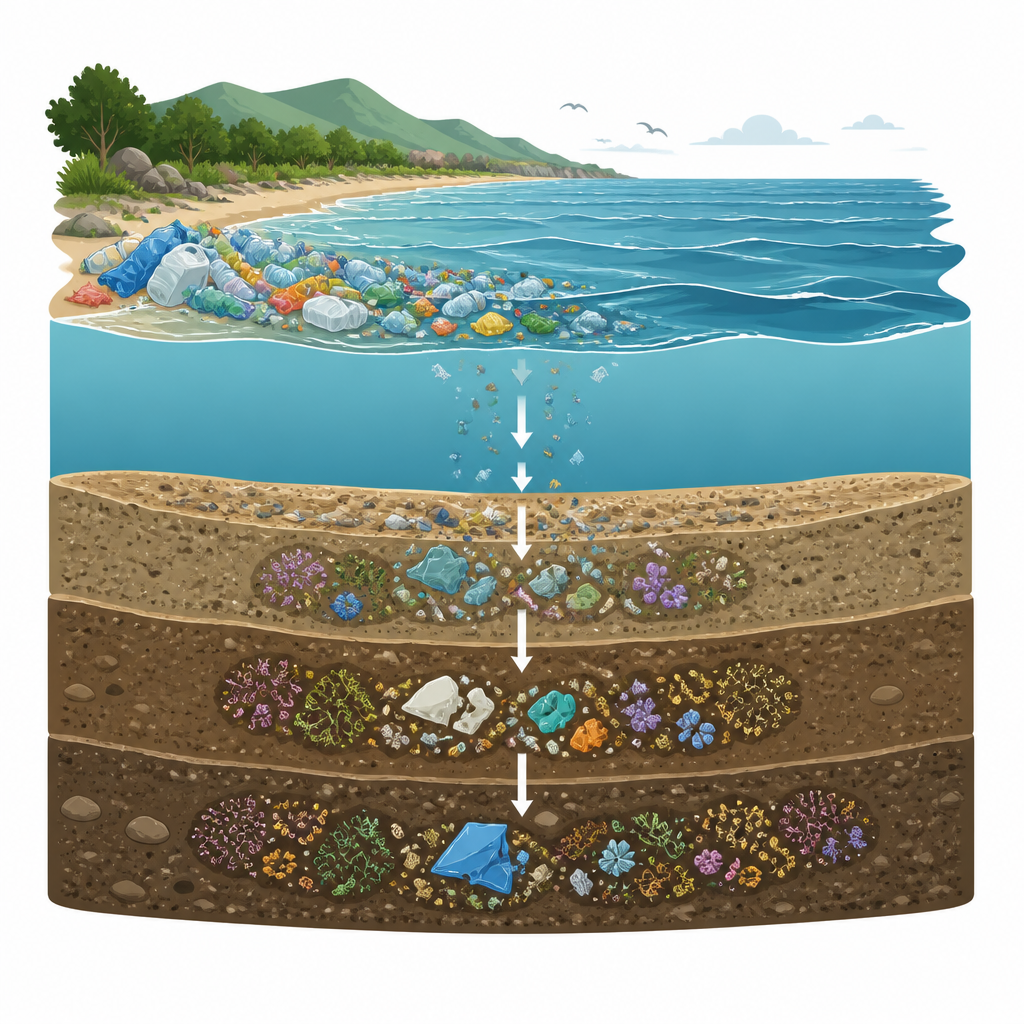
Hidden world beneath a plastic covered shore
The researchers focused on coastal sediment from Marakkanam, a town on the southeast coast of India where the shoreline is heavily littered with bottles and plastic covers. Coastal sediments act as long term holding areas for plastic, storing fragments from large pieces down to tiny microplastics. Yet the microbes living there are hard to grow in the lab, so most have remained unknown. By studying their DNA directly from the sediment, the team aimed to reveal which microbes thrive in this polluted setting and how they might help break down plastic.
Reading the DNA of an unseen community
From a small amount of sediment collected a few centimeters below the surface, the team extracted all the DNA present and sequenced it using a high throughput Illumina machine. Instead of looking at single species, they assembled these short DNA reads into longer stretches and then grouped them into draft genomes, each representing a different microbe. They used three advanced computer tools to perform this grouping and then removed duplicates, ending up with 52 distinct microbial genomes that met widely accepted quality standards.
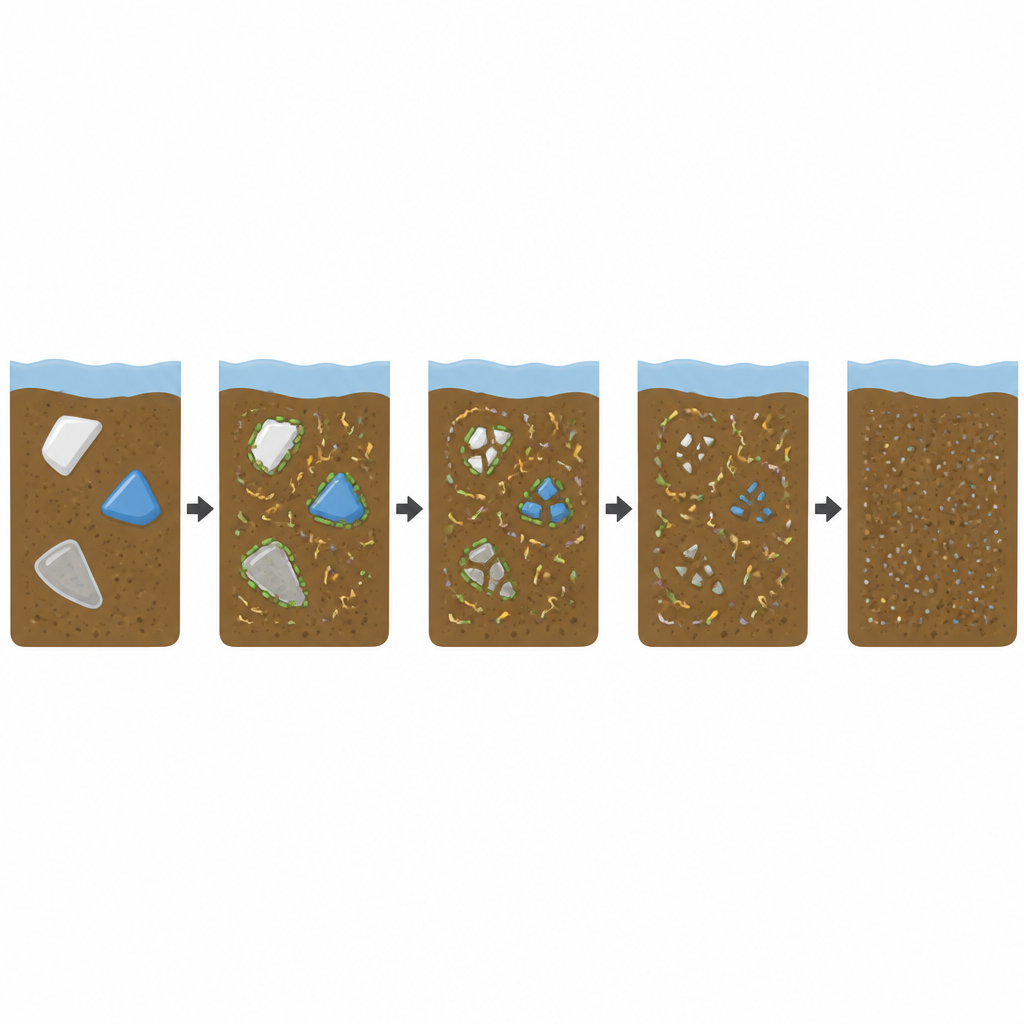
New branches on the tree of life in polluted sand
When the scientists compared these genomes against a global reference database, they found that the microbes came from 18 different major groups, including several common marine and soil lineages. However, for most of the genomes, the matches stopped at intermediate levels of the family tree. Follow up checks with a specialized taxonomy server suggested that the sediment contains microbes that belong to three previously unrecognized orders, 16 new families, and 28 new genera. In other words, this patch of plastic rich sediment harbors many lineages that are new to science.
Genes that hint at plastic eating potential
Beyond naming the microbes, the team searched their genomes for genes linked to breaking down plastic like polyethylene terephthalate and related polymers. They found many such genes, including different kinds of enzymes that can cut or modify plastic chains. These included PET dealing enzymes, hydrolases, proteases, and other catalysts previously connected to plastic breakdown. While the study does not test whether the microbes actually clear plastic in the wild, the genetic signatures suggest that this community has the machinery needed to attack at least some plastic materials.
Building a resource for cleaner coasts
This work does not offer an immediate fix for plastic pollution, but it provides a detailed map of who lives in a plastic choked coastal sediment and what they are genetically capable of doing. By making the DNA sequences and assembled genomes publicly available, the study gives other researchers a starting point for tracking pollution linked microbes, discovering new plastic breaking enzymes, and comparing sites around the world. In time, such knowledge could support better monitoring and smarter use of natural microbial helpers in efforts to reduce the burden of plastic in coastal environments.
Citation: Achudhan, A.B., Narayanan, R. & Madhavan, T. Metagenome Sequencing and Recovery of 52 Microbial Genomes from Plastic-Polluted Coastal Sediment. Sci Data 13, 767 (2026). https://doi.org/10.1038/s41597-026-07068-8
Keywords: plastic pollution, coastal sediment, microbial genomes, metagenomics, plastic degradation