Clear Sky Science · en
High-quality chromosome-scale genome assemblies of 29 maize inbred lines of European breeding relevance
Why corn DNA matters to our daily lives
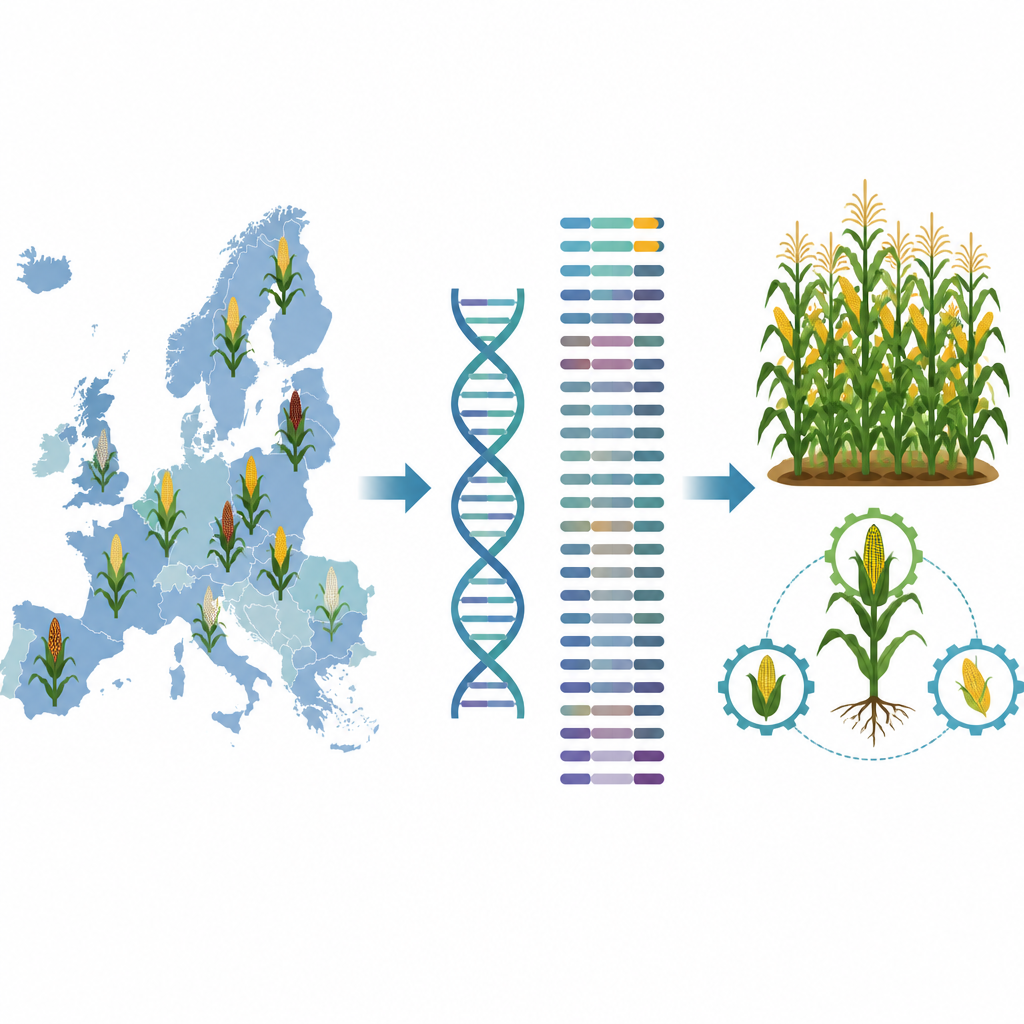
Maize, or corn, is a staple food, animal feed and industrial crop grown on every continent. Behind each ear of corn lies a remarkably complex genetic blueprint that helps the plant thrive in hot tropics, cool northern fields and everything in between. This study delivers a new set of complete DNA maps for 29 important corn lines used in European breeding, giving scientists and breeders a sharper tool to understand how genetic differences shape yield, resilience and adaptation to changing climates.
Looking beyond one favorite corn plant
For many years, most of what scientists knew about corn genetics came from a single American line called B73. That line has been studied in extraordinary detail, but it represents only one branch of corn’s family tree. European farmers rely heavily on different types of corn, especially flint lines that handle cool, short summers. Until now, these flint lines and other European breeding materials were missing from the set of complete reference genomes, which limited the ability to see the full range of genes and DNA structures that matter for European fields.
Building complete DNA maps for 29 key lines
In this work, the researchers created high quality, chromosome scale DNA assemblies for 29 inbred corn lines that are central to European breeding programs. These lines include northern and European flint types, dent lines from American breeding groups and lines derived from tropical European landraces. Using advanced long read DNA sequencing, they pieced together each genome into large, nearly continuous chromosome segments. The final genome sizes ranged from about 2.17 to 2.35 billion DNA “letters,” with very long stretches ordered into ten chromosomes and only small leftovers remaining unplaced. Quality checks showed that more than 97 percent of expected corn genes were present and that the sequences were highly accurate.
Comparing genomes to reveal hidden differences
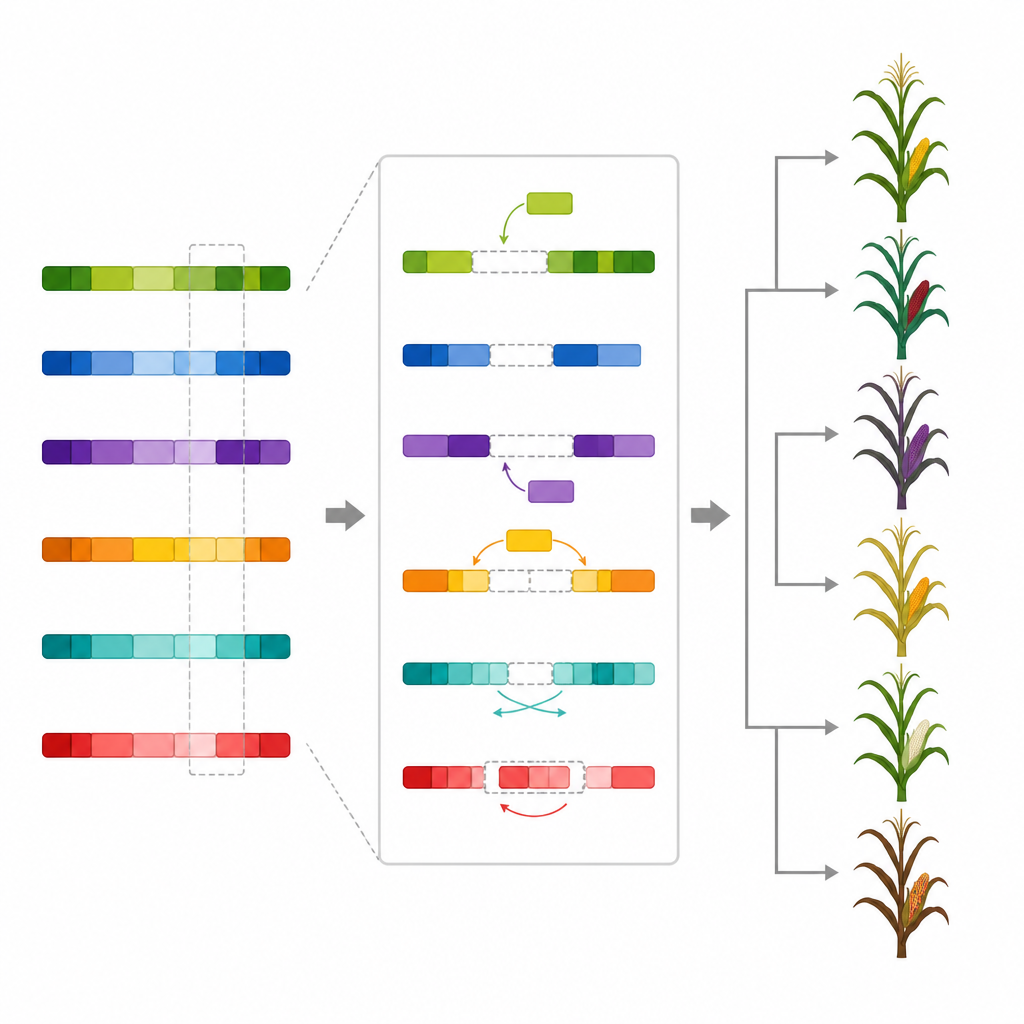
With these new DNA maps in hand, the team compared each of the 29 lines to the long studied B73 reference. They looked both at single DNA changes and at larger rearrangements known as structural variants, such as stretches that are inserted, deleted or flipped. The patterns of these differences neatly matched the known genetic groups of the lines, confirming that the correct seeds were sequenced and that the assemblies are reliable. Lines closely related to B73 showed fewer changes, while more distant groups carried many more differences. Flint lines in particular contributed the highest number of previously unseen structural variants, highlighting how underexplored their DNA had been.
What the new diversity tells breeders and scientists
Earlier studies of corn’s “pangenome” hinted that many traits are linked not only to simple DNA spelling changes but also to these larger structural shifts. Some regions associated with traits were found only by looking at structural variants and not by tracking standard genetic markers. The new assemblies greatly expand this view for materials that are directly relevant to European agriculture. By adding flint lines and tropical derived lines to the catalog, the study shows that the total set of corn genes has not yet reached a limit and that key pieces of variation still lie hidden in unsequenced material.
How this new resource will be used
The complete genome sequences, along with the lists of single letter changes and structural variants for all 29 lines, have been deposited in public databases. This means breeders and scientists worldwide can now link specific DNA patterns to traits such as cold tolerance, flowering time, disease resistance or grain quality in European growing conditions. Rather than starting new sequencing projects from scratch, they can build on this shared resource, design more precise experiments and make better use of flint and other underrepresented germplasm. In a practical sense, these genome maps act as a detailed atlas that guides the search for useful traits.
What this means for future corn crops
By assembling chromosome scale genomes for 29 important inbred lines, this study fills a major gap in our picture of corn diversity. It confirms that European flint lines harbor many unique DNA structures and shows that corn still has more genetic variety to uncover. For non specialists, the takeaway is that we now have a much clearer genetic foundation for breeding corn that fits European climates, supports stable yields and responds to future challenges, from new pests to shifting weather patterns.
Citation: Marcuzzo, C., Birbes, C., Eché, C. et al. High-quality chromosome-scale genome assemblies of 29 maize inbred lines of European breeding relevance. Sci Data 13, 715 (2026). https://doi.org/10.1038/s41597-026-07055-z
Keywords: maize genome, structural variation, pangenome, plant breeding, European flint corn