Clear Sky Science · en
Chromosomal-scale and haplotype-resolved genome assembly of the first Trinitario hybrid cacao ICS 1
Why this chocolate story matters
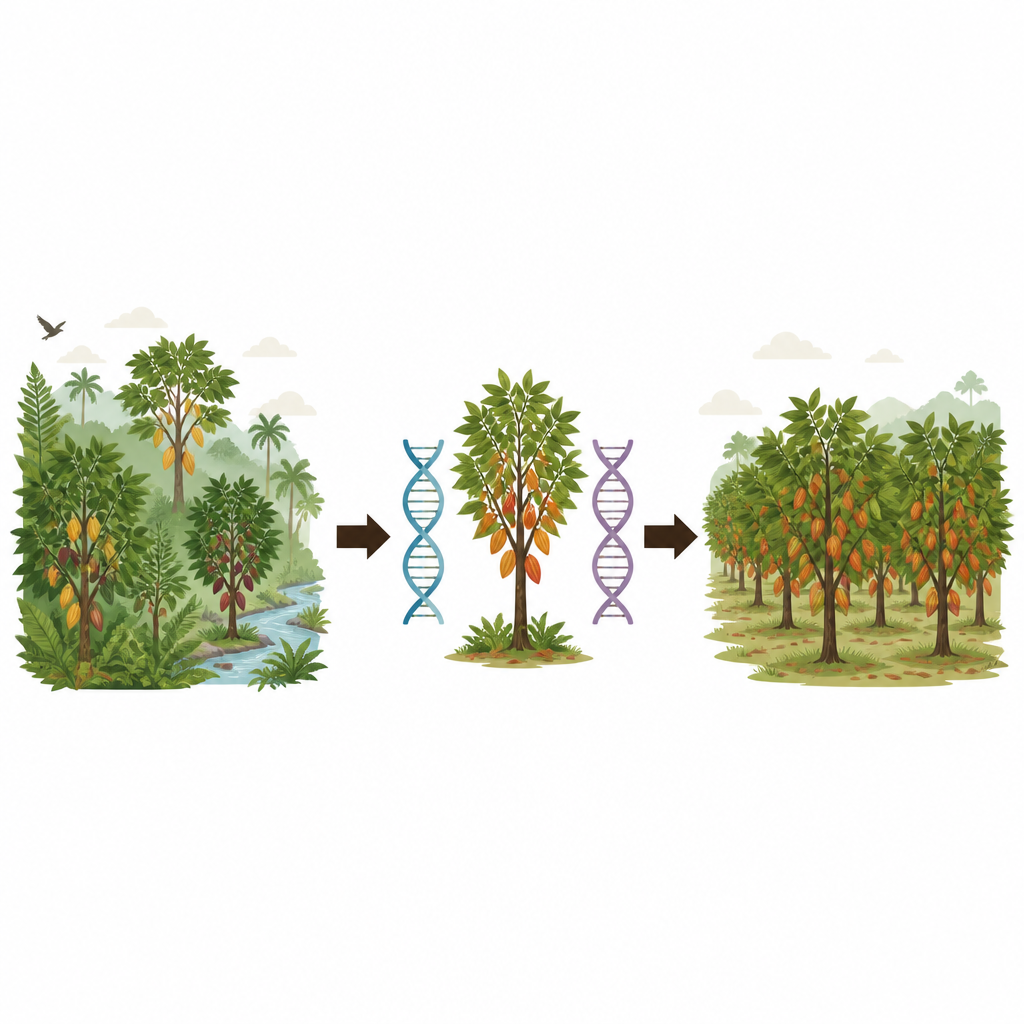
Behind every bar of chocolate lies a tree whose genes shape its taste, yield, and resilience. This study decodes the full genetic blueprint of ICS 1, a prized fine flavor cacao variety used around the world in breeding programs. By mapping its DNA at high resolution, scientists provide a tool that can help create future cacao trees that produce better tasting beans while standing up to disease and climate stress, supporting both chocolate lovers and the farmers who grow the crop.
A special cacao tree for fine flavor
Cacao trees fall into broad groups that differ in flavor and toughness. Traditional Criollo trees are famous for their delicate taste but are often fragile and low yielding. Forastero trees tend to be hardier and more productive but usually give a simpler, bulk flavor. Trinitario trees, including ICS 1, are natural hybrids that combine much of Criollo’s fine flavor with Forastero’s vigor. ICS 1 in particular has become a favorite parent in breeding programs, helping to pass on rich flavor and the ability to self-pollinate to many modern cacao varieties grown across Asia, Africa, and the Americas.
Chocolate quality versus farm reality
Fine flavor cocoa beans command higher prices on the global market than ordinary beans, yet the price gap is not large enough to fully offset the risks farmers face when they grow traditional fine flavor trees. These trees can be less robust, more vulnerable to disease, and less productive than modern hybrid lines, and climate change is adding pressure through new pests, shifting rainfall, and heat. As a result, many growers have switched to higher yielding bulk types, even though these often produce less complex flavors. Breeders aim to break this trade-off by creating new varieties that unite excellent taste, high yield, disease resistance, and resilience to harsh conditions.
Reading the full DNA book of ICS 1
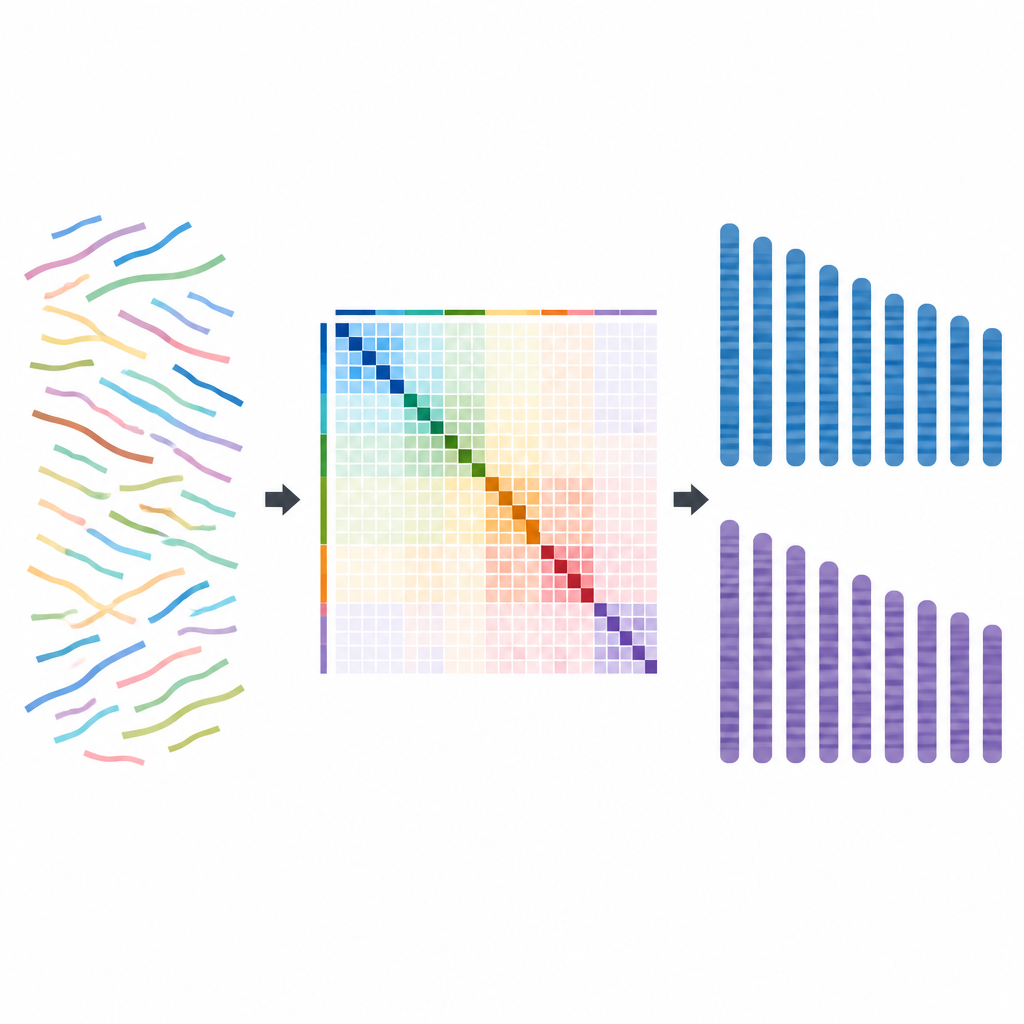
To support that goal, the researchers produced a detailed, chromosome-scale DNA map of ICS 1, treating each of its two parental copies of the genome separately. They combined long-read sequencing, which captures extended stretches of DNA, with Hi-C data, which reveals how DNA pieces sit near one another inside the cell nucleus. The result was two high quality assemblies that each span about 375 to 410 million DNA units and are organized into 10 long, chromosome-like pieces, matching cacao’s known chromosome count. Checks on gene content and coverage showed that more than 98 percent of expected plant genes were present, indicating that very little of the genome is missing.
Looking under the hood of the cacao genome
With the assemblies in hand, the team annotated over 22,000 protein-coding genes in each version of the ICS 1 genome and examined repeated DNA sequences that make up roughly two thirds of the DNA. They compared the two haplotypes to one another and to other published cacao genomes, finding that the overall chromosome layout is highly conserved, with only a few local rearrangements and stretches rich in repeats. These comparisons confirm that the new assemblies are reliable and that ICS 1 fits into the broader picture of cacao genetic diversity, while also providing its own unique combination of flavor and agronomic traits. The complete datasets and annotations have been deposited in public databases for researchers and breeders to use.
What this means for future chocolate
By delivering a precise, haplotype-resolved genome for ICS 1, this work gives breeders a detailed map to locate genes linked to fine flavor, yield, and stress tolerance in a key hybrid cacao. Over time, this map can guide the development of new trees that produce distinctive, high quality cocoa beans while withstanding poor soils, diseases, and a warming climate. For consumers, this raises the prospect of more diverse and reliably available fine chocolates, and for farmers, it offers tools to grow crops that are both profitable and better adapted to changing conditions.
Citation: Feng, X., Patel, R.S.K.R., Yan, Y. et al. Chromosomal-scale and haplotype-resolved genome assembly of the first Trinitario hybrid cacao ICS 1. Sci Data 13, 713 (2026). https://doi.org/10.1038/s41597-026-07054-0
Keywords: cacao genome, fine flavor cocoa, ICS 1, plant breeding, chocolate genetics