Clear Sky Science · en
The Global Observation System for Mercury dataset for mercury stable isotope signatures in environmental media
Why Mercury Matters to People and the Planet
Mercury is a metal that can travel the globe and quietly build up in fish, wildlife, and people, causing damage to the brain, heart, and reproductive system. Because it moves through air, water, soil, and living things in complex ways, governments need reliable tools to track where mercury comes from and how it behaves. This article describes a global effort to pull together thousands of highly detailed measurements of mercury’s “fingerprints” in nature, creating a shared reference that can help scientists and policy makers better protect human health and the environment.
Reading Mercury’s Hidden Fingerprints
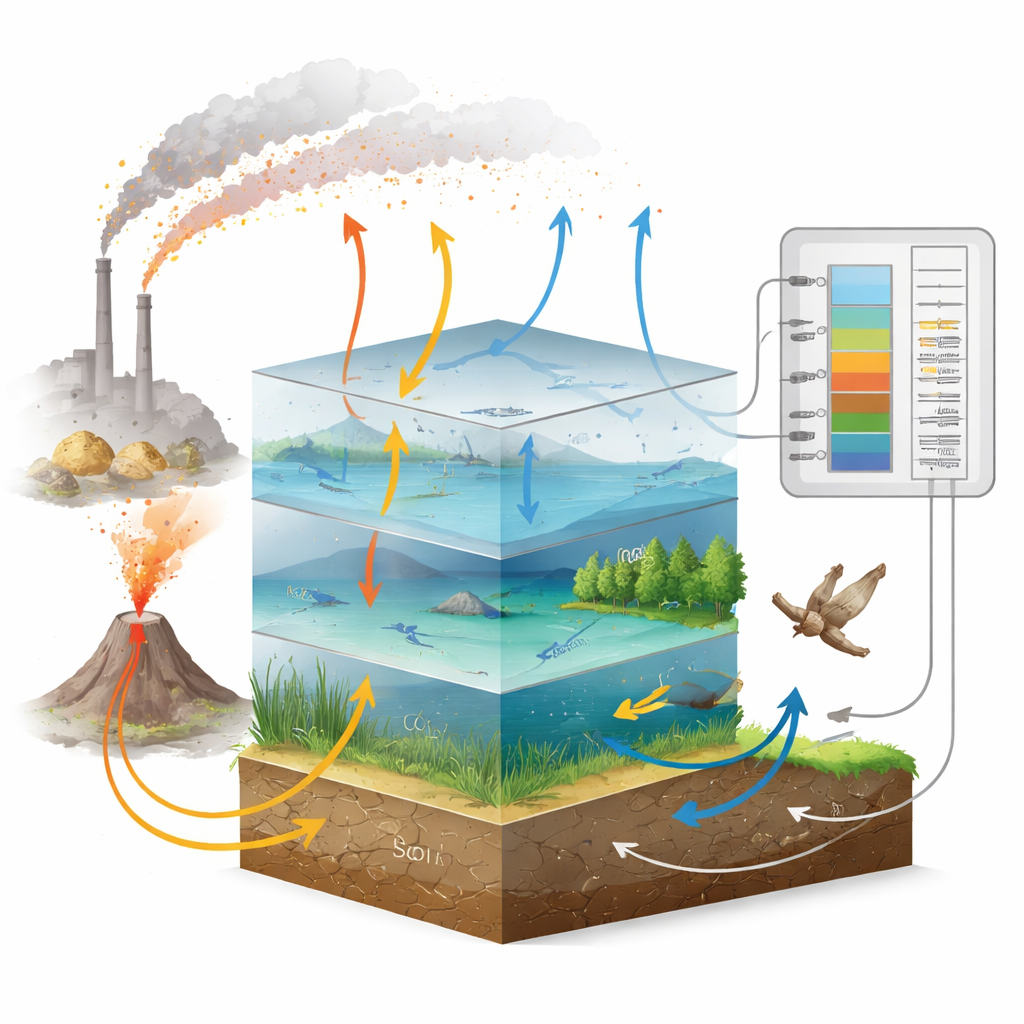
Like many elements, mercury comes in slightly different forms called stable isotopes. These varieties behave just a bit differently during natural processes such as evaporation, sunlight-driven reactions, and uptake by plants and animals. Modern instruments can measure tiny shifts in the mix of these isotopes, giving each mercury sample a kind of barcode that reflects its origin and history. Over the past two decades, researchers around the world have used these barcodes to trace mercury from smokestacks and mines, through the atmosphere, into oceans, lakes, forests, and food webs, and even back through deep time to ancient volcanic eruptions.
Building a Global Mercury Isotope Library
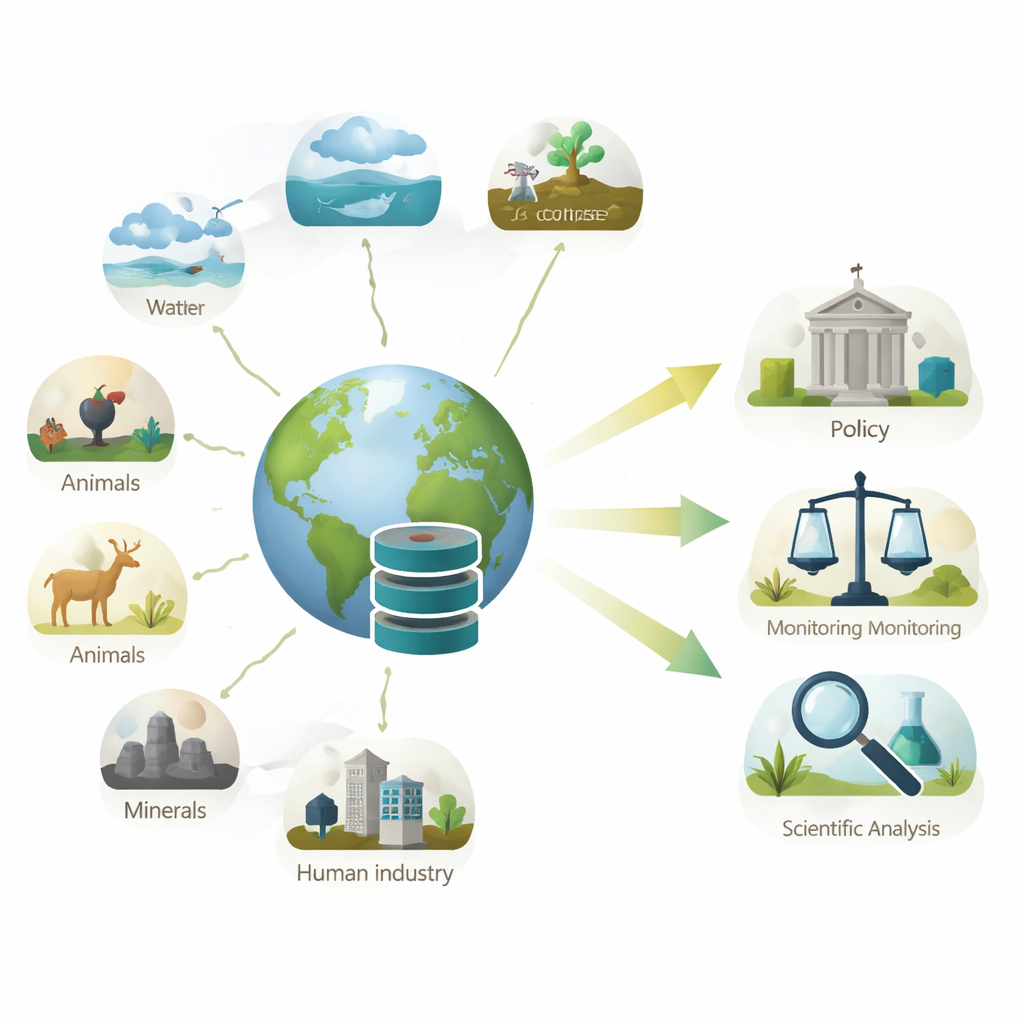
As the number of studies exploded, it became harder for any single scientist to keep track of all the data scattered across journals and reports. To solve this, the authors created a unified collection called the iGOS4M mercury isotope dataset, developed under the Global Observation System for Mercury that supports the United Nations Minamata Convention on Mercury. The current version brings together more than 11,000 individual entries from 190 studies. Each entry includes not only the isotope “barcode” but also information such as sample type (for example, lake water, ocean water, air, soil, fish, or industrial materials), location, and mercury concentration. This turns years of scattered work into a single, searchable resource that anyone can explore online.
What the Combined Data Reveal
When all of these measurements are plotted together, clear patterns emerge. Mercury in rocks and ores tends to cluster around a narrow range of values, while mercury in soils is shifted toward lighter forms because forests and ground surfaces pull in gaseous mercury from the air. In fish and other organisms, the patterns are different again, reflecting how sunlight changes toxic methylmercury in water before it moves up the food chain. In the air, the mix of isotopes helps distinguish between elemental mercury gas and more reactive forms that fall out in rain. By comparing these patterns, scientists can estimate how much mercury in a lake or forest comes from the atmosphere versus local pollution, and how sunlight and chemistry reshape mercury after it arrives.
Ensuring Data Quality and Consistency
To make the dataset truly global and reliable, the authors also spell out strict rules for how mercury isotope measurements should be made and reported. They emphasize the use of common reference materials and calculation methods so that results from different laboratories and years can be compared directly. The team checked each study for quality control steps, such as repeated measurements and use of well-characterized standards, and they recorded realistic uncertainty estimates for every isotope value. Studies that did not follow key conventions were either carefully adjusted or left out, helping to keep the collection trustworthy for sensitive tasks such as evaluating international pollution agreements.
How This Resource Can Guide Future Action
By opening this dataset to all, the authors provide a foundation for more powerful models of how mercury moves through the Earth system, including advanced computer simulations and machine learning approaches. These tools can link isotope fingerprints with climate, land use, and emissions, helping to fill in gaps where measurements are scarce and to test whether policies like the Minamata Convention are working. For non-specialists, the message is straightforward: we now have a global library of mercury’s chemical fingerprints that makes it easier to pinpoint sources, understand risks to seafood and wildlife, and design smarter strategies to reduce exposure in a changing world.
Citation: Sonke, J.E., Kwon, S.Y., Demers, J.D. et al. The Global Observation System for Mercury dataset for mercury stable isotope signatures in environmental media. Sci Data 13, 688 (2026). https://doi.org/10.1038/s41597-026-07035-3
Keywords: mercury pollution, stable isotopes, environmental monitoring, global dataset, Minamata Convention