Clear Sky Science · en
A longitudinal dataset of hypertensive osteoporotic fracture patients: treatments and long-term outcomes
Why Bone Breaks and Blood Pressure Matter Together
As people age, two common health problems often travel together: fragile bones that break easily and high blood pressure. Each is serious on its own, but when they coincide, they can shape how long and how well someone lives after a major fracture. This study introduces a large, carefully built dataset from an aging city in Eastern China that follows thousands of older adults with bone fractures over many years, linking their hospital records, blood pressure status, and blood pressure medicines to long-term outcomes like survival and repeat fractures.
A Big Picture Look at Broken Bones in Older Adults
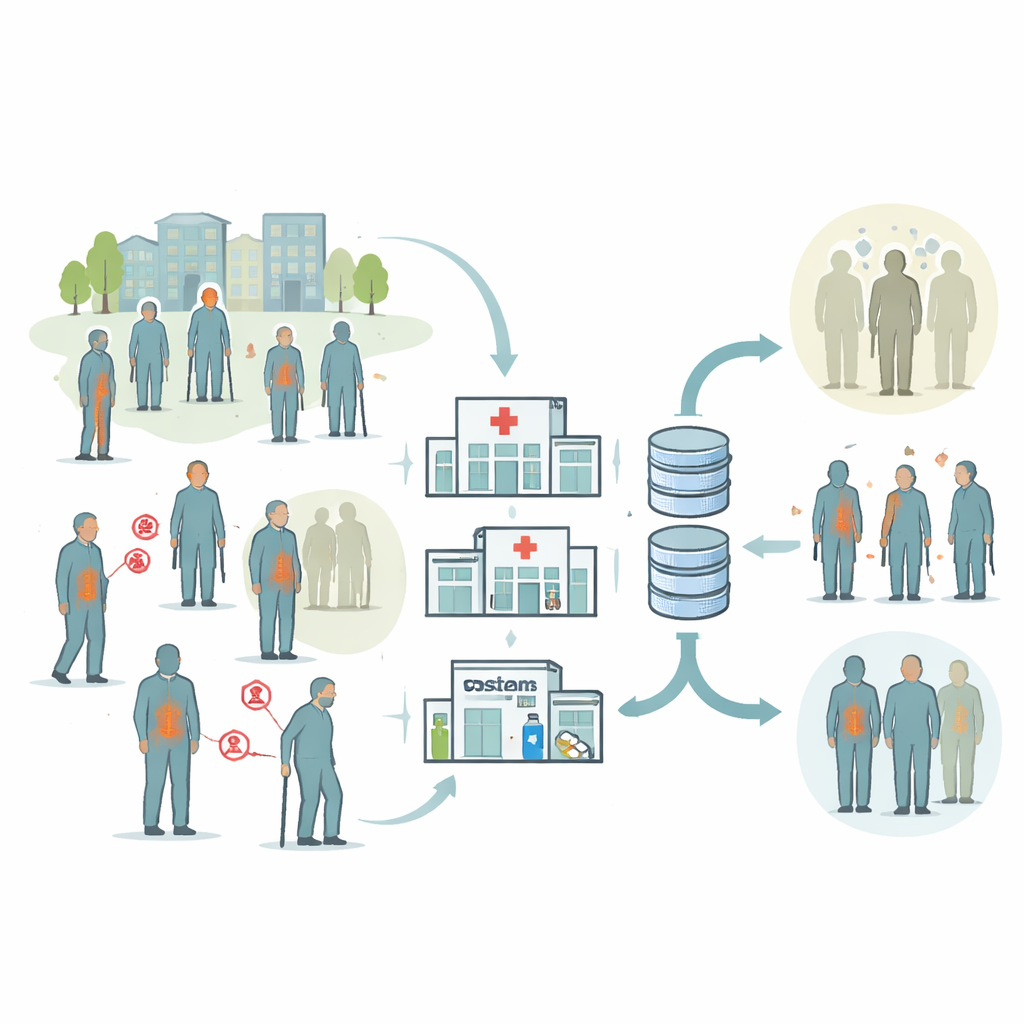
Osteoporotic fractures—breaks of the hip, spine, wrist, or shoulder caused by fragile bones—are not just painful accidents; they are life-changing events that raise the risk of disability, repeat fractures, and early death. High blood pressure is also widespread in older adults and has been tied to both heart disease and weaker bones. Yet few resources have combined detailed fracture information, long-term medication use, and years of follow-up in the same people. To fill this gap, researchers drew on the Osteoporotic Fracture Registration System at a major hospital in Kunshan, a rapidly aging city with strong electronic health records, and connected it to regional health and death registries.
Building a Long-Term Health Story for Each Patient
The team started with 4,782 adults aged 50 and over who were hospitalized with qualifying low-energy fractures between 2017 and 2024. After excluding those who died within 30 days or lacked key blood pressure information, 4,325 patients remained. For each person, the dataset captures who they are (age, sex, body weight), how and where they broke a bone, their other medical conditions, lab test results, and what treatments they received for osteoporosis. These records were then linked, using encrypted identifiers, to citywide hospital and clinic visits and to the provincial death registry, allowing researchers to track who died, who sustained a new fracture needing hospital care, and when these events occurred.
Following Blood Pressure and Medicines Over Time
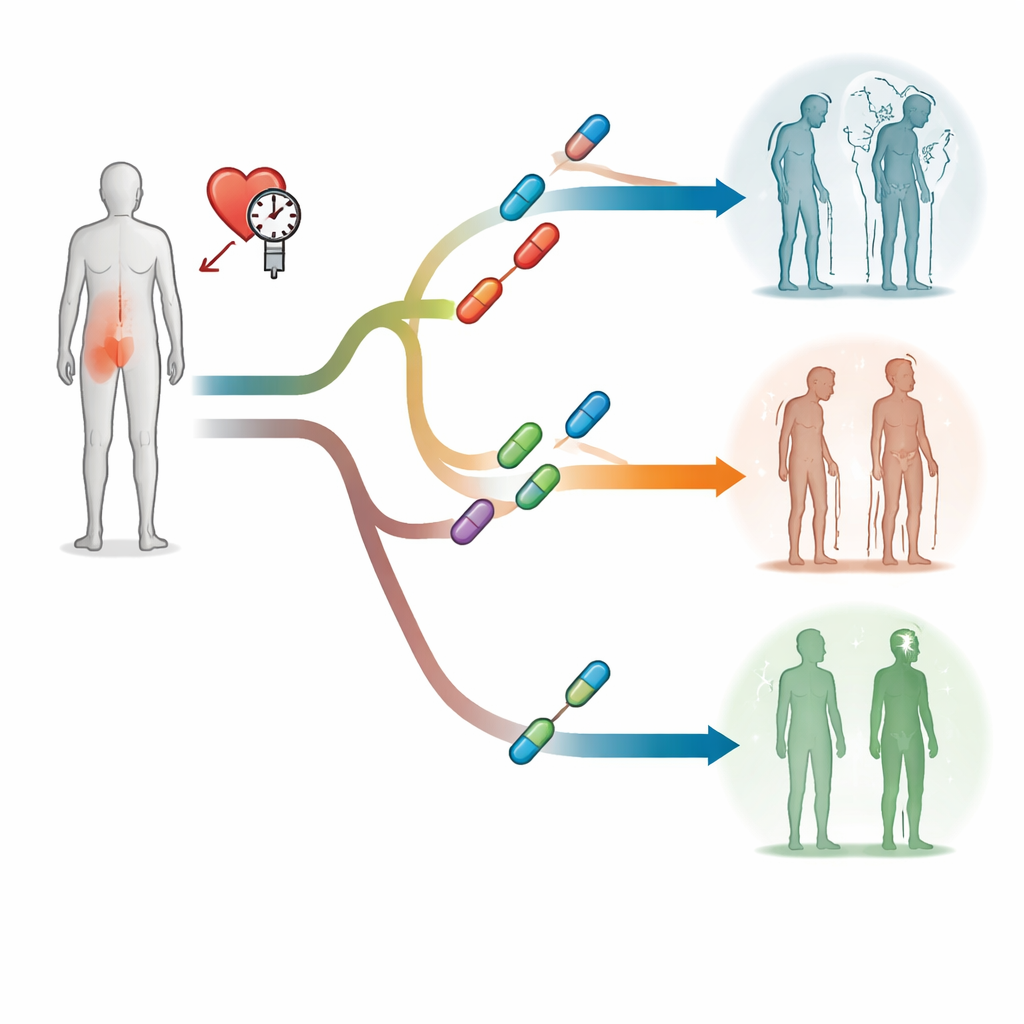
A key feature of this resource is the detailed record of blood pressure and blood pressure drugs. More than half of the patients had high blood pressure, defined by measurements during their hospital stay or a history of such treatment. Through a city-wide prescription database, the researchers mapped over 42,000 prescriptions for blood pressure medicines—such as diuretics, beta-blockers, calcium channel blockers, angiotensin-converting enzyme inhibitors, and angiotensin receptor blockers—to individual patients over time. This makes it possible to see which drug types patients received, for how long, and how those patterns lined up with later deaths or repeat fractures, all while keeping personal identities hidden.
What the Early Analyses Revealed
To make sure the dataset was coherent and clinically meaningful, the authors ran a series of statistical checks and example analyses. Patients with high blood pressure had clearly worse long-term outcomes: they were more likely to die and more likely to suffer another fracture than those without high blood pressure, even after accounting for age, sex, other illnesses, and fracture site. Survival curves showed that differences in death and refracture rates grew over the years, and a matching technique that paired similar patients with and without hypertension confirmed that these patterns persisted. The researchers also built visual risk calculators, called nomograms, that combine age, sex, blood pressure status, overall illness burden, and fracture location to estimate an individual’s chances of surviving or fracturing again in one, three, or five years.
Clues from Different Blood Pressure Drugs
When the team looked at specific drug classes, they found that real-world prescribing patterns and outcomes were not uniform. Diuretics were the most commonly used blood pressure medicine among these patients and were linked to the highest proportion of deaths in this cohort, whereas some other classes, such as certain vessel-relaxing drugs, were associated with lower mortality rates. Because this is an observational dataset, these findings do not prove that any one drug causes better or worse outcomes, but they highlight that the choice of blood pressure therapy could matter for bone-fragile patients and deserves closer study.
What This Means for Patients and Future Research
In plain terms, this article does not announce a new treatment; it delivers the foundation for many future discoveries. By assembling a large, cleaned, and openly shared dataset that follows older people with fragile-bone fractures and high blood pressure over many years, the researchers provide a powerful tool for scientists worldwide. Others can now use these data to test how different treatment strategies, drug choices, and patient characteristics shape survival and the risk of breaking another bone. For patients and families, the message is that controlling blood pressure and understanding medication choices may be an important part of staying alive and fracture-free after a serious break—and that this new dataset will help doctors refine that advice over time.
Citation: Li, C., Lu, K., Su, Lw. et al. A longitudinal dataset of hypertensive osteoporotic fracture patients: treatments and long-term outcomes. Sci Data 13, 671 (2026). https://doi.org/10.1038/s41597-026-07031-7
Keywords: osteoporotic fractures, hypertension, older adults, longitudinal cohort, antihypertensive medications