Clear Sky Science · en
A chromosome level reference genome for the pecan weevil, Curculio caryae
Why a tiny nut pest matters
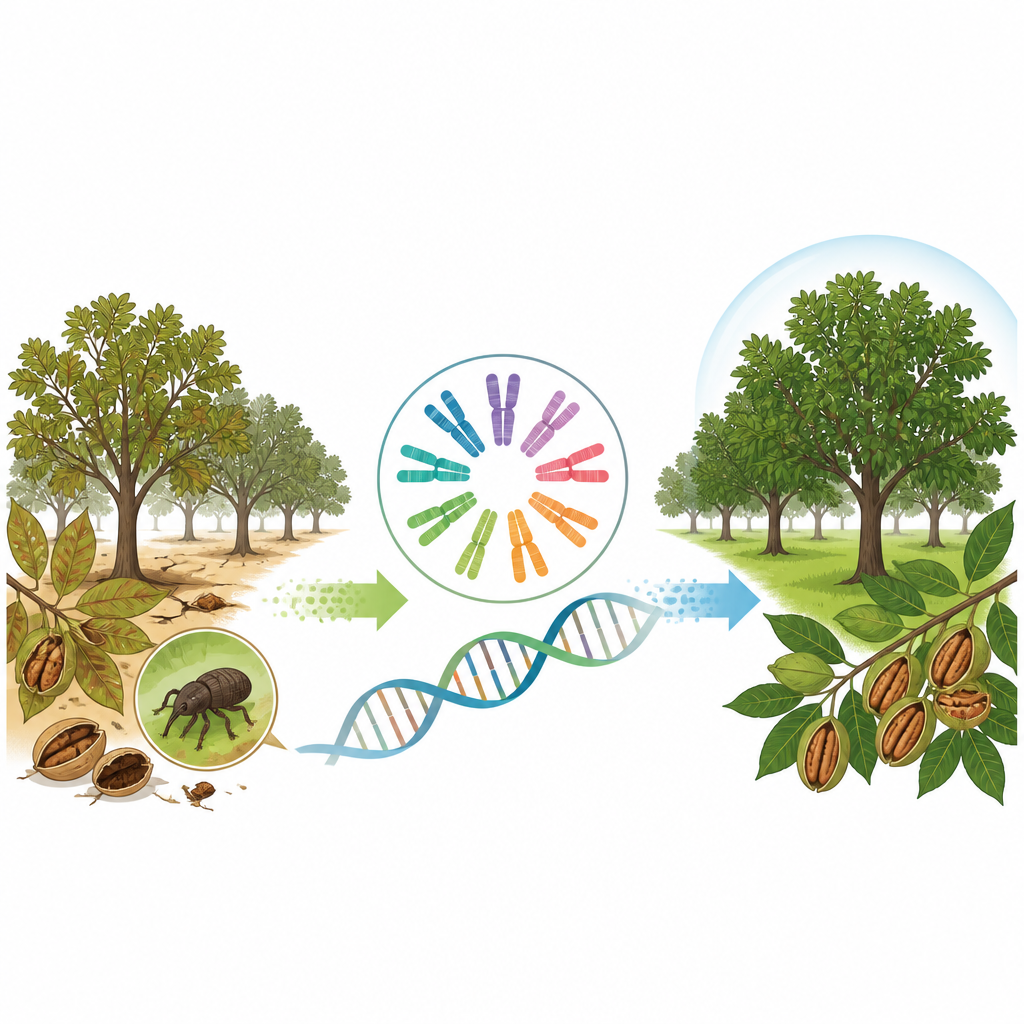
The pecan weevil is a small beetle with an outsized impact on our food and economy. By tunneling into developing pecans and native hickory nuts, it can spoil an entire orchard’s crop and even halt international trade. Yet until now, scientists and growers have had very little genetic information to understand this pest or to design smarter, more targeted ways to manage it. This study delivers the first complete, chromosome-scale map of the pecan weevil’s DNA, opening a new window into its biology.
A closer look at a costly insect
Pecan weevils live wherever pecan and hickory trees grow across much of the United States, from New Mexico to the Carolinas and north into Illinois. Because the insects are “obligate feeders,” meaning they must feed on these trees to survive, commercial orchards are especially at risk. A bad infestation can lead to millions of dollars in losses and can cause entire harvests to be rejected. Until now, most control methods have relied on field observations and broad pest management, rather than a deep understanding of the insect’s own genetic blueprint.
Building a complete DNA map
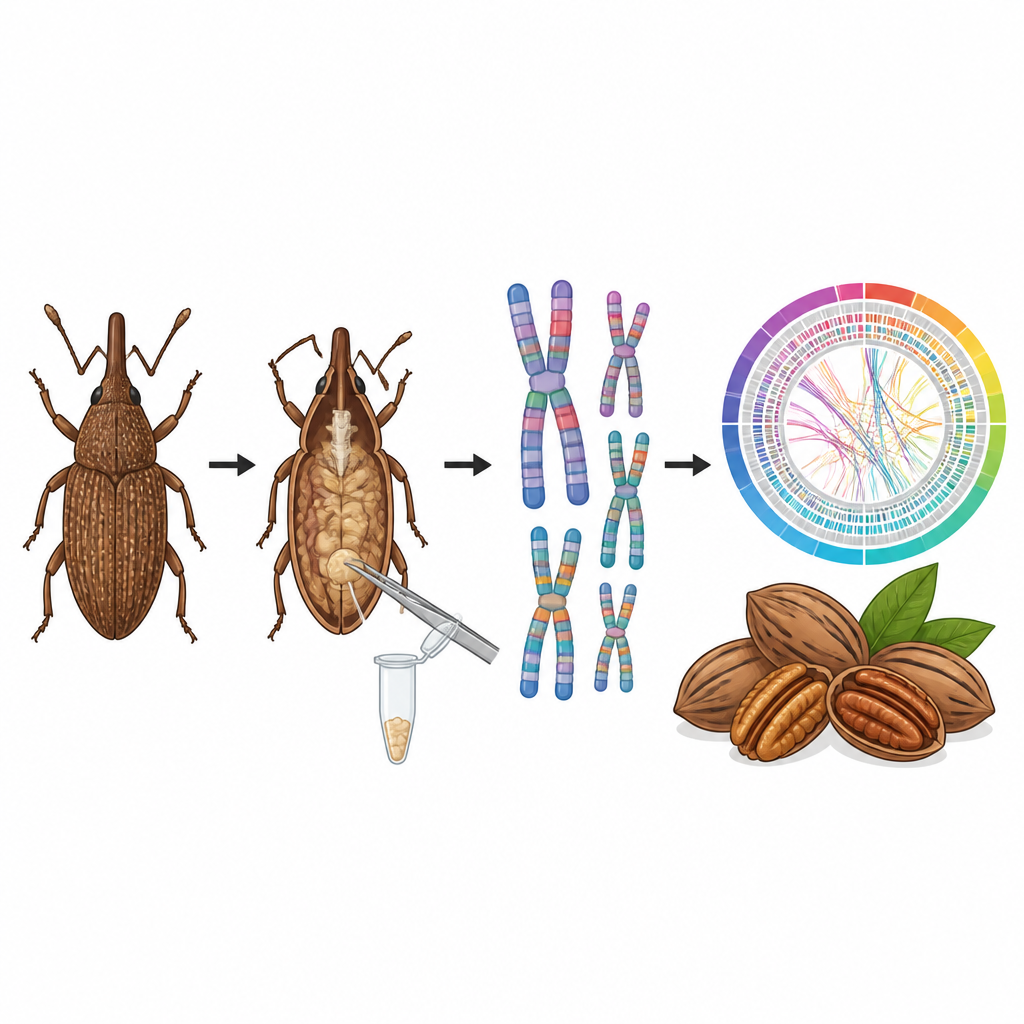
To create that blueprint, the researchers collected adult pecan weevils from a Texas orchard. Using advanced DNA sequencing that reads very long stretches of genetic material, combined with a method that records which pieces of DNA are physically near each other inside the cell, they assembled the insect’s genome at chromosome level. The final assembly is about 2.2 billion “letters” long, organized into 13 chromosomes. Tests comparing this assembly to independent estimates of genome size, as well as checks for completeness of important genes, show that the map is both large and highly accurate.
A genome filled with repeated sequences
One striking feature of the pecan weevil genome is how much of it is made up of repeated DNA. Using specialized software, the team found that more than four-fifths of the genome consists of repeated elements rather than unique genes. They also identified and cataloged about 19,500 protein-coding genes, using long-read RNA sequencing from both male and female adults to guide the annotation. In addition, they assembled and annotated the separate mitochondrial genome, a small circular piece of DNA that powers the cell’s energy machinery.
Checking quality and sharing the data
The researchers put the new genome through several quality checks. They examined patterns of short DNA fragments to estimate genome size and consistency, and they used a widely accepted set of core insect genes to confirm that nearly all expected genes are present. They also screened the assembly for contaminants, such as stray DNA from microbes, and removed any sequences that did not belong to the weevil. All of the raw data, the assembled genome, the gene annotations, and the mitochondrial sequence have been deposited in public databases so that other scientists can freely use them.
What this means for growers and science
For non-specialists, the key message is that we now have a detailed parts list and wiring diagram for one of the most important pests of pecan orchards. While this study does not test new control methods directly, it lays the groundwork for future research into how the insect develops, feeds, and adapts to its environment. Over time, insights from this genome may help breeders, entomologists, and pest managers design more precise and sustainable ways to protect pecan crops, while also improving our broader understanding of weevil evolution and diversity.
Citation: Perkin, L.C., Cohen, Z.P., Sim, S.B. et al. A chromosome level reference genome for the pecan weevil, Curculio caryae. Sci Data 13, 706 (2026). https://doi.org/10.1038/s41597-026-07030-8
Keywords: pecan weevil, genome assembly, agricultural pest, insect genetics, comparative genomics