Clear Sky Science · en
LncRNA and mRNA expression characteristics and bioinformatics analysis of exosomes from sheep ovaries with different reproductive capacities
Why tiny messages in sheep ovaries matter
Farm animals that naturally have more offspring are valuable not just to farmers but also to scientists trying to understand fertility. This study looks inside the ovaries of sheep to explore why one breed, called Hu sheep, tends to have more lambs than another breed, Mongolian sheep. Instead of focusing only on genes inside cells, the researchers examined microscopic packets, known as extracellular vesicles, that carry genetic messages between cells. By comparing the contents of these packets in the two breeds, they built a public data resource that may help improve livestock breeding and deepen our understanding of how fertility is controlled.
Two types of sheep, two different fertility stories
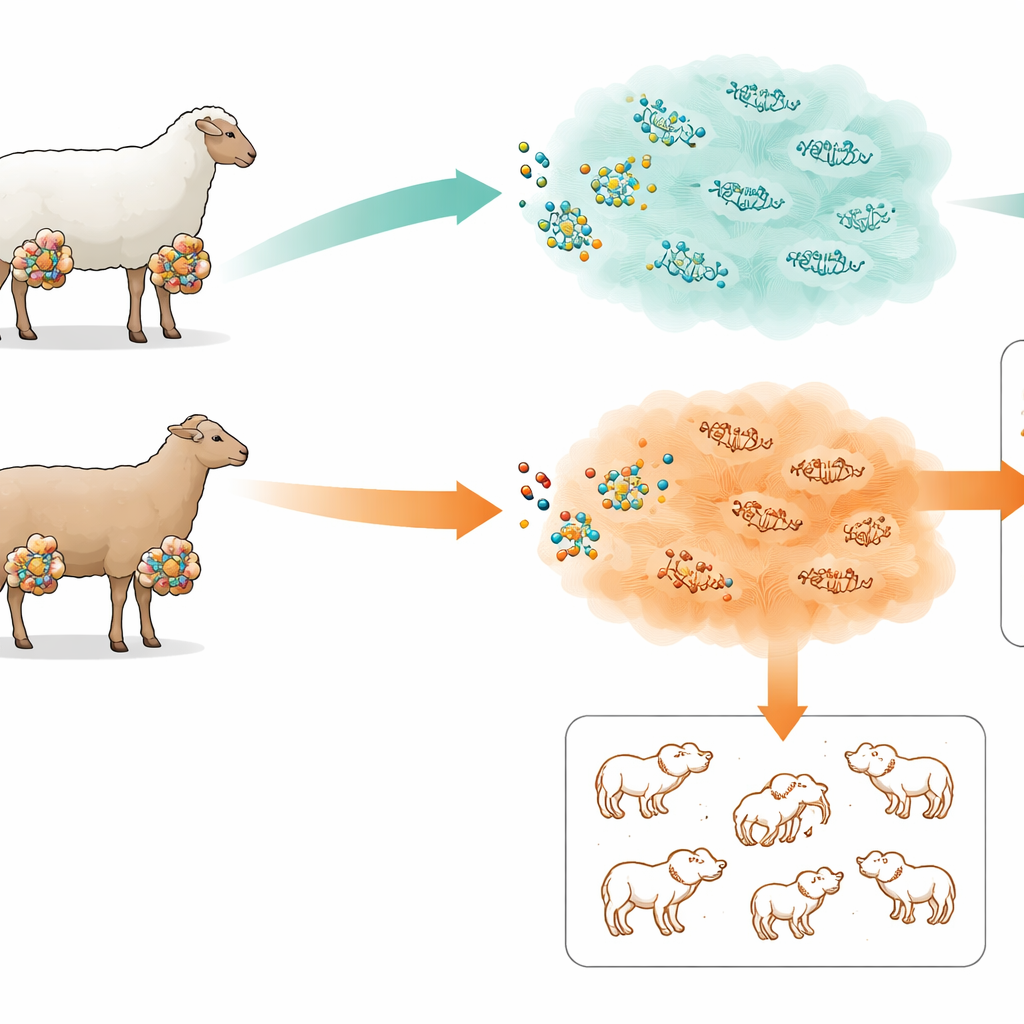
Hu sheep are famous in China for coming into heat throughout the year and often giving birth to multiple lambs at once. Mongolian sheep, by contrast, usually have fewer offspring. Earlier work showed that a specific change in a fertility-related gene, called FecB, is linked to bigger litters. In this study, the team selected six one-year-old ewes: three Hu sheep carrying two copies of the fertility-boosting FecB version and three Mongolian sheep without that version. All animals were carefully synchronized so that their reproductive cycles lined up, and their ovaries were collected at the same key moment, just after a hormone surge that precedes ovulation. This design allowed for a clean comparison between a naturally “high-fertility” and a “lower-fertility” group.
Tiny bubbles carrying genetic messages
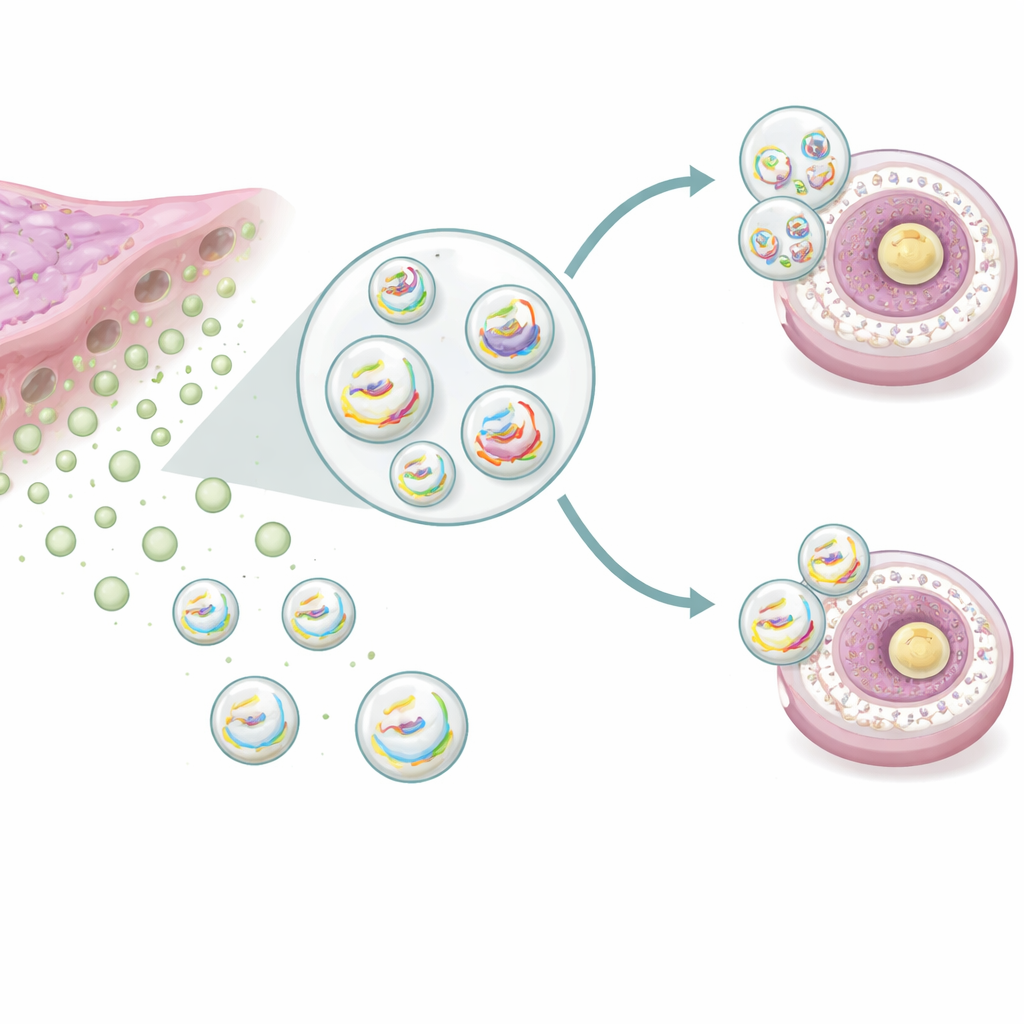
The scientists focused on extracellular vesicles, extremely small, membrane-wrapped bubbles released by living cells. These vesicles float through tissue and bodily fluids, delivering proteins and genetic material that can alter how neighboring cells behave. From frozen ovarian tissue, the team gently released these vesicles, filtered and spun them down at very high speeds, and then checked their identity. Under an electron microscope, the vesicles showed the expected round shape and size, and protein tests confirmed that they bore typical vesicle markers while lacking proteins from inside whole cells. Additional measurements showed that most vesicles were about 90 nanometers across—thousands of times smaller than the width of a human hair.
Reading the RNA cargo inside vesicles
Inside these vesicles, the researchers looked at two kinds of RNA, the molecules that help turn genetic information into action: traditional messenger RNA (mRNA), which encodes proteins, and long non-coding RNA (lncRNA), which helps regulate gene activity without making proteins. They purified RNA from the vesicles and used high-throughput sequencing to catalog which RNA molecules were present and how abundant they were. Careful quality checks confirmed that the data were reliable: most reads were high quality, matched well to the sheep reference genome, and reached a sequencing depth sufficient to capture the majority of expressed genes. Overall, they detected 14,480 genes and 2,455 lncRNAs, including many that had not been previously described in sheep.
Key differences in genetic signals linked to fertility
When the team compared Hu and Mongolian sheep, they found that the vesicles did not carry identical messages. In Hu sheep, 180 mRNA transcripts and 15 lncRNA transcripts were expressed at significantly different levels. Some were more abundant, others less so. Using standard bioinformatics tools, the authors mapped these differences onto biological processes and pathways related to cell growth, hormone signaling, and tissue remodeling—all functions that matter for follicle development and successful ovulation. They also built a network showing which lncRNAs tended to rise and fall together with specific mRNAs. Several lncRNAs, with laboratory-style names such as MSTRG.19742 and MSTRG.26765, stood out as hubs strongly linked to many protein-coding genes, suggesting that they may help coordinate complex reproductive processes.
A new data resource for understanding fertility
Rather than claiming to have fully explained why Hu sheep have larger litters, this work provides a detailed map of the RNA messages found in ovarian vesicles from high- and lower-fertility animals. The data, now publicly available in major genetic databases, give researchers worldwide a starting point for exploring how vesicle-borne signals influence egg development and hormone balance. For non-specialists, the main takeaway is that fertility is not governed by genes alone, but also by a rich conversation between cells carried out through microscopic bubbles packed with regulatory molecules. Understanding that hidden communication network could eventually aid in breeding more productive livestock and, potentially, shed light on fertility problems in other mammals, including humans.
Citation: Yan, C., Zhang, C., Wei, W. et al. LncRNA and mRNA expression characteristics and bioinformatics analysis of exosomes from sheep ovaries with different reproductive capacities. Sci Data 13, 699 (2026). https://doi.org/10.1038/s41597-026-07024-6
Keywords: sheep fertility, ovarian exosomes, lncRNA and mRNA, reproductive genetics, livestock breeding