Clear Sky Science · en
Chromosome-level genome assemblies of the pink snow mold pathogens Microdochium majus and Microdochium nivale
A Hidden Threat Beneath the Snow
For many of us, wheat is an invisible staple that quietly fills our bread baskets and noodle bowls. Yet in frigid, snow-covered fields, a little-known disease called pink snow mold can wipe out large portions of winter wheat, threatening harvests and regional food security. This study peels back the microscopic world behind that disease, assembling complete genetic "blueprints" of its two main fungal culprits. By mapping their DNA from end to end, the researchers provide a foundational resource that could help breeders and plant pathologists develop hardier wheat and better control strategies.
Why Snow Mold Matters to Farmers and Food
Pink snow mold thrives in cold, wet conditions where snow lies on unfrozen ground for long periods. Under this blanket, fungi in the genus Microdochium quietly infect wheat and other cereals such as barley and oats. In regions across North America, Europe, Russia, and parts of China, outbreaks have caused severe yield losses, sometimes rendering fields unusable. The disease can strike wheat at any stage from seedling to maturity, causing leaf spots, rot along the stem sheath, and damage to the grain heads. Because the fungi can persist in soil for years and do not simply disappear when the snow melts, farmers face an ongoing challenge that standard fungicides and field practices do not always solve.
Two Look-Alike Fungi Revealed as Distinct
For decades, the main pink snow mold agents—Microdochium majus and Microdochium nivale—were thought to be just two varieties of a single species. Under the microscope, their threadlike growth and spores are hard to tell apart. Only with modern DNA testing did scientists recognize them as separate species. Yet, until now, no one had a complete, chromosome-by-chromosome map of either fungus. Such maps are crucial because even subtle genetic differences can change how a pathogen infects plants, survives winter, or responds to fungicides. The current work closes this gap by building full, high-quality genome assemblies for one strain of each species.
Building Complete Genetic Blueprints
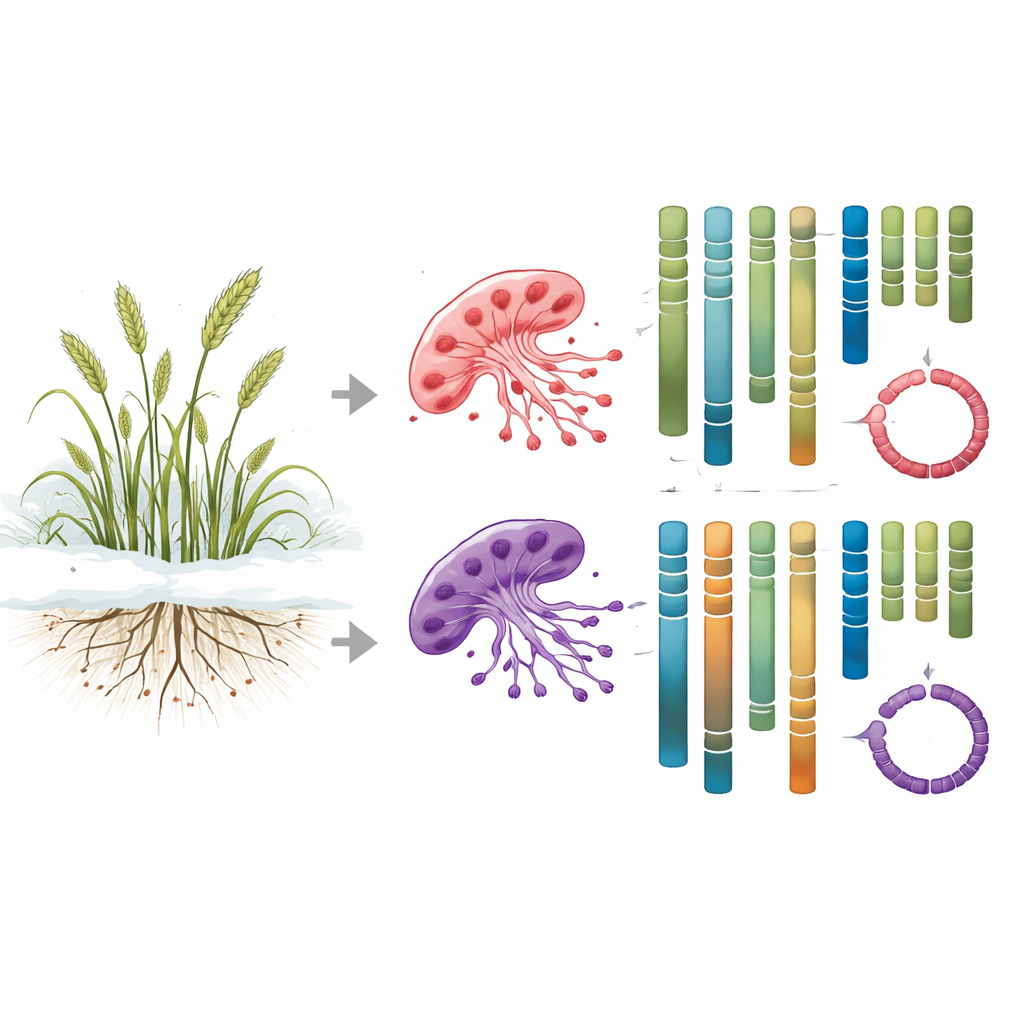
The team combined two cutting-edge DNA sequencing approaches: long reads that span large stretches of DNA and shorter, highly accurate reads that correct small errors. After growing the fungi in the lab and carefully extracting their DNA, they used these technologies to piece together each genome from thousands of fragments, then polished the results to improve accuracy. The final assemblies cover about 36.5 million and 37.3 million DNA letters for M. majus and M. nivale, respectively. Each genome is organized into 13 nuclear chromosomes plus a circular mitochondrial genome, with characteristic repeat patterns at both chromosome ends—a sign that the sequences run from telomere to telomere without gaps.
What the Genomes Say About Similarities and Differences
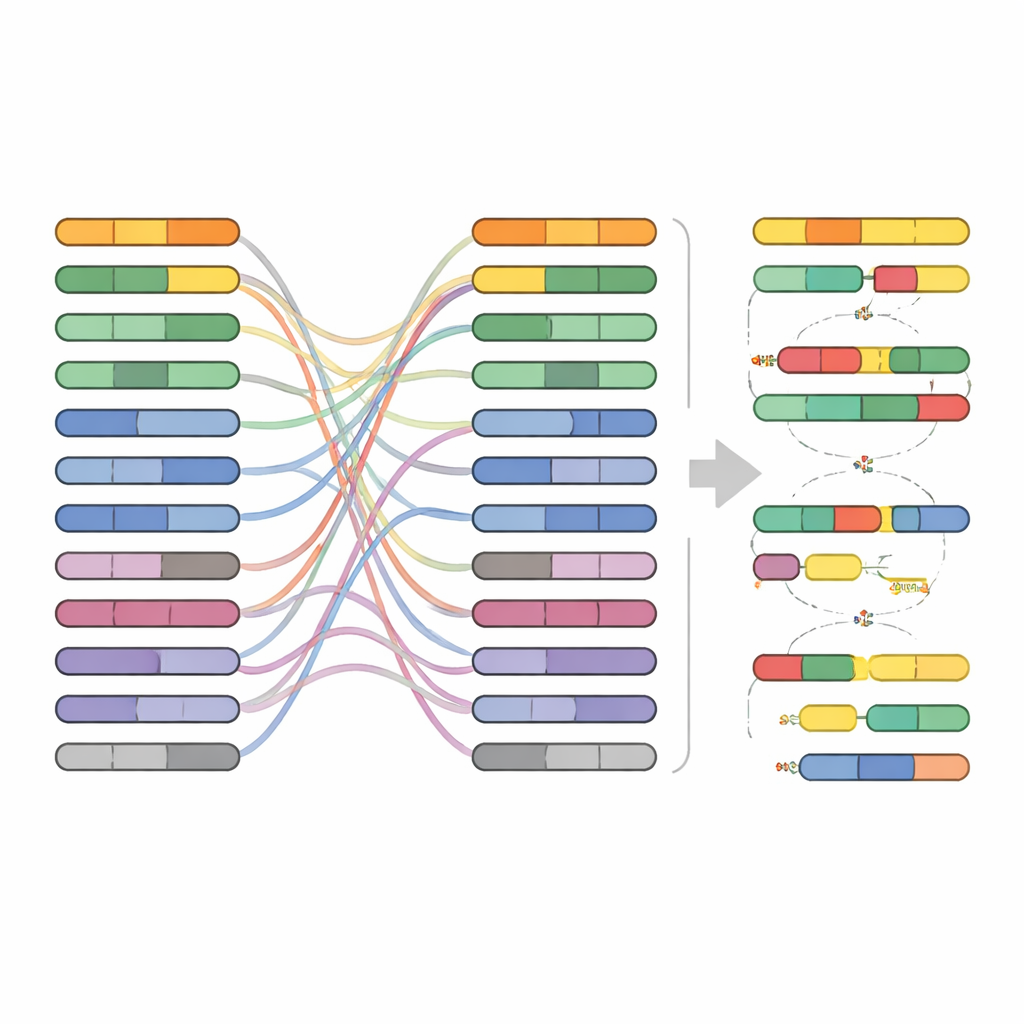
With the full blueprints in hand, the researchers cataloged more than 11,000 genes in each fungus and checked how complete their gene sets were using a widely accepted benchmark; both passed with flying colors. They then compared the two genomes side by side. The chromosomes lined up remarkably well, indicating that the overall structure of the two species is highly similar. Yet the comparison also revealed small rearrangements and regions where one species carries genes that are missing in the other. Many of these genes are linked to secreted proteins and biosynthetic clusters that can influence how the fungus interacts with its host plants, potentially affecting aggressiveness, survival strategies, or sensitivity to treatment.
A New Toolkit for Tackling Snow Mold
Beyond producing neat maps, the study makes all sequencing data, genome assemblies, and analysis code publicly available. This turns the work into a shared toolkit for plant scientists worldwide. With these resources, researchers can now explore which fungal genes are switched on during infection, search for markers to track field populations, and identify targets for breeding wheat with better resistance. In simple terms, the paper delivers a complete genetic reference for the two main pink snow mold fungi, laying the groundwork for smarter, more durable ways to protect wheat and, ultimately, the food supply that depends on it.
Citation: Yang, M., Xu, M., Chen, W. et al. Chromosome-level genome assemblies of the pink snow mold pathogens Microdochium majus and Microdochium nivale. Sci Data 13, 636 (2026). https://doi.org/10.1038/s41597-026-07013-9
Keywords: wheat disease, pink snow mold, fungal genomics, plant pathology, crop protection