Clear Sky Science · en
A longitudinal 1H NMR-based urinary metabolomics dataset in a birth cohort for childhood atopic diseases
Why baby urine can tell us about future allergies
Parents often wonder why some children develop asthma, eczema, or hay fever while others do not, even when they grow up in similar homes. This study shows that ordinary urine samples, collected from babies and young children, can provide rich clues about how their bodies grow, respond to food, and develop allergies. By following nearly 200 children from birth to age five, the researchers created a detailed, publicly available dataset that other scientists can use to better understand – and eventually help prevent – childhood allergic diseases.
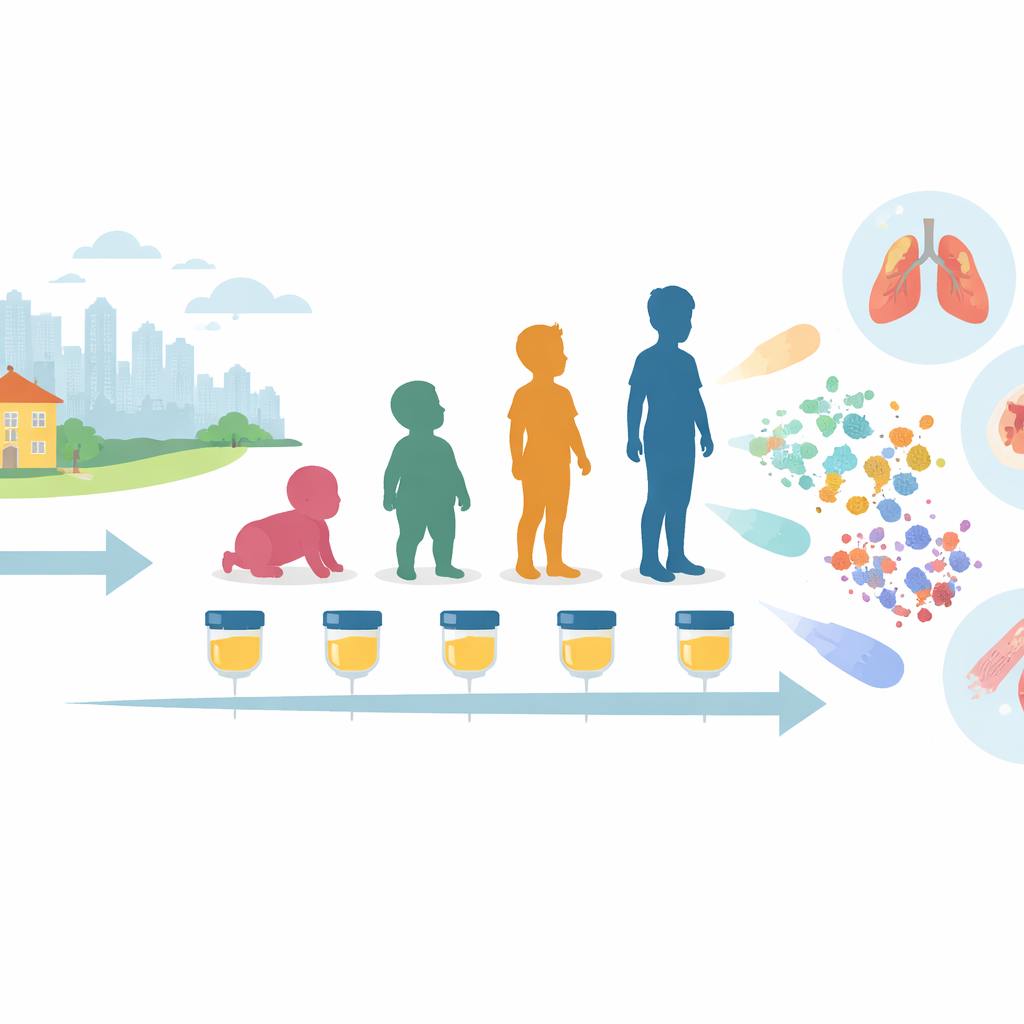
Following children as they grow
The dataset comes from a long-running project in Taiwan that enrolled 260 newborns and closely tracked 198 of them through their fifth birthday. At several key ages – 1 month, 6 months, 1 year, 3 years, and 5 years – the team collected urine samples and measured each child’s weight, height, and body mass index. They also gathered extensive background information, such as birth details, feeding type (breast, formula, or mixed), family history of allergy, exposure to cigarette smoke, and household income. Over the years, doctors regularly checked the children for signs of eczema, asthma, and allergic rhinitis (hay fever–like symptoms) using standardized questionnaires and clinical exams.
Reading the body’s chemical fingerprints
To probe what was happening inside the children’s bodies, the researchers turned to a technique called proton nuclear magnetic resonance, or 1H NMR. In simple terms, this method scans urine to reveal hundreds of tiny molecules that come from diet, gut microbes, growth, and immune activity. Each urine sample was carefully prepared in the same way, then analyzed on the same high-precision NMR machine to ensure that results were consistent across time and children. The resulting spectra – complex patterns of peaks – capture a “chemical fingerprint” of each child at each age, reflecting how their metabolism changes as they grow and encounter new foods and environments.
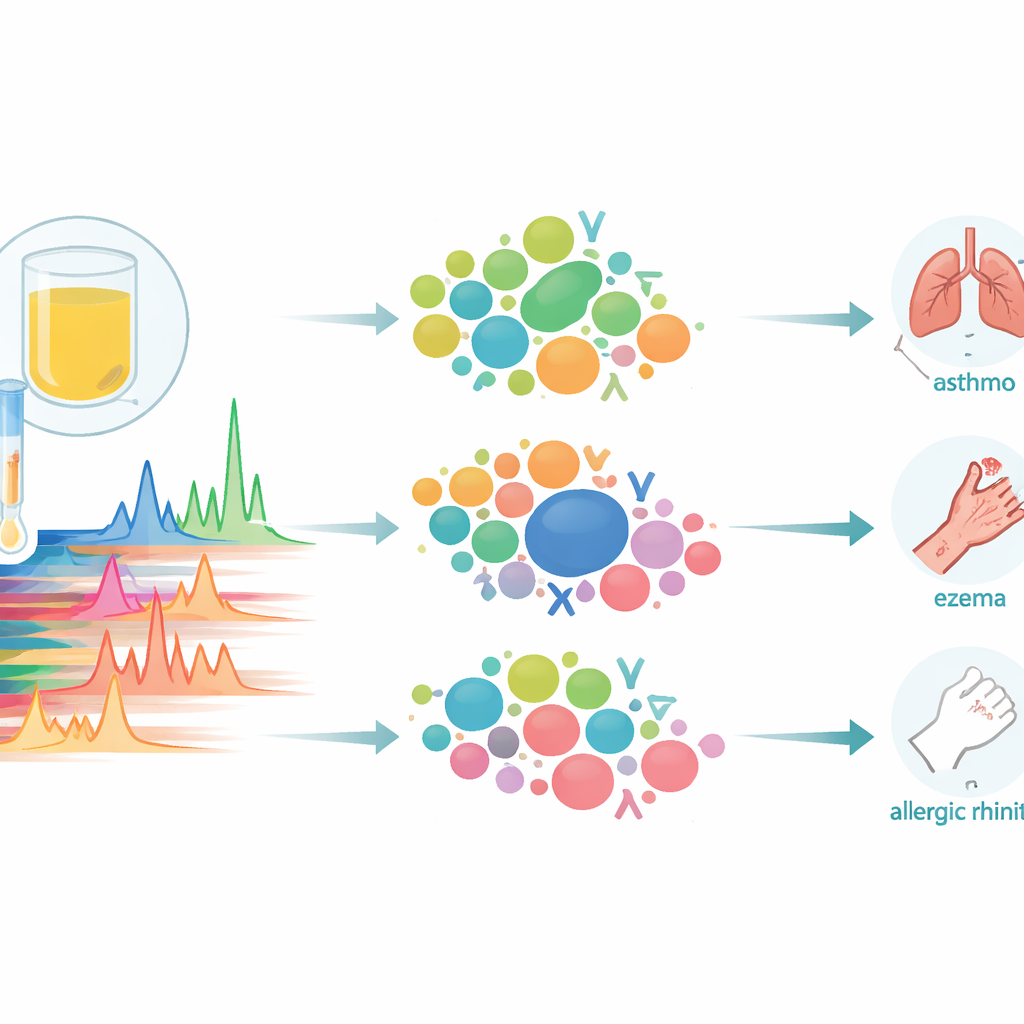
Linking chemistry to allergy risk
Alongside these chemical fingerprints, the team measured total and allergen-specific IgE, an antibody that signals allergic sensitization. At 6 months, 1 year, 3 years, and 5 years, blood tests showed how strongly each child’s immune system reacted to common triggers such as house dust mites, egg, and cow’s milk. By pairing IgE levels, clinical diagnoses of eczema, asthma, and allergic rhinitis, and detailed growth data with the urine profiles, the dataset allows researchers to explore how early metabolic patterns might foreshadow later disease. For example, scientists can now look for combinations of urine molecules that appear before children develop wheezing or itchy skin, or that differ between breastfed and formula-fed infants.
A resource built for many questions
The strength of this work lies less in a single headline finding and more in the rich, reusable resource it provides. All NMR data files and clinical details have been carefully de-identified and organized into open digital repositories. Separate files store information on body size, allergy test results, family history, and more, all linked by anonymous subject numbers so they can be combined for analysis. The researchers also followed strict quality-control steps when collecting and processing samples, helping to ensure that observed differences reflect true biological variation rather than technical noise. In addition, they have shared basic analysis code to help other teams get started.
What this means for families
For non-specialists, the key message is that simple, non-invasive urine samples from infancy can reveal a great deal about a child’s development and potential allergy risk. This study does not yet offer a new clinic test or cure, but it lays essential groundwork by mapping how metabolism, growth, diet, and immune responses weave together in the first five years of life. By making this large, carefully collected dataset publicly available, the authors invite scientists around the world to search for early warning signs and protective patterns. Over time, such insights may help doctors better predict which children are likely to develop asthma, eczema, or hay fever – and guide more personalized advice on nutrition and environment during the most critical early years.
Citation: Kuo, YH., Chiu, CY., Chiang, MH. et al. A longitudinal 1H NMR-based urinary metabolomics dataset in a birth cohort for childhood atopic diseases. Sci Data 13, 640 (2026). https://doi.org/10.1038/s41597-026-07001-z
Keywords: childhood allergies, urinary metabolomics, birth cohort, asthma and eczema, IgE sensitization