Clear Sky Science · en
The chromosome-scale genome assembly and annotation of Rosa bracteata (Macartney Rose)
A Tough Rose with a Hidden Story
Roses are famous for their beauty, but some wild roses also hide powerful survival tricks in their DNA. One of them is the Macartney rose (Rosa bracteata), an evergreen climber known for thriving in heat, resisting disease, and keeping lush foliage year-round. Plant breeders have long hoped to borrow these traits to make garden roses more resilient, yet until now they lacked a detailed map of this species’ genetic blueprint. This study delivers that missing map: a complete, chromosome-scale view of the Macartney rose genome, opening new doors for rose breeding and for understanding how plants adapt to a warming world. 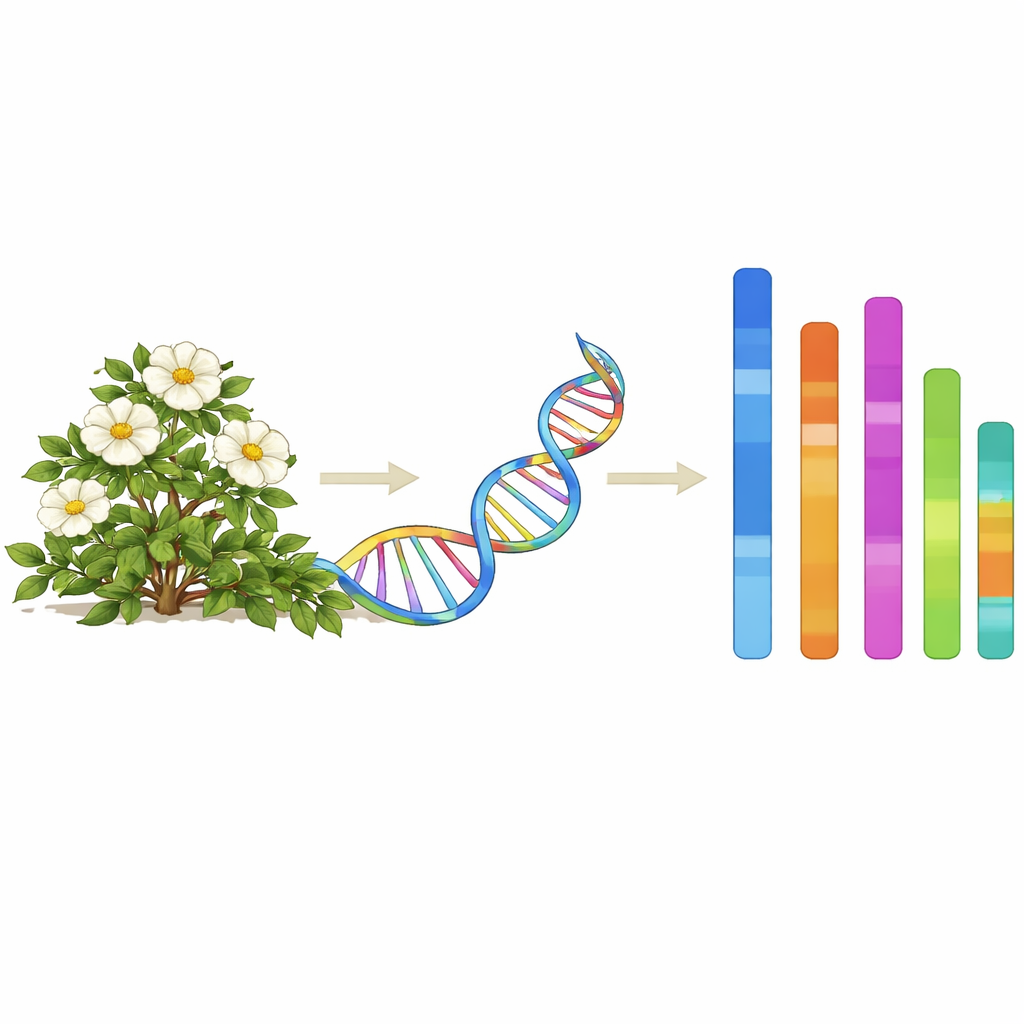
Why This Wild Rose Matters
Macartney rose is the only member of its branch of the rose family, making it a unique piece of the rose family tree. Originally from lowland areas of southern China, it was brought to Europe in the late 1700s and later used as a pollen donor in breeding. Although its direct hybrids are few and often have low fertility, they stand out for strong growth, glossy evergreen leaves, robust disease resistance, and large, simple white flowers. These qualities make Macartney rose an attractive source of hardiness and stress tolerance traits that could help modern roses cope with hotter climates and new pests.
Building a Genetic Map from Scratch
To reveal this rose’s genetic makeup, the researchers combined several cutting-edge DNA sequencing methods. Long stretches of DNA were read using a technology that can follow single molecules, while another technique captured how DNA strands fold and touch inside the cell, helping to piece the fragments into full-length chromosomes. They also sequenced RNA from roots, stems, leaves, and flowers at different stages, which highlights which parts of the DNA are actually used to build the plant. By weaving all these data together, they assembled a genome about 540 million DNA “letters” long, neatly arranged into seven chromosome-like units and thoroughly checked for accuracy and completeness. 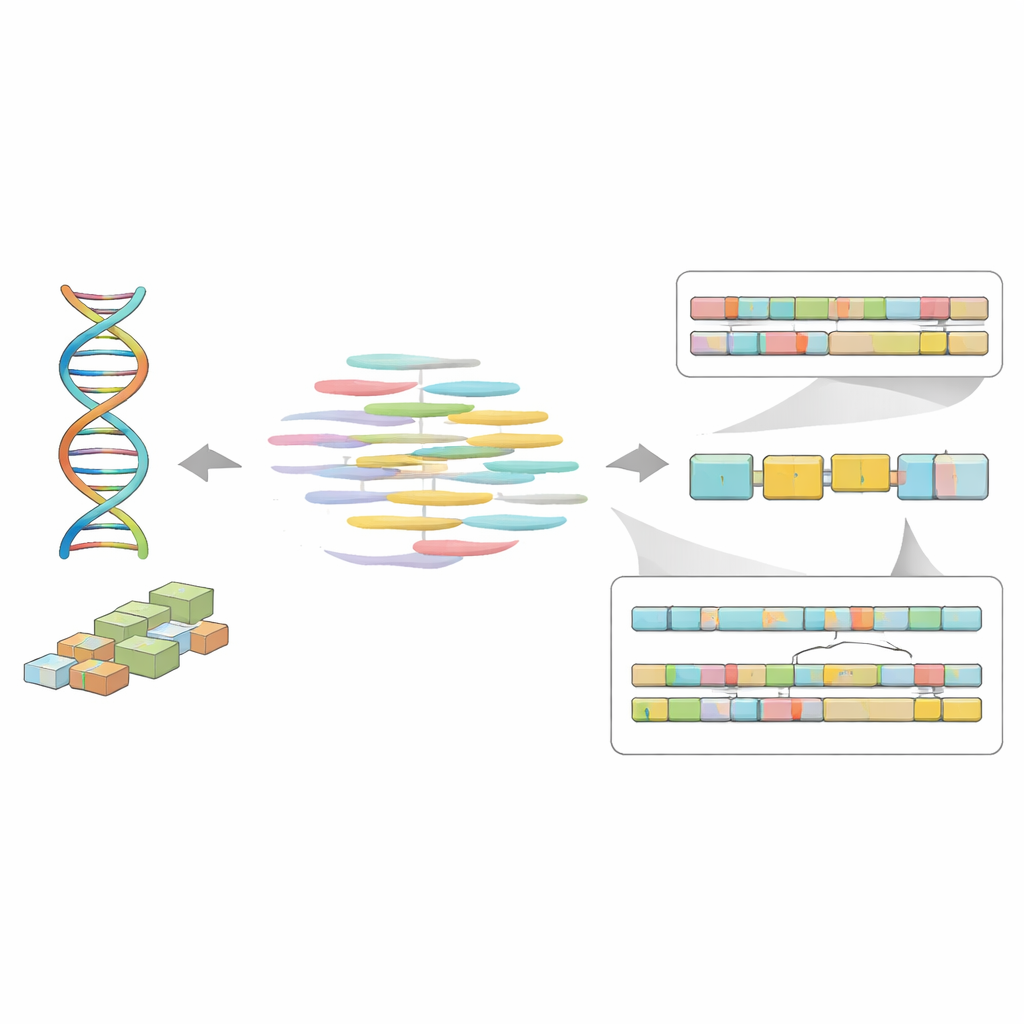
What the Genome Reveals Inside
The finished genome is rich in repeated DNA, which makes up roughly three-fifths of the entire sequence. Within this landscape, the team identified 42,789 genes that code for proteins, and nearly 90% of them could be assigned likely functions by comparison with existing databases. They also cataloged many small pieces of RNA that help control how genes are switched on or off. The high level of quality checks—such as how well new DNA reads match back to the assembled genome—shows that this genetic map is both detailed and reliable, providing a strong foundation for future studies of how this plant grows, flowers, and defends itself.
Fitting into the Rose Family Tree
Because many rose varieties have now been sequenced, the team could compare the Macartney rose genome with those of other wild and cultivated roses. They traced thousands of shared genes to build an updated family tree and examined how stretches of chromosomes match up across species. The Macartney rose fills an important gap, representing a previously unsampled section of the genus. The high degree of structural similarity among rose genomes suggests that key traits—like heat tolerance, evergreen growth, or unique leaf bracts—can be linked to specific genes or regions that breeders can now search for with precision.
From Gene Map to Better Roses
For non-specialists, the main takeaway is that scientists have produced a high-resolution, trustworthy genetic map of a particularly tough wild rose. With this map, breeders and researchers can more easily find and track genes connected to heat tolerance, disease resistance, evergreen leaves, and distinctive flower features, and then introduce them into modern cultivars. In practical terms, this work sets the stage for creating roses that stay healthy and beautiful under harsher conditions, helping gardens and commercial flower production adapt as the climate changes.
Citation: Li, R., He, Y., Xiang, F. et al. The chromosome-scale genome assembly and annotation of Rosa bracteata (Macartney Rose). Sci Data 13, 627 (2026). https://doi.org/10.1038/s41597-026-06997-8
Keywords: rose genome, Rosa bracteata, plant breeding, heat tolerance, wild roses