Clear Sky Science · en
A chromosome-level genome assembly of two-spotted cricket, Gryllus bimaculatus (Orthoptera: Grylloidea)
Why Crickets and Their DNA Matter
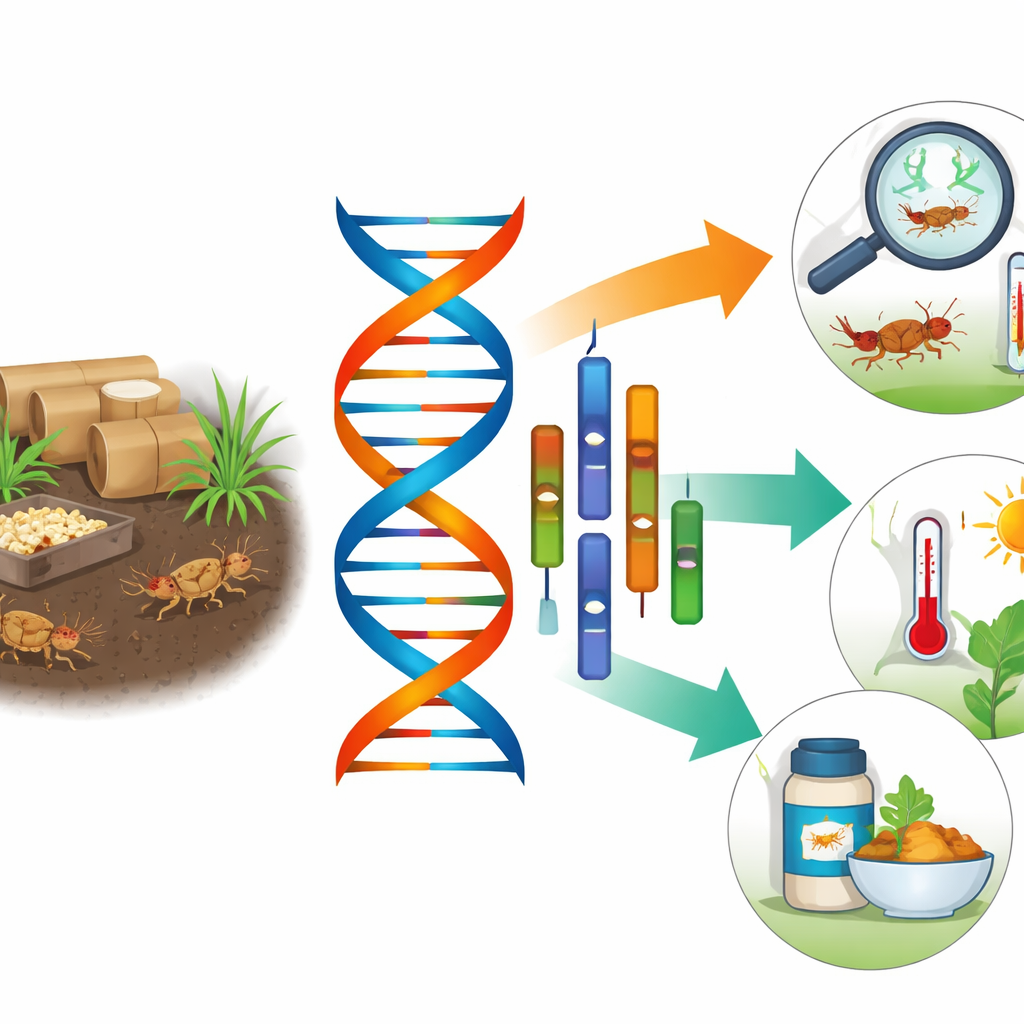
Crickets might seem like simple backyard insects, but they are becoming important players in the search for sustainable food. The two-spotted cricket, Gryllus bimaculatus, is rich in protein and already used as feed for livestock, pets, and in some regions as food for people. Yet until now, scientists lacked a detailed genetic "blueprint" for this species, limiting efforts to improve how it is farmed, understand its behavior, and explore its potential as a resilient food source in a changing climate.
From Cricket Farm to High-Tech Sequencers
The research team began by collecting two-spotted crickets from a controlled breeding chamber in southern China, where temperature, light, and humidity are carefully managed. After carefully cleaning the insects to remove surface microbes, they extracted DNA and RNA, the molecules that carry genetic information and show which genes are active. They then used several cutting-edge sequencing technologies to read the cricket’s genetic code in different ways: very long DNA reads from one platform, short but highly accurate reads from another, and special Hi-C data that reveal which pieces of DNA sit close together inside chromosomes. Altogether, they generated almost 500 billion DNA bases of data—enough to read the cricket’s genome many times over.
Building a Complete Genetic Blueprint
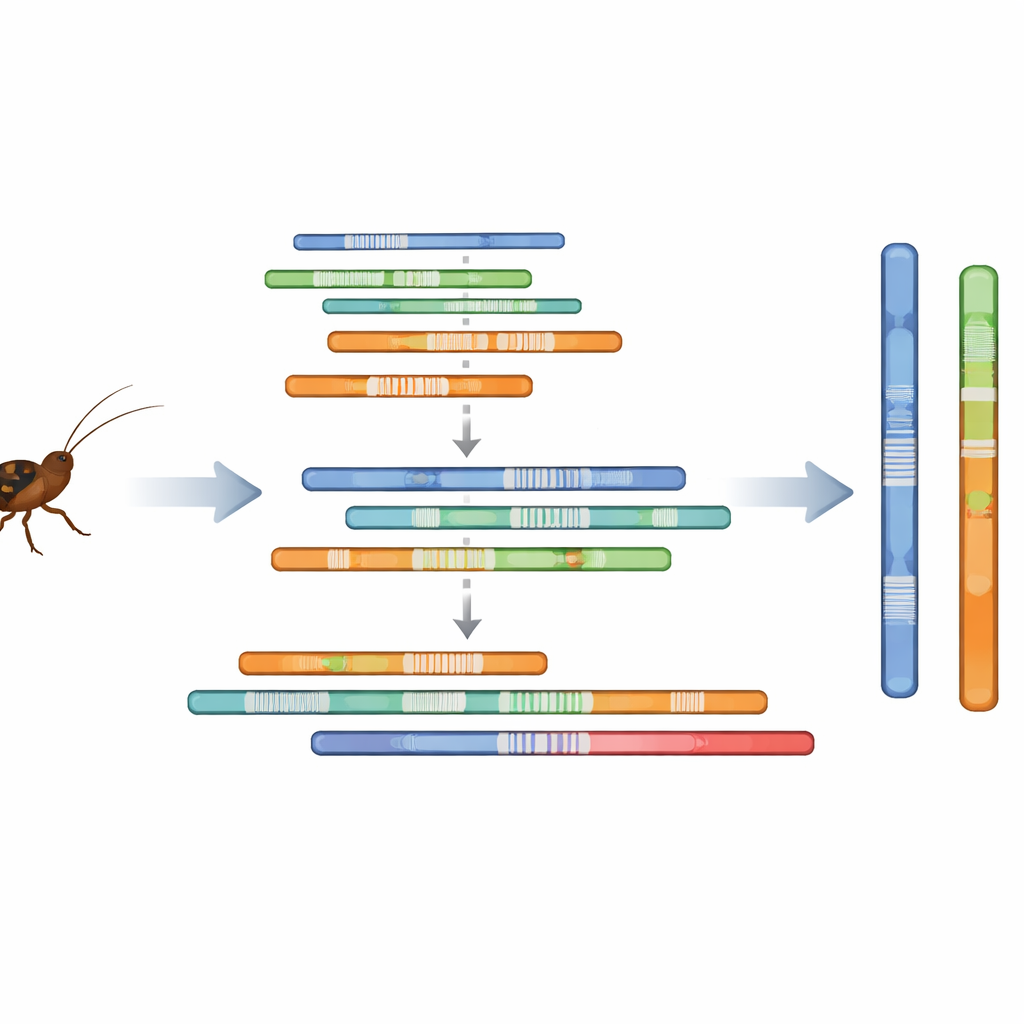
Turning billions of raw DNA snippets into a coherent map of the cricket genome is like assembling an enormous jigsaw puzzle without a picture on the box. The researchers used specialized software to first piece together long stretches of DNA and then to remove extra, duplicated fragments that arise because each cricket carries two copies of its genome. Next, they used the Hi-C data to figure out which pieces belong on the same chromosome and in what order, effectively folding the puzzle into 15 large chromosome-sized segments. The final assembly spans about 1.66 billion DNA letters—roughly half the size of the human genome—with impressively long continuous stretches, showing that the pieces fit together with high confidence.
What the Cricket Genome Contains
With the basic map in place, the team set out to catalog its contents. Nearly 42 percent of the genome was made up of repeated DNA elements, including mobile sequences that can copy and move around and simpler short repeats. On top of this background, they identified 14,457 protein-coding genes—the instructions for building the cricket’s body and running its cells. To be sure these predictions were reliable, the scientists combined evidence from the cricket’s own RNA, comparison with known genes from other insects such as fruit flies and honey bees, and large protein databases. Over 80 percent of the genes could be linked to known families, functions, or cellular pathways. They also annotated more than 8,000 non-coding RNAs, small genetic pieces that help control how genes are used rather than directly making proteins.
Checking the Quality of the Map
High-quality genomes are essential if other researchers are to trust and build on them. The team therefore put their assembly through several independent checks. Statistical analyses of the DNA reads showed that the sequence is both accurate and complete, with almost all test genes expected in insects present and correctly assembled. The Hi-C contact map—a kind of interaction fingerprint of DNA inside the nucleus—showed clear, continuous patterns along each chromosome, indicating that the large-scale structure is correct. When they aligned fresh DNA and RNA reads back to the new genome, the vast majority landed exactly where expected, further confirming that the map provides a faithful representation of the cricket’s genetic material.
What This Means for Food and Future Research
By delivering a detailed, chromosome-level genome for the two-spotted cricket, this study creates a powerful resource for both basic science and practical applications. For scientists, it opens the door to exploring how crickets sense chemicals, communicate by sound, and adapt to their environments at the genetic level. For agriculture and food security, it offers the foundation needed to breed crickets that grow better on less feed, handle heat or crowding, or provide more consistent nutrition. In short, the new genome map turns Gryllus bimaculatus into a modern genetic model, helping transform a familiar chirping insect into a well-understood, sustainable food and research resource.
Citation: Li, X., Wang, Y., Lu, C. et al. A chromosome-level genome assembly of two-spotted cricket, Gryllus bimaculatus (Orthoptera: Grylloidea). Sci Data 13, 690 (2026). https://doi.org/10.1038/s41597-026-06995-w
Keywords: cricket genome, edible insects, sustainable protein, chromosome assembly, insect genetics