Clear Sky Science · en
Inter-agency Coordination for Rural Power Restoration After A Natural Disaster in the United States: A Qualitative Interview Dataset
Why Recovering Rural Power Matters
When a major storm knocks out electricity, most of us just see dark homes and spoiled food. But behind the scenes, a fast and fair recovery depends on dozens of agencies learning to work together under pressure. This article describes a new public dataset built from interviews with the people who coordinated power restoration after Hurricane Helene in 2024. Their stories reveal how rural communities, which often have fewer resources and more fragile infrastructure, struggle and improvise to bring the lights back on—and what we can learn to do better next time.
A Powerful Storm and a Vulnerable Region
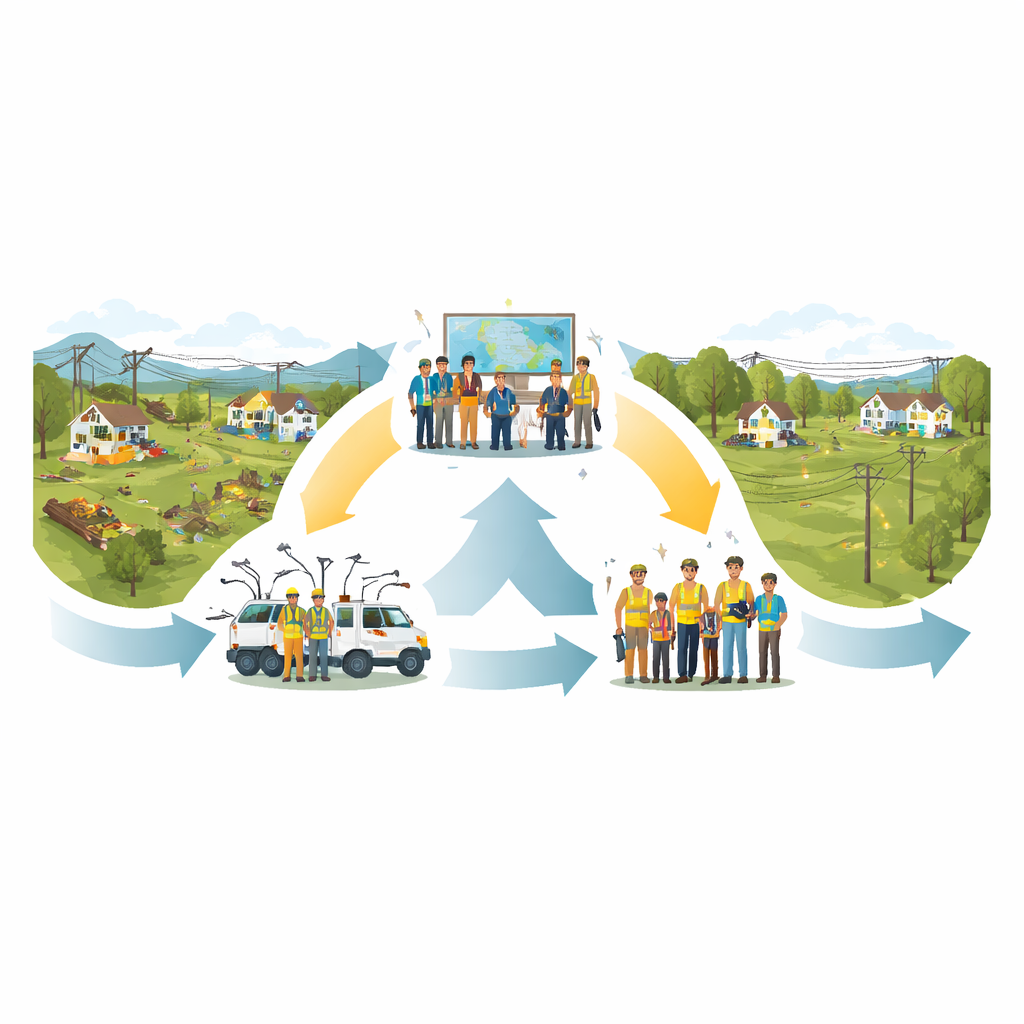
Hurricane Helene slammed into the largely rural Upstate region of South Carolina and nearby inland counties in North Carolina in September 2024. The area was not used to direct hits from hurricanes, and the combination of soaked soil and dense forests led to massive treefall. More than 90% of residents lost power, with some waiting up to two weeks for service to be restored. These outages were especially hard on small towns and rural households, where backup options are limited and medical or economic safety nets are often thin. The event laid bare how dependent modern life is on power, and how fragile that lifeline can be outside big cities.
Listening to the People in the Trenches
To understand what really happened during the recovery, researchers from Clemson University carried out in-depth interviews in mid-2025 with 21 people who had central roles in restoring power. They spoke with managers from electric and water utilities, local and state government officials, emergency coordinators, and leaders of community and nonprofit groups. The conversations explored who did what, how different organizations communicated, how they adapted their routines, and how they tried to keep crews and communities working in sync. Rather than counting damage or repair times, the project focuses on lived experience: which decisions helped, which habits got in the way, and how people improvised when plans failed.
How Teams Click—or Fall Out of Step
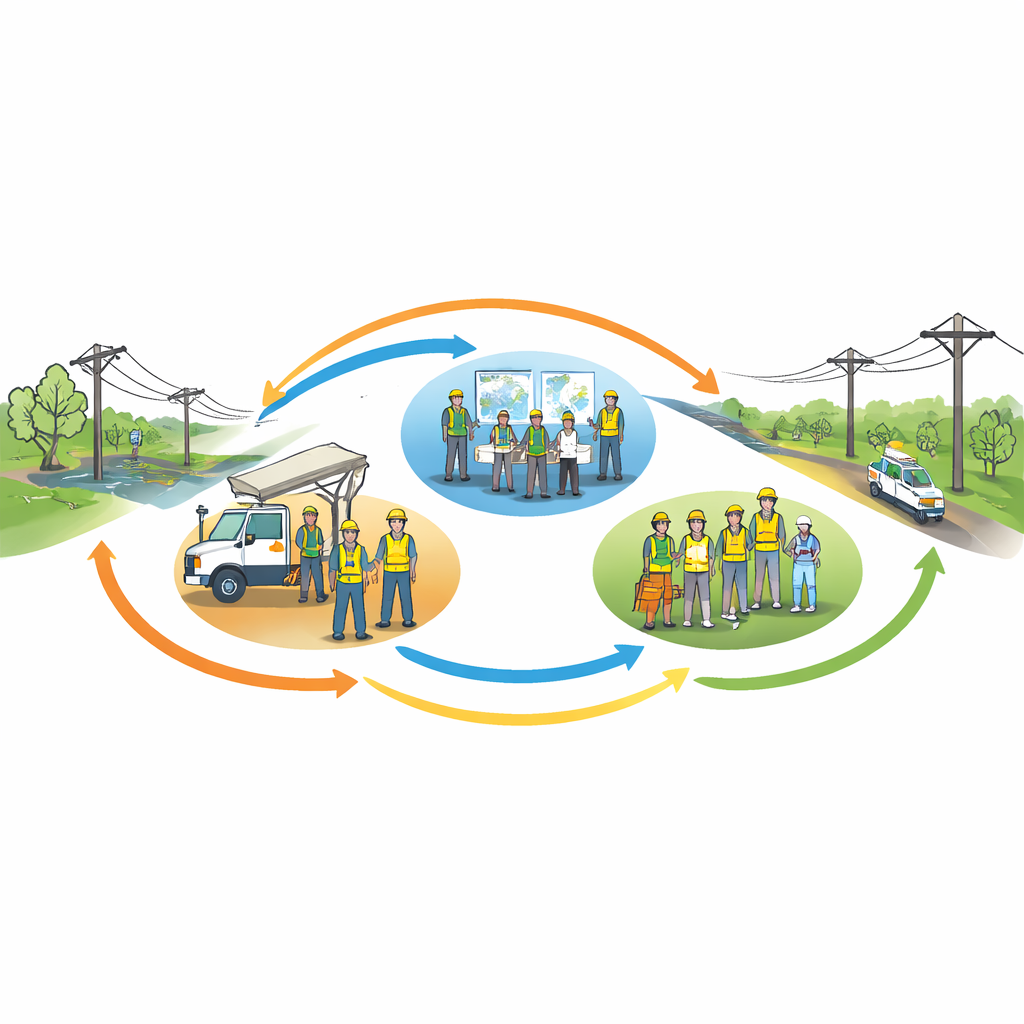
A key idea in the study is "team flow"—those moments when a group feels deeply focused, shares the same goal, and moves smoothly from one action to the next. The interview protocol was designed to uncover the conditions that make this possible, without asking people to use academic language. Instead of talking about "flow" directly, interviewers asked about clear goals, real-time feedback, trust across agencies, and how people handled confusion or misinformation. Stories about broken radios, blocked roads, or mismatched priorities help show how fragile coordination can be in remote, hilly areas where physical damage can sever not only power lines but also the communication links that keep teams aligned.
What the Dataset Contains
The resulting dataset, now hosted on Harvard Dataverse, includes three parts: anonymized transcripts of all 21 interviews, the question guide used in the conversations, and a spreadsheet describing each participant’s general role and organization type without revealing identities. Participants span core functions such as emergency command centers, field repair, logistics, public communication, and community support. The research team carefully checked and cleaned the transcripts, removed identifying details, and used qualitative analysis software to confirm that the interviews consistently covered the main themes. They continued interviewing until new conversations stopped adding fresh ideas, suggesting that the dataset offers a solid cross-section of how the recovery actually unfolded.
How Researchers and Communities Can Use It
This open dataset gives scholars, planners, and local leaders a rare window into the social side of disaster recovery, especially in rural settings. It can help test ideas about how organizations learn, how information breakdowns slow repairs, and how trust between agencies and communities shapes outcomes. The authors show, for example, that when storm damage destroys communication equipment, it not only cuts electricity but also interrupts the feedback loops that crews rely on to coordinate in real time. By combining these rich accounts with future surveys and computer models, researchers hope to design more resilient systems, from better emergency plans to mobile clean-energy microgrids tailored to the reality of rural life.
Lessons for Future Storms
In plain terms, this article concludes that successful power restoration after a major disaster is not just about wires, poles, and trucks—it is about people and relationships. Rural communities face special hurdles: long distances, fewer spare crews, weaker communication networks, and residents who may be hit harder by long outages. By preserving detailed memories from those who managed the response to Hurricane Helene, this dataset gives future decision-makers a practical playbook. It highlights the importance of clear goals, open lines of communication, shared trust, and flexible teamwork, offering clues on how to bring the lights back faster and more fairly when the next big storm arrives.
Citation: Shao, R., Piratla, K., Chen, Cf. et al. Inter-agency Coordination for Rural Power Restoration After A Natural Disaster in the United States: A Qualitative Interview Dataset. Sci Data 13, 692 (2026). https://doi.org/10.1038/s41597-026-06994-x
Keywords: rural disaster recovery, power outage restoration, interagency coordination, Hurricane Helene, infrastructure resilience