Clear Sky Science · en
An in-depth transcriptomic atlas deciphering traditional Chinese medicine mechanisms and disease associations
Ancient Remedies Meet Modern Data
Traditional Chinese Medicine (TCM) has been used for centuries to treat conditions ranging from cancer to chronic inflammation, yet how these remedies act inside the body has often remained mysterious. This study brings a modern twist to that story by using large-scale gene activity measurements to create a detailed “atlas” of how many different herbs and their ingredients affect human cells across a variety of diseases. The result is a publicly available resource that helps scientists connect ancient remedies to precise biological effects, opening the door to better therapies and more targeted use of TCM in modern medicine.
Bringing Scattered Studies Under One Roof
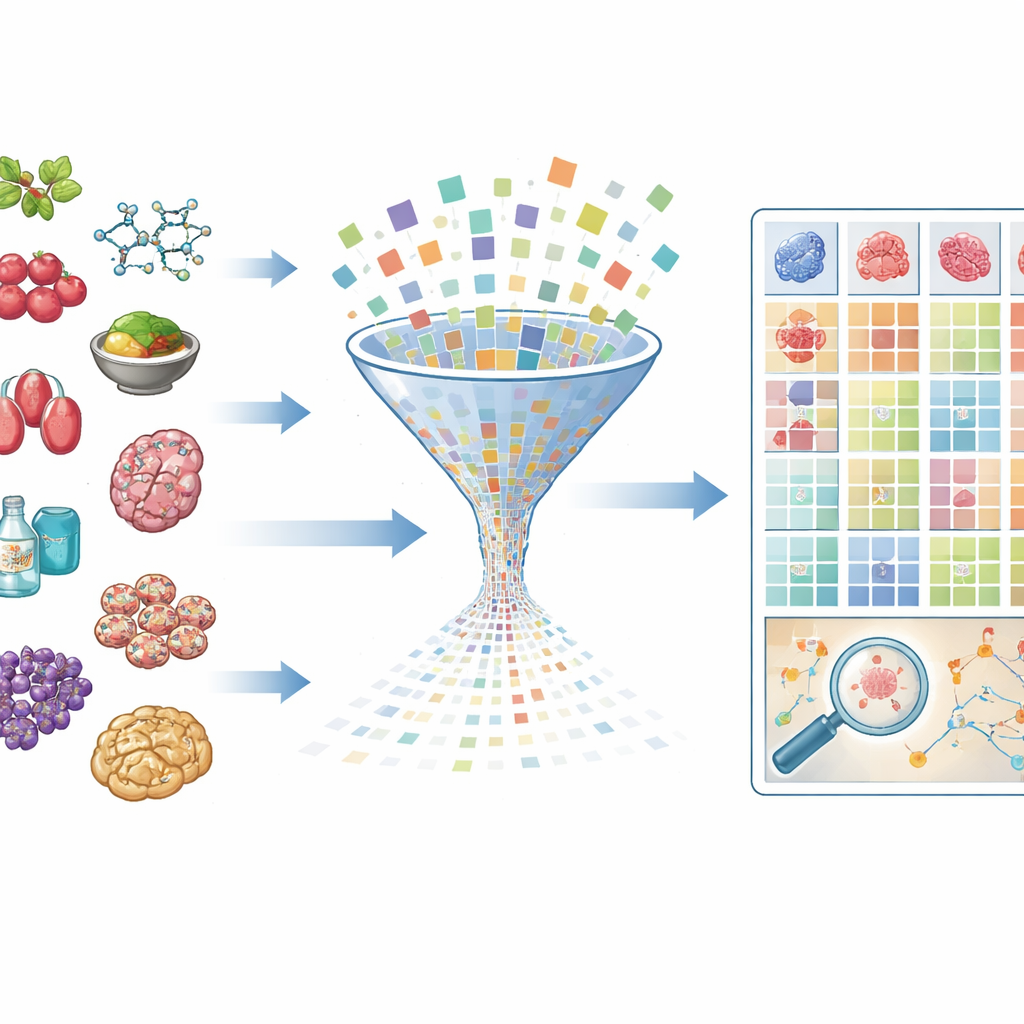
Over the past decade, many labs have tested TCM herbs and purified compounds on human tissues and cell lines, then measured how genes in those cells were turned on or off. These results are stored in public databases, but they were produced using different experimental designs, platforms, and naming systems. That patchwork makes it hard to compare results or draw big-picture conclusions. The authors tackled this problem by systematically searching these databases for studies involving TCM treatments, focusing on experiments that included both treated and control samples from human-derived cells or tissues and that provided usable raw or processed gene expression data.
Building a Unified Gene Activity Atlas
From this search, the team assembled 362 individual datasets made up of 1,471 samples. These covered 27 distinct TCMs, such as Astragali Radix and Ginkgo biloba, and 137 active ingredients like curcumin and quercetin, tested across 26 disease settings. All gene activity measurements were reprocessed using the same steps, including a standard mathematical transformation and consistent naming of genes based on a current human reference genome. The researchers then compared treated samples to controls to pinpoint which genes increased or decreased their activity after TCM treatment, tracking both protein-coding genes and long non-coding RNAs, important regulators that do not make proteins but strongly influence cell behavior.
From Raw Signals to Biological Meaning
Having identified thousands of treatment-responsive genes, the authors next asked what these changes might mean biologically. They used established computational tools to test whether certain cellular functions or signaling routes were over-represented among the affected genes. This allowed them to map TCM effects onto known pathways related to immunity, cell death, inflammation, and other processes relevant to disease. The team also carefully organized all supporting information—such as cell type, treatment time, dose, and disease context—into standardized tables, and stored gene expression, differential gene lists, and pathway results in a well-structured online repository so others can explore or reuse the data with ease.
Checking Reliability and Clinical Relevance
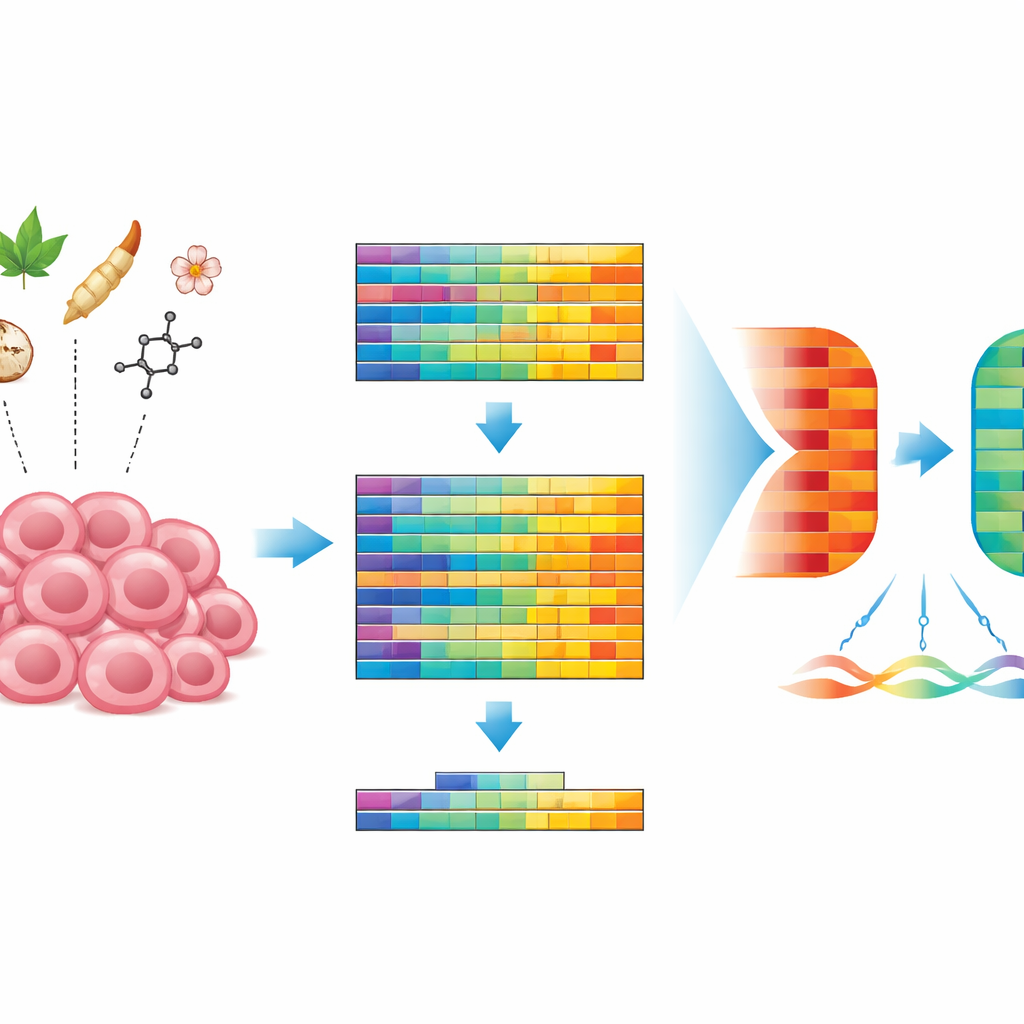
To make sure their atlas reflects real biology rather than technical noise, the researchers ran a series of validation checks. They showed that repeated samples under the same TCM treatment were highly similar, indicating strong reproducibility. They then compared TCM-induced gene patterns with those seen in large cancer datasets. In several cases, well-known anticancer herbs such as Astragali Radix, Ginseng, and Atractylodis Rhizoma produced gene activity changes that opposed the patterns seen in colon, bladder, or breast tumors—mirroring clinical and experimental evidence that these remedies can slow tumor growth or improve outcomes. The team also confirmed that many genes known from past studies to be targets of specific herbs were indeed shifted by those treatments in their atlas, and that these genes clustered in pathways tied to immune and inflammatory control.
A New Map for Future TCM Research
In practical terms, this work delivers a comprehensive, standardized map of how a wide range of TCM herbs and ingredients reshape gene activity in human disease contexts. For non-specialists, the key takeaway is that ancient remedies are beginning to be understood at the level of individual genes and pathways, giving scientists a powerful tool to test which herbs might help in particular conditions and why. As more in-depth studies and animal data are added in the future, this transcriptomic atlas could guide the design of new combination therapies, suggest fresh uses for familiar herbs, and help bridge traditional medicine and modern precision healthcare.
Citation: Zhao, H., Ben, P., Liu, Z. et al. An in-depth transcriptomic atlas deciphering traditional Chinese medicine mechanisms and disease associations. Sci Data 13, 608 (2026). https://doi.org/10.1038/s41597-026-06988-9
Keywords: traditional Chinese medicine, gene expression, transcriptomic atlas, cancer therapy, drug mechanisms