Clear Sky Science · en
Kinetic Human Movement Ontology: a semantic terminology model to symbolically represent physiological movement
Why Mapping Movement Matters
Every step, stretch, or swim stroke you make is powered by a coordinated dance of muscles, bones, and nerves. Yet most health data systems record only that you "exercised"—not which body parts moved, how they worked together, or how this might affect disease risk. This paper introduces a new digital vocabulary, the Kinetic Human Movement Ontology (KHMO), designed to describe human movement in precise, computer-readable detail. By turning movement into structured data, KHMO aims to help researchers better understand how specific activities protect against chronic diseases such as cancer and to make sense of the flood of information from wearables, cameras, and clinical studies.
From Simple Steps to Complex Health
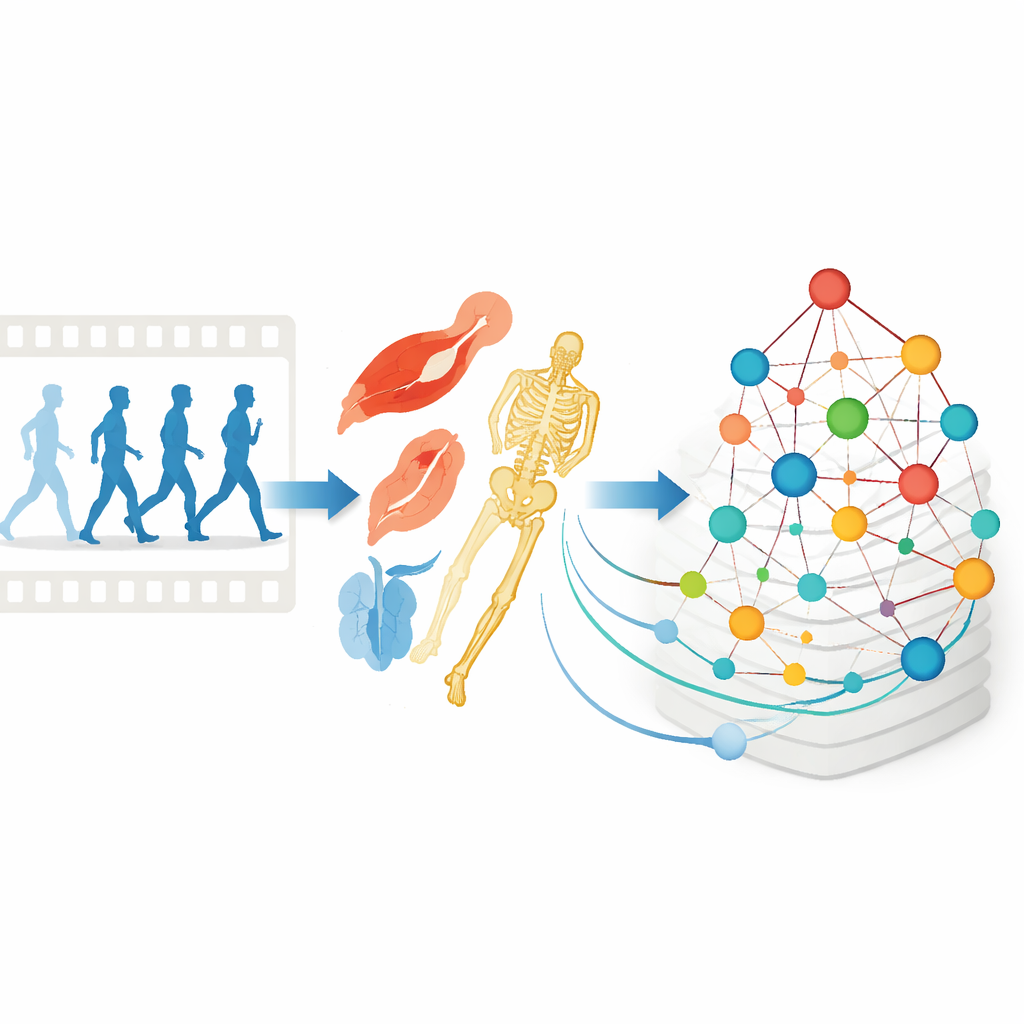
Human movement is central to health. When you walk, lift a weight, or glide through a pool, your musculoskeletal system—bones, muscles, ligaments, and joints—works as a highly tuned machine. Research has shown that regular physical activity helps lower the risk of many cancers, reduces body fat, and alters hormones and signaling molecules linked to tumor growth. Both aerobic exercise, like brisk walking or swimming, and muscle-strengthening activities, like resistance training, contribute to better survival and lower cancer risk. But while we know that “more of the right movement” is good, it has been much harder to describe exactly which movements, which body parts, and which patterns make the biggest difference.
Building a Shared Language for Motion
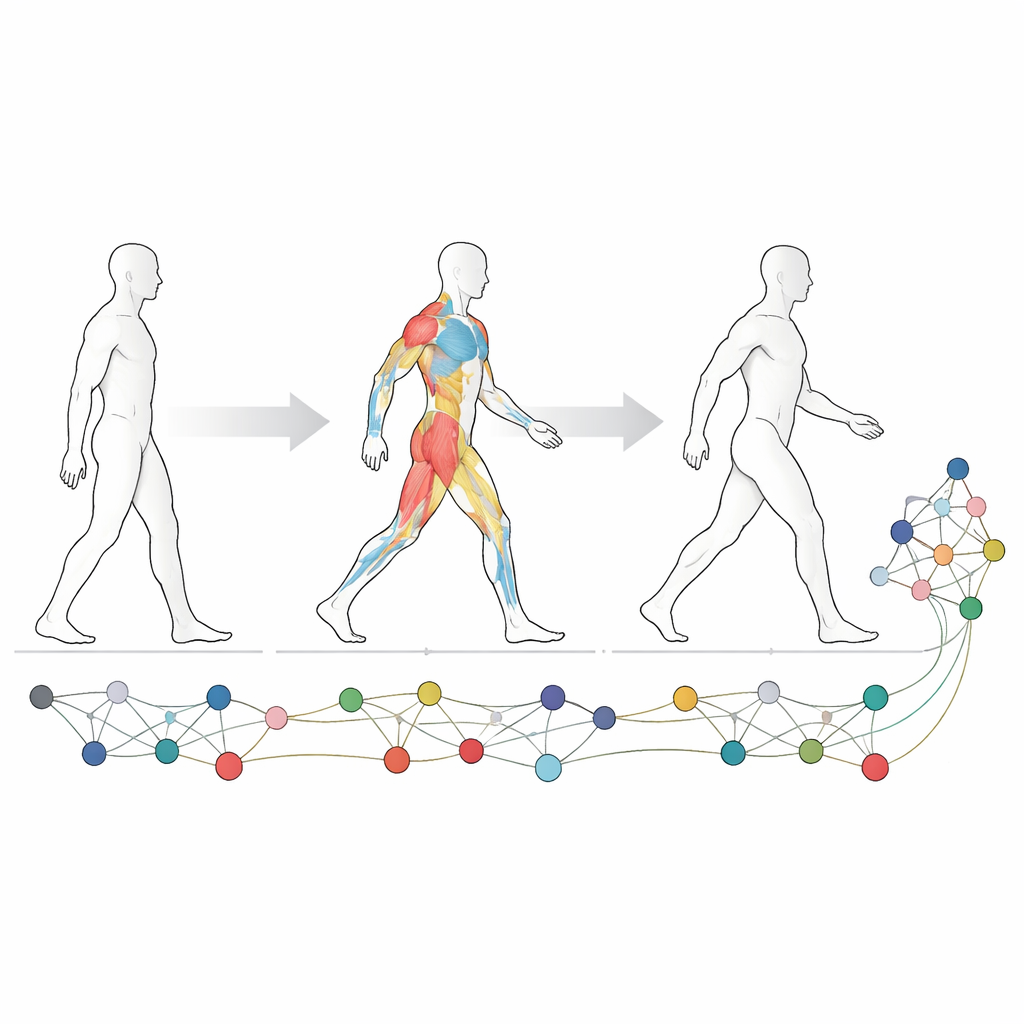
To tackle this, the authors created KHMO, a formal model for describing how the human body moves. They began with a simple idea borrowed from animation and film: any movement can be broken down into a sequence of frames, each capturing a posture at a particular moment. In KHMO, a basic movement starts with one stance and ends with another, with specific anatomical parts—such as particular muscles or bones—helping to make that transition happen. The model connects planned activities (like “a swimming stroke” or “a Tai Chi form”) to the smaller movements and stances that compose them, and to the underlying body parts and physiological motions that enable them.
Connecting Anatomy, Motion, and Data
KHMO does not reinvent anatomical terms; instead, it weaves together established biomedical vocabularies into a single, coherent structure focused on movement. It reuses concepts from well-known ontology projects that already define body parts, behaviors, and experiments. Using tools for ontology editing and term extraction, the team linked human stances, body-part movements, and anatomical entities such as specific muscles into one integrated knowledge base. They expanded this resource using real-world examples, including Tai Chi and swimming, which involve rich, whole-body coordination and are known to benefit health. In the process, they added more than 1,600 terms for muscles and over 700 data entries describing aquatic exercise movements, allowing very fine-grained mapping between a stroke phase and the muscles that power it.
Testing Quality and Practical Use
To ensure KHMO was not just large but also reliable, the authors evaluated it using a semiotic framework that scores how well an ontology is structured (syntax), how clear and consistent its terms are (semantics), and how broadly it covers its domain (pragmatics). KHMO scored above the average of several existing exercise and physical activity ontologies, especially in domain coverage. Automated reasoning tools found no logical contradictions in its definitions and relationships. The team then showed how researchers can query KHMO to answer practical questions: Which physiological motions occur in a given movement? Which anatomical parts participate? How do specific muscles coordinate with particular motions? In addition, they built software that converts spreadsheet-based movement descriptions into machine-readable knowledge graphs linked to KHMO, and that can also attach images of postures to the corresponding stances.
Future Paths for Smarter Movement Science
KHMO is presented as a foundation for future tools that can connect rich movement descriptions with health outcomes. Because it is publicly available and aligned with widely used biomedical ontologies, other researchers can reuse and extend it in sports science, rehabilitation, robotics, and cancer prevention. As motion capture systems, wearables, and pose-estimation algorithms generate ever more detailed traces of how we move, KHMO offers a way to translate those traces into a common language. In plain terms, it is a structured dictionary that helps computers “understand” the posture-by-posture story of human movement, making it easier to study which specific motions, muscles, and patterns best support lifelong health.
Citation: Amith, M., Ha, V., Nguyen, E. et al. Kinetic Human Movement Ontology: a semantic terminology model to symbolically represent physiological movement. Sci Data 13, 696 (2026). https://doi.org/10.1038/s41597-026-06984-z
Keywords: human movement, exercise and cancer, biomedical ontology, knowledge graph, wearable sensor data