Clear Sky Science · en
A high-quality chromosome-level genome assembly of a feather star Glyptometra sp. from a deep seamount
Ancient Sea Flowers in the Deep
Far below the ocean’s surface, on a lonely underwater mountain in the South China Sea, lives a delicate animal that looks more like a flower than a creature: a feather star. These relatives of starfish and sea urchins wave their many arms to catch drifting food in the dark. Until now, scientists knew little about how such animals have adapted to life under crushing pressure and constant night. This study changes that by decoding, in remarkable detail, the full genetic instruction book of a deep‑sea feather star, opening a new window onto how life survives and evolves in the deep ocean.
A Living Link to Earth’s Past
Feather stars belong to a group called crinoids, among the oldest lineages of spiny‑skinned animals. Their ancestors once crowded warm, shallow seas hundreds of millions of years ago and left behind rich fossil deposits. After a massive extinction at the end of the Permian period, most crinoid branches vanished, and only a fraction of their former diversity remains today. Modern crinoids include stemmed “sea lilies” anchored to the seafloor and free‑moving feather stars. While fossils tell us how their bodies changed through time, they cannot fully reveal how these animals coped with shifting climates, predators, and habitats. Genetics can fill that gap—but until this work, no high‑quality whole genome from a deep‑sea feather star was available.
From Seamount to Sequencer
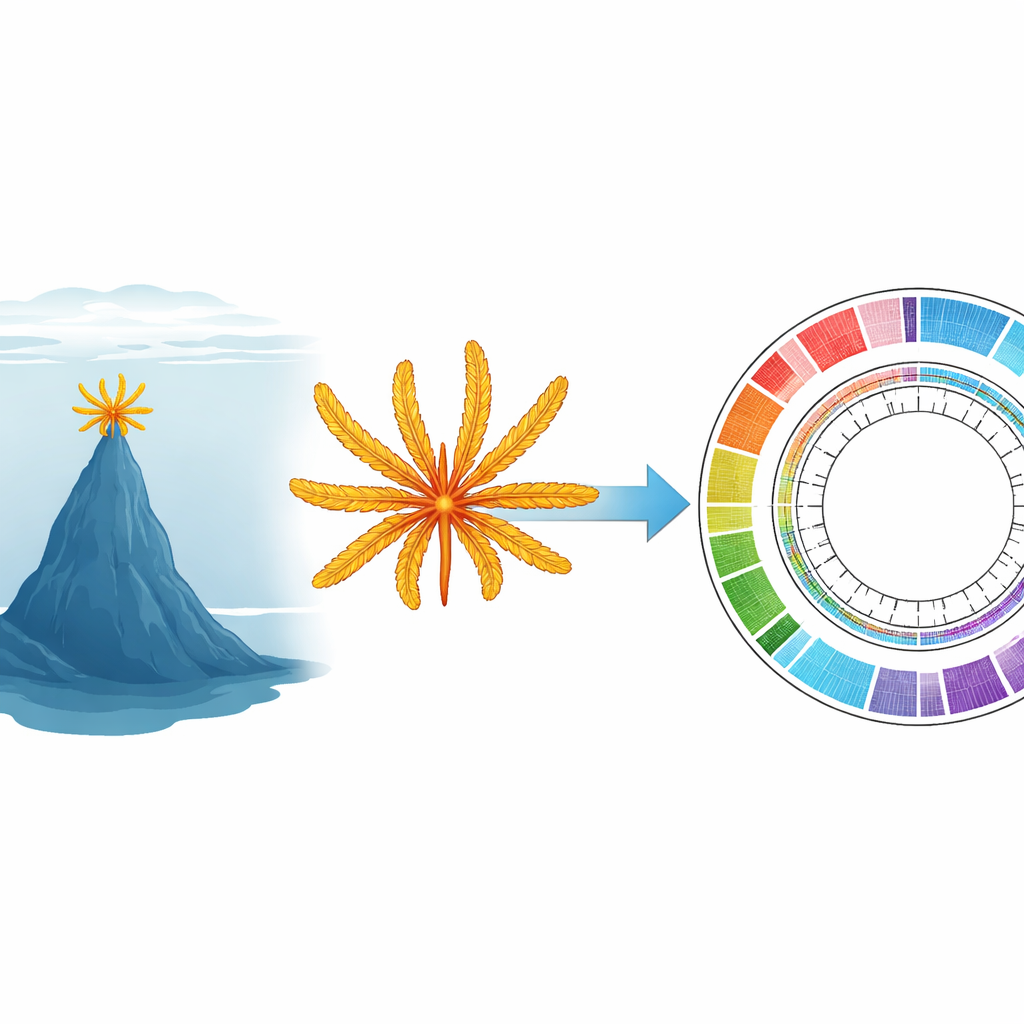
The researchers collected a feather star known as Glyptometra sp. from nearly 800 meters down on the Zhenbei seamount in the South China Sea, using a remotely operated vehicle. Back on the ship, they carefully preserved parts of the animal for traditional identification and froze small tissue pieces for genetic work. In the laboratory, they extracted DNA and built several kinds of sequencing libraries. One produced many short, accurate snippets of DNA; another generated long stretches that help bridge gaps; and a third, called Hi‑C, captured how pieces of DNA are physically folded and packed inside the cell nucleus. They also sequenced RNA—the intermediate molecules made when genes are switched on—to help pinpoint where genes lie in the genome.
Piecing Together a Giant Genome
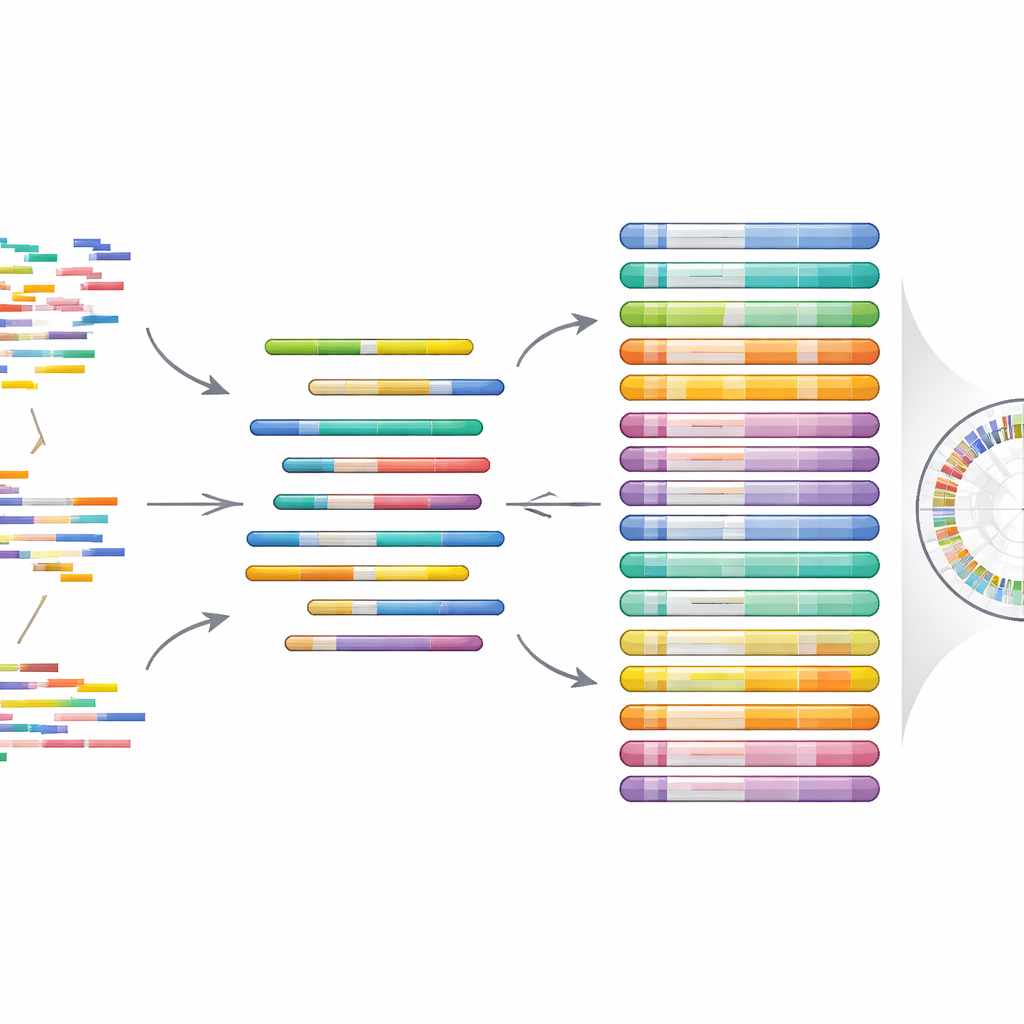
Using advanced computer tools, the team assembled the overlapping DNA snippets into long continuous stretches and then, guided by the Hi‑C data, arranged them into 13 chromosome‑sized pieces. The finished genome is large—about 1.14 billion DNA “letters” long—and extremely complete by modern standards. Tests that look for hundreds of core animal genes showed that more than 98 percent of them are present and intact. The scientists then searched the genome for repeating DNA, which often behaves like genetic “copy‑and‑paste” elements. They found that roughly two‑thirds of the feather star’s genome consists of such repeats, especially one class called DNA transposons. These repetitive regions tend to cluster in stretches where genes are sparse, shaping the overall landscape of the chromosomes.
Finding the Working Parts
To identify the active instructions in this vast sequence, the researchers combined three lines of evidence: patterns recognized directly in the raw DNA, similarities to known genes in closely related sea creatures, and the RNA data showing which stretches are actually read out in the animal’s cells. This integrated approach produced a catalog of 20,814 protein‑coding genes—segments that can be translated into the molecular machines of life. Nearly all of these genes could be matched to functions or families already described in public databases. The team also charted non‑coding pieces such as transfer RNAs, ribosomal RNAs, and small regulatory RNAs, which help control how and when genes are used.
Why This Genome Matters
This chromosome‑level map of a deep‑sea feather star’s DNA is more than a technical feat; it is a new resource for understanding how ancient marine animals have survived dramatic changes in oceans over hundreds of millions of years. With it, scientists can now compare feather stars from shallow reefs and deep seamounts, looking for genetic signatures of low‑light living, resistance to high pressure, and responses to predators and environmental stress. It also provides a solid reference for sorting out confusing family relationships within crinoids, where body shape and gene‑based family trees have not always agreed. In short, this genome turns a mysterious deep‑sea “flower” into a powerful model for exploring evolution, adaptation, and biodiversity in the largest and least known part of our planet.
Citation: Wang, J., Sun, S., Mei, Z. et al. A high-quality chromosome-level genome assembly of a feather star Glyptometra sp. from a deep seamount. Sci Data 13, 598 (2026). https://doi.org/10.1038/s41597-026-06982-1
Keywords: feather star genome, deep sea adaptation, crinoid evolution, marine biodiversity, chromosome-level assembly