Clear Sky Science · en
Biodiversity of Hong Kong purse seine fisheries: An integrated DNA barcode reference library
Why the DNA of Hong Kong’s seafood matters
Hong Kong’s busy coastal waters feed one of the world’s most seafood-loving cities, but many of the fish, squids and shrimps landed each night are hard to tell apart by eye. This makes it difficult to track wild species, manage fisheries or check what really ends up on our plates. The study described here builds the first comprehensive DNA "phone book" for marine animals commonly caught by purse seine nets in Hong Kong, creating a key resource for monitoring biodiversity, food safety and the health of local seas.
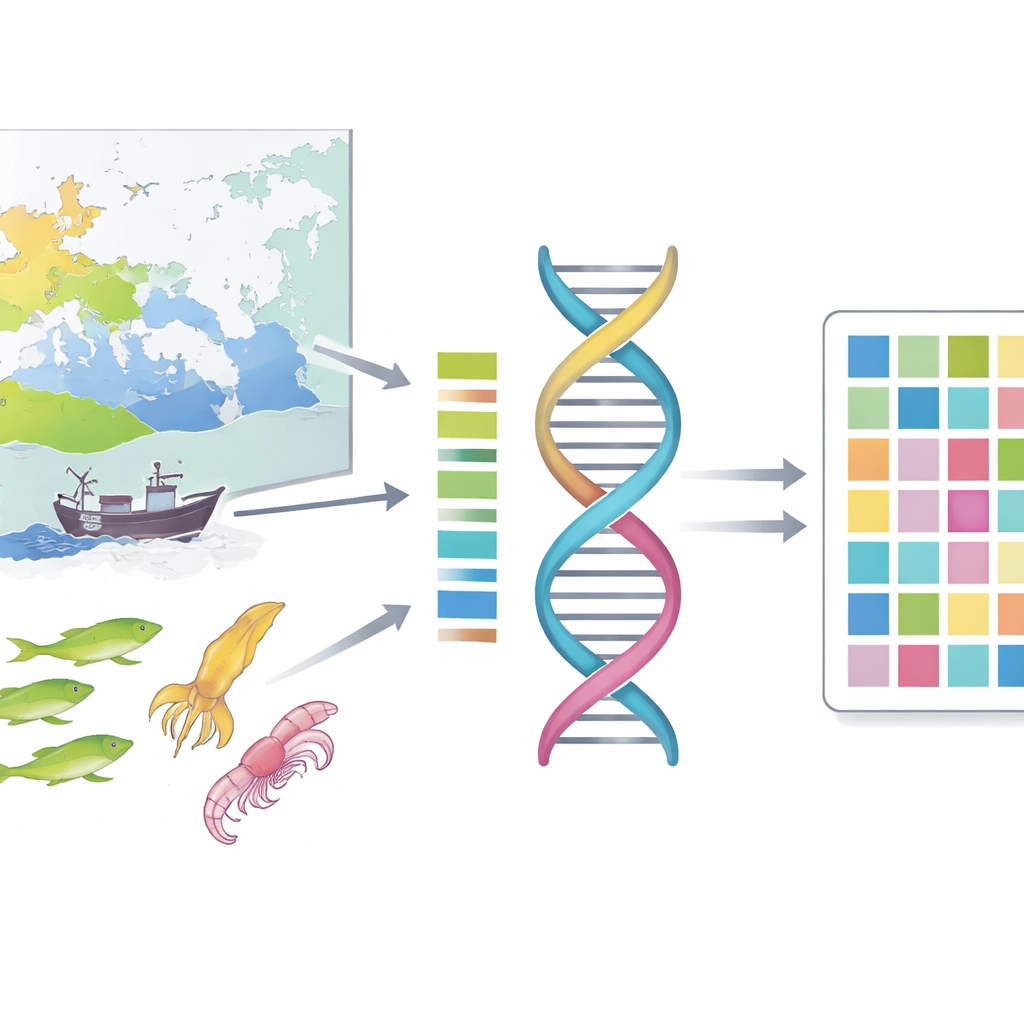
Taking a closer look at the night-time catch
Between 2023 and 2024, the researchers worked with local purse seine fisheries that target animals swimming in open water, rather than on the sea floor. From boats operating in eastern, southern and western Hong Kong waters, they collected 605 specimens of fish, cephalopods such as squids and cuttlefish, and crustaceans such as shrimps and crabs. Each specimen was photographed and examined by taxonomic experts using identification guides and recent scientific descriptions, so that every animal had a carefully checked name before any genetic work began.
Turning tissue into genetic ID codes
Small tissue samples from each animal were preserved and later processed in the laboratory. The team extracted DNA and focused on short stretches of the mitochondrial genome that have proved especially useful for telling species apart. For fishes they sequenced two regions, often called COI and 12S, while for cephalopods and crustaceans they sequenced COI and 16S. These short DNA segments act like barcodes at the supermarket checkout: they are similar enough across life to be easy to read, yet different enough between species to serve as unique identifiers.
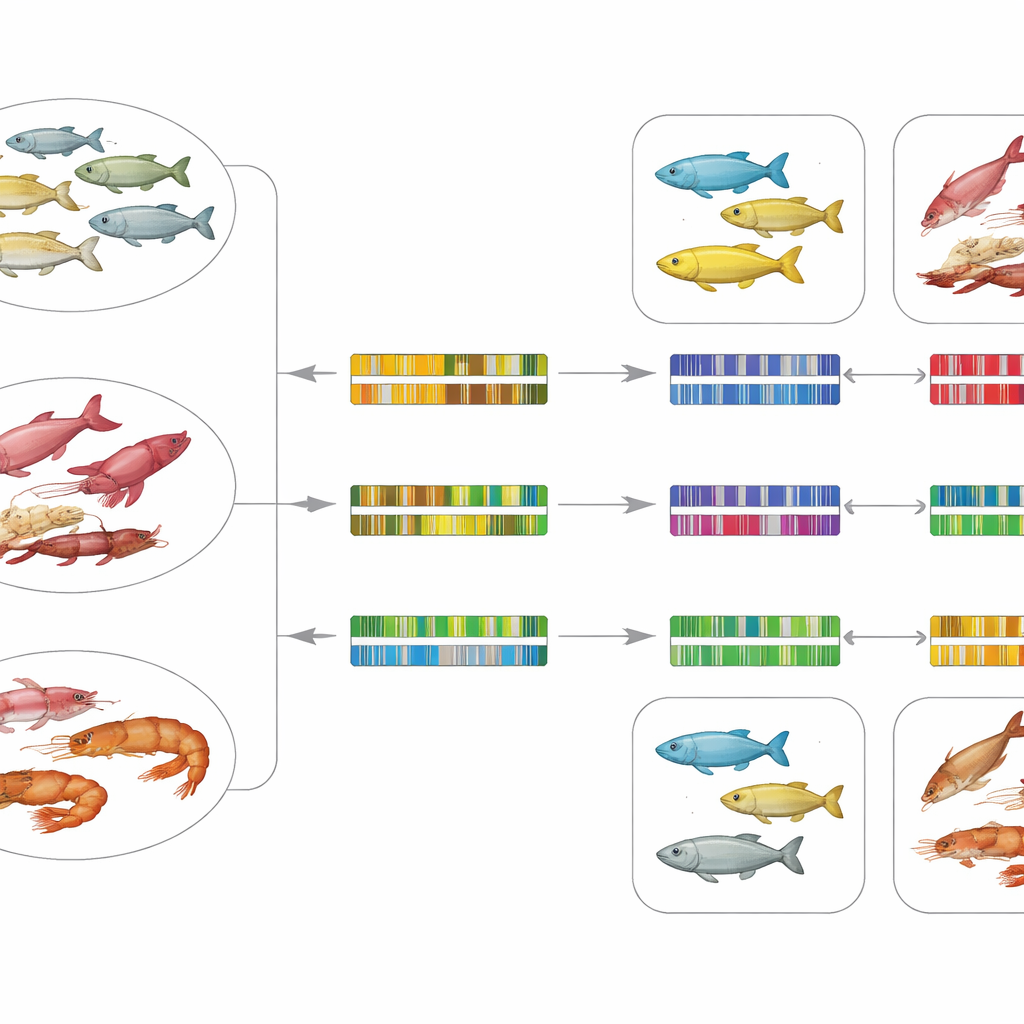
Checking names with both eyes and genes
Because many marine species look remarkably alike, the authors did not rely on appearance alone. They compared each new DNA barcode with existing sequences in global databases, and they built evolutionary trees to see whether individuals of the same named species clustered together. Where sequences were nearly identical and formed clean groups, this supported the original identifications. In a few cases, very close genetic similarity between species within the same genus showed that a single DNA region might not be enough, underscoring the value of using more than one marker and of building a local reference library tuned to the region’s fauna.
Building an open library for future ocean monitoring
In the end, the project assembled high-quality DNA barcodes for 206 confirmed species: 185 fishes, 8 cephalopods and 13 crustaceans from dozens of families and orders. For each species, the dataset links photographs, collection locations, and sequences from one or two genetic markers. All information is freely available through the Barcode of Life Data System (BOLD) and GenBank, following international standards so that other researchers can reuse the data easily. This makes the Hong Kong purse seine collection one of the most complete regional barcode libraries for open-water marine animals in the northern South China Sea.
What this means for Hong Kong’s seas
For non-specialists, the practical outcome is straightforward: it is now much easier to know exactly which species are present in Hong Kong’s waters, even when they are represented only by eggs, tiny larvae, fillets in a market stall or trace DNA drifting in seawater. By pairing careful visual identification with multiple genetic markers, this study delivers a reliable reference against which future environmental DNA surveys and seafood checks can be compared. In turn, that knowledge will help scientists and managers track changes in marine life, safeguard commercially important species and better protect the rich but pressured biodiversity that surrounds Hong Kong.
Citation: Lin, Ba., Leung, K.T., Han, W. et al. Biodiversity of Hong Kong purse seine fisheries: An integrated DNA barcode reference library. Sci Data 13, 670 (2026). https://doi.org/10.1038/s41597-026-06981-2
Keywords: DNA barcoding, Hong Kong marine life, purse seine fisheries, environmental DNA, fish biodiversity