Clear Sky Science · en
Draft genomes of two Lethrus species
Why beetle DNA matters to everyday nature
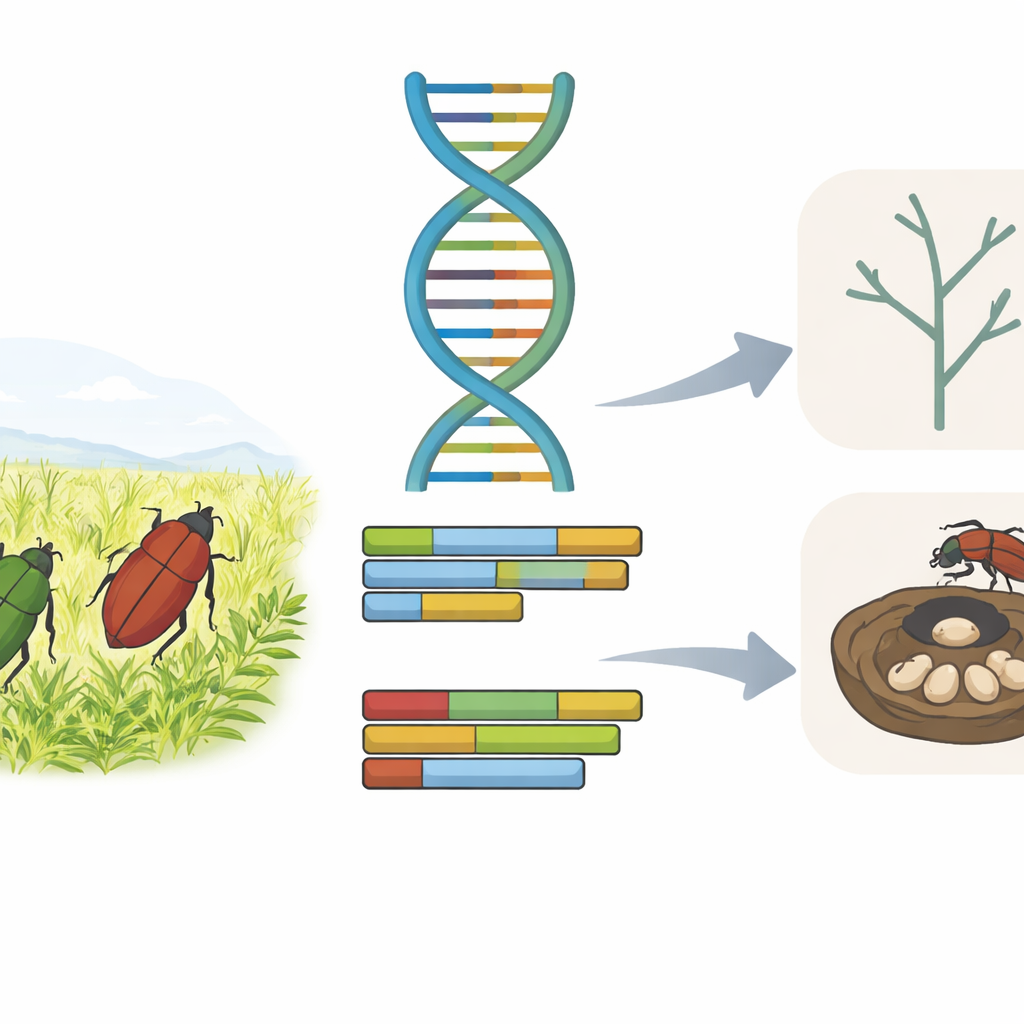
Across grasslands from Central Europe to Central Asia, chunky, flightless beetles quietly shape soils, recycle nutrients, and tend their young in underground nests. Yet while their behavior has fascinated field biologists, their DNA has remained largely unexplored. This study cracks open that black box by assembling high-quality genomes for two such beetles in the genus Lethrus, giving scientists a detailed blueprint of their biology and a new window into how unusual feeding habits and family life evolve in this group.
A hidden world of underground beetles
The beetles at the heart of this work belong to the superfamily Scarabaeoidea, a vast clan that includes familiar dung beetles and more than 40,000 described species. Many of these insects are ecological workhorses: they move soil, bury dung, and influence plant growth. Lethrus beetles, however, are a bit different. They cannot fly, prefer open habitats across the Palaearctic region, and feed on fresh plant leaves instead of animal droppings. They also live complex family lives, with parents often cooperating to build nests and care for their offspring. One species, Lethrus apterus, has already become a model for studying parental behavior and physiology, but its previously published genome was highly fragmented—more like a jigsaw puzzle spilled on the floor than a completed picture.
Building better genetic blueprints
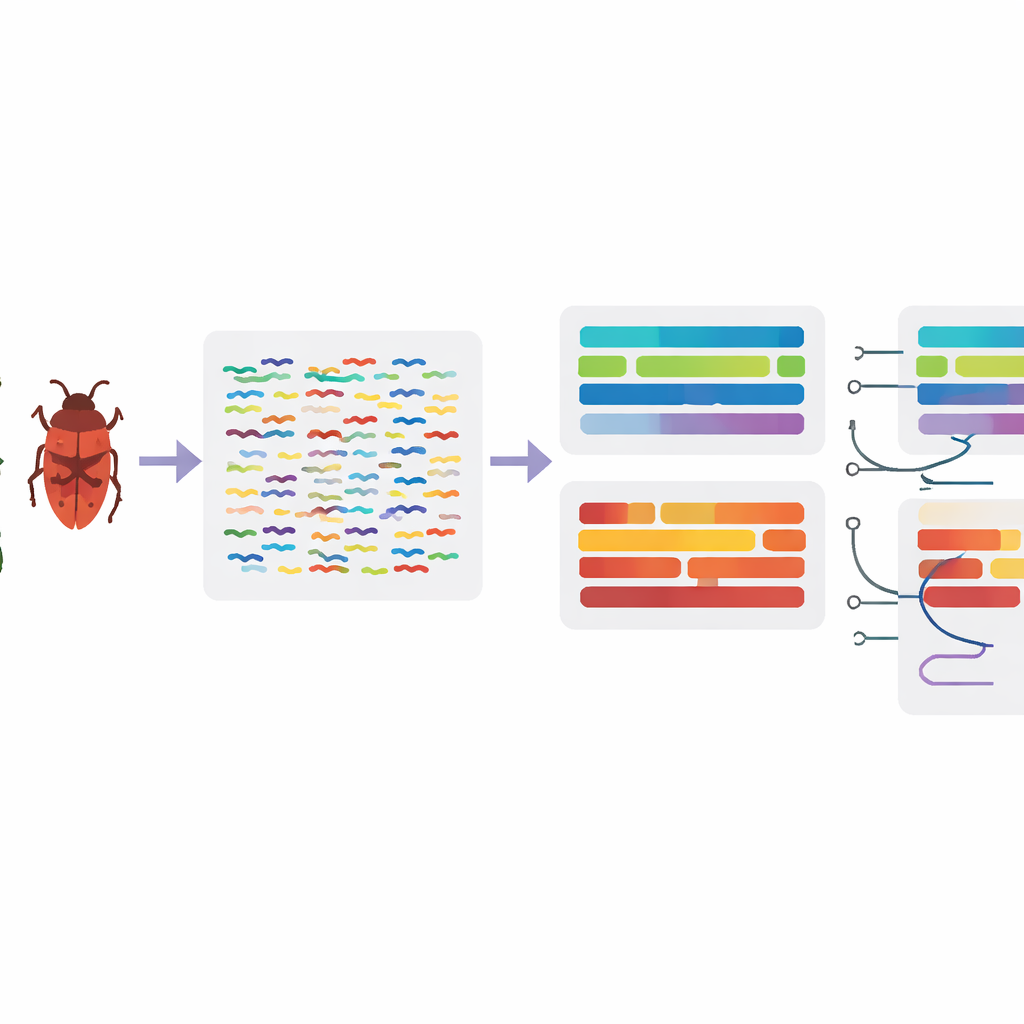
To fill this gap, the researchers generated new genome assemblies for two species: they produced the first draft genome for Lethrus scoparius, and they substantially improved the existing genome of Lethrus apterus. Working from single wild-caught individuals, they extracted long stretches of DNA and sequenced them using a technology that reads very long fragments, which helps assemble genomes into larger, more continuous pieces. For L. apterus, they also combined these long reads with earlier short-read data and with RNA data from living beetles, which captures which genes are actively used in different tissues or seasons. Careful filtering, polishing, and decontamination steps removed low-quality data and non-beetle sequences, yielding compact, high-quality genomes with very few missing genes.
What the new genomes reveal
The finished genome of L. scoparius spans about 266 million DNA letters, arranged into fewer than 3,000 pieces, while the upgraded L. apterus genome is slightly larger at about 293 million letters but broken into only 886 pieces—dramatically more continuous than the tens of thousands of fragments in the earlier version. Tests that search for universal insect genes showed that both genomes are nearly complete, with over 96% of expected genes present. The authors then identified more than 15,000 genes with putative functions in each species, many involved in core processes such as cellular maintenance, energy use, and gene regulation. Comparing the two genomes showed that roughly 96% of the L. scoparius sequence can be aligned to the improved L. apterus genome, confirming that these species are genetically close while still harboring hundreds of gene groups unique to each.
Clues to beetle lifestyles and family strategies
While this study focuses on building and validating the genomes rather than testing specific biological hypotheses, the new data set the stage for a wide range of future work. Because Lethrus beetles are flightless and often confined to particular regions, their genomes are ideal for tracking how species split and spread across landscapes. Their unusual switch from dung-feeding to leaf-feeding, and their tendency toward elaborate parental care and nest building, can now be investigated at the genetic level by comparing genes linked to digestion, immunity, and behavior across different scarab beetles. The authors also show that the improved L. apterus genome is a far more reliable reference for studies of gene activity, reducing false signals that arose from the older, fragmented assembly.
What this means for our understanding of evolution
For a lay reader, the key takeaway is that we now have sturdy, nearly complete genetic blueprints for two little-known but ecologically important beetles. These genomes transform Lethrus species from behavioral curiosities into genomic model organisms for their group. With these high-resolution maps in hand, scientists can probe how flightless, plant-feeding beetles evolved from dung-feeding ancestors, and how complex parental care took root in the underground chambers they build. In short, this work supplies the detailed DNA roadmaps needed to connect what these beetles do in the field with how their genes shape those behaviors over evolutionary time.
Citation: Nagy, N.A., Laczkó, L., Freytag, C. et al. Draft genomes of two Lethrus species. Sci Data 13, 610 (2026). https://doi.org/10.1038/s41597-026-06978-x
Keywords: scarab beetle genomes, Lethrus apterus, Lethrus scoparius, parental care evolution, long-read sequencing