Clear Sky Science · en
EEG dataset of consumer- and research-grade systems
Why Everyday Brain Gadgets Matter
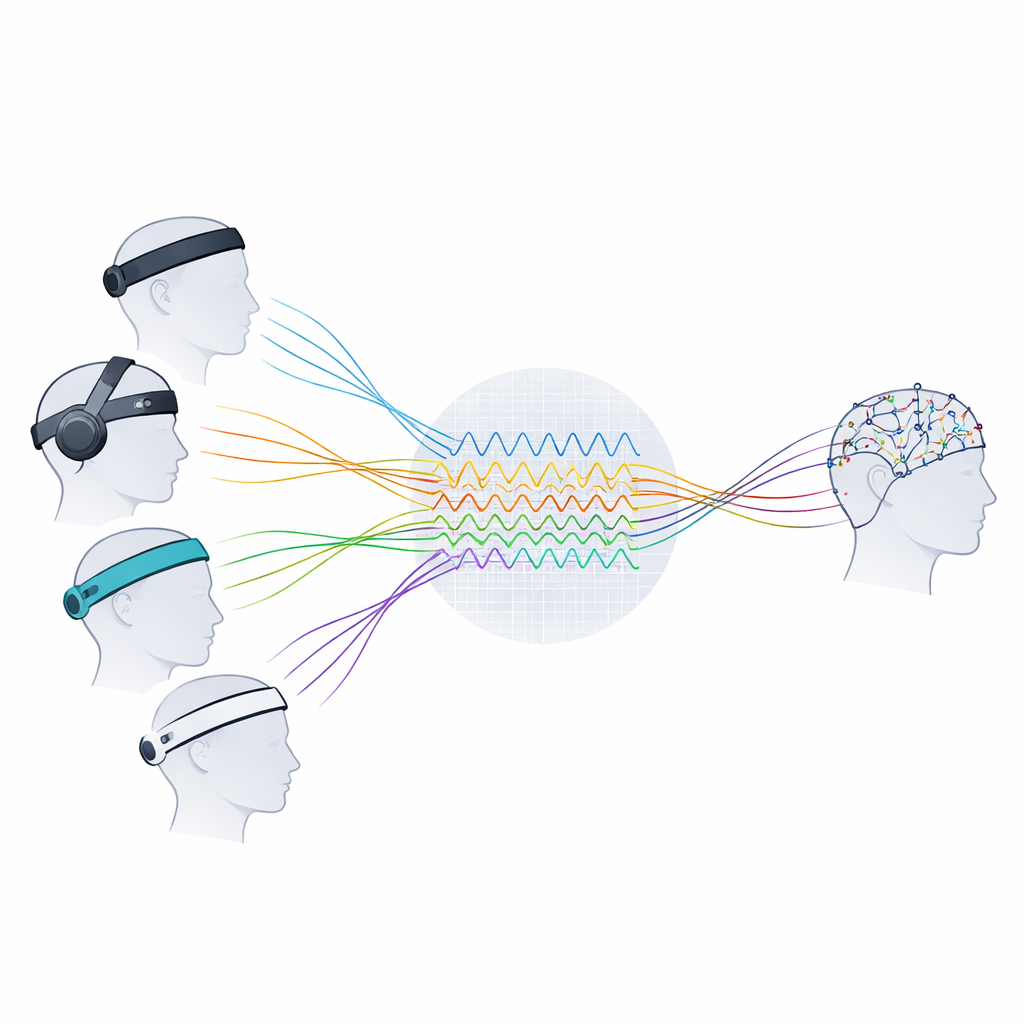
Small, affordable headbands that promise to read your brainwaves are now sold for meditation, focus training, and even gaming. But can these consumer gadgets really measure brain activity as reliably as the bulky caps used in research labs? This study introduces an openly available dataset that directly compares several popular low-cost electroencephalography (EEG) headsets with a professional, research-grade system, under carefully controlled conditions. The goal is to give scientists, developers, and informed consumers the tools to judge how trustworthy these devices are.
What the Researchers Wanted to Test
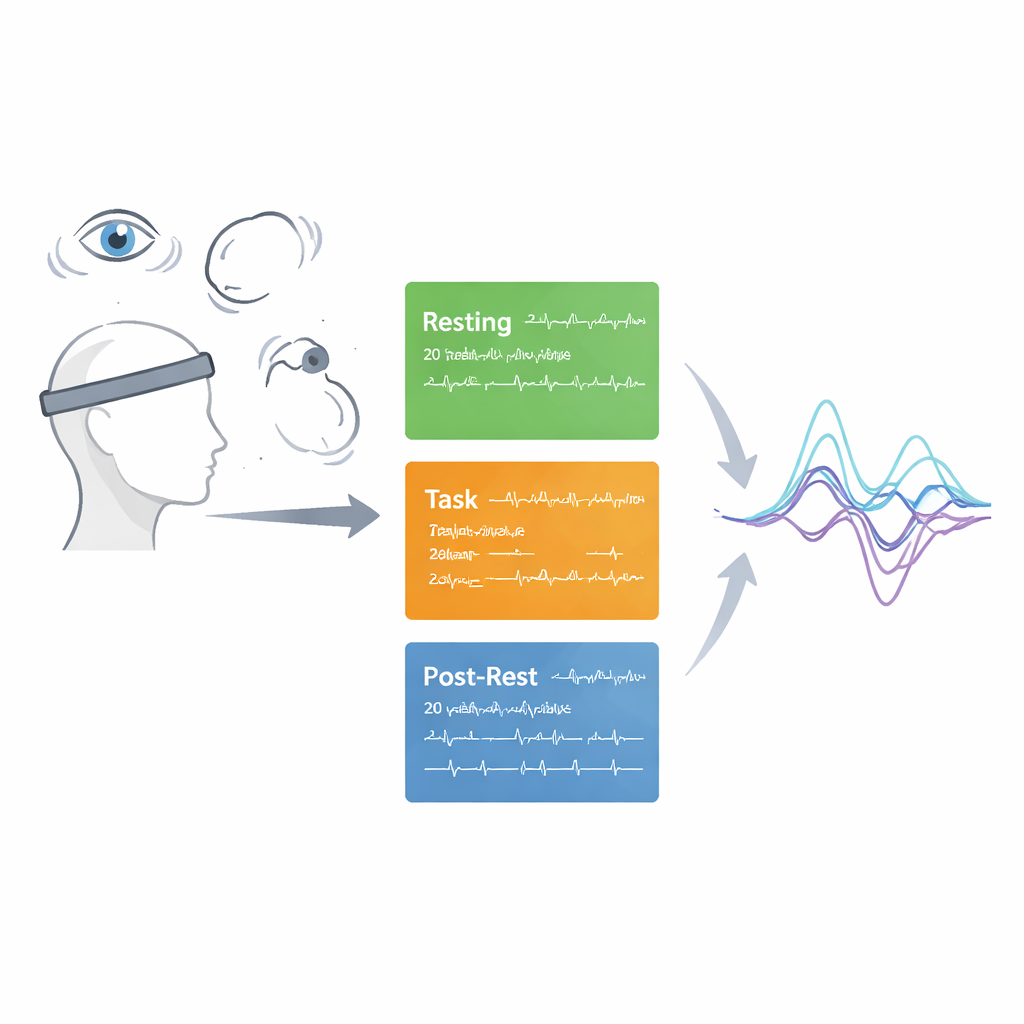
The team set out to build a fair, standardized way to evaluate consumer EEG devices. Instead of focusing on one narrow task, they designed a three-step testing framework. First, they checked whether the devices could detect obvious physical signals, like eye blinks and jaw clenches, which create large electrical disturbances on the scalp. Second, they examined whether the headsets could capture well-known brain patterns, such as the increase in “alpha” brainwave power that typically appears when a person closes their eyes and relaxes. Finally, they tested how sensitive each device was to movement, a major challenge when people use EEG in everyday settings outside the lab.
How the Brainwave Data Were Collected
Thirty healthy young adults came into the lab and were fitted, one after another, with four consumer-grade EEG devices and one research-grade cap. Each person completed the same four short tasks with every device: a series of timed eye blinks, repeated jaw clenches, controlled head turns while keeping their eyes open, and the same head movements with their eyes closed. Each task was wrapped by quiet periods before and after, when participants sat still and rested so that their brain activity could be recorded in a calm baseline state. Precise timing markers were stored with the data to show when each rest period and each of the 20 repetitions of a task began.
Inside the Headsets Being Compared
The consumer devices represented a range of popular designs: two single-sensor forehead bands, a two-sensor frontal system, and a four-sensor headset that also records from the sides of the head. All use dry electrodes, making them easy to put on quickly. As a benchmark, the researchers used a research-grade cap with 21 sensors spread across the scalp, a system widely used in brain–computer interface experiments and clinical-style measurements. All recordings were saved in standard data formats without any cleaning or filtering, so other researchers can apply their own analysis methods from scratch.
What the Signals Revealed
To validate signal detection, three independent raters looked at the raw recordings and confirmed that eye blinks and jaw clenches appeared as clear spikes in the data for nearly all devices and participants. To probe genuine brain activity, the team compared the strength of alpha-band waves when participants’ eyes were open versus closed. As expected, alpha power rose noticeably when eyes were closed, and this characteristic “alpha peak” appeared at almost the same frequency across all devices for the same person. The average differences between each consumer headset and the research-grade cap were only a fraction of a hertz, with no statistically meaningful gaps. Finally, to test movement robustness, the researchers compared frequency patterns before and after head-turning tasks. High correlation values showed that, for most devices, the overall shape of the brainwave spectrum changed little, suggesting that the headsets remained reasonably stable even when the wearer moved.
Why This Open Dataset Is Useful
Beyond the recordings themselves, the dataset includes usability survey responses about comfort, ease of use, and preferred wear time for each device. All of the EEG files, timing markers, and example analysis code are freely available in a public repository, allowing others to reproduce the figures in the paper or develop new algorithms for cleaning and interpreting the signals. Because the data cover multiple devices, tasks, and movement conditions under one unified protocol, they provide a valuable benchmark for comparing old and new consumer EEG systems on equal footing.
What It Means for Future Brain Tech
For non-specialists, the main takeaway is that some consumer EEG headsets can capture key brainwave patterns and respond to simple tasks in ways that closely resemble a professional lab system, at least under controlled conditions. The study does not claim that all consumer devices are interchangeable with research-grade equipment, but it offers a solid, shared testbed for checking how close they come. As more groups analyze and build on this open dataset, we can expect clearer answers about when low-cost brain gadgets are “good enough,” when lab gear is still essential, and how to design future devices that are both user-friendly and scientifically reliable.
Citation: Lee, Y., Gwon, D., Kim, K. et al. EEG dataset of consumer- and research-grade systems. Sci Data 13, 595 (2026). https://doi.org/10.1038/s41597-026-06962-5
Keywords: consumer EEG, brain-computer interfaces, brainwave headsets, EEG dataset, neurotechnology validation