Clear Sky Science · en
A haplotype-phased male genome sequence of the stinging nettle, Urtica dioica ssp. dioica
Why a common weed matters
Stinging nettle is famous for the burning sensation its hairs leave on our skin, but this humble weed is also a valuable source of food, fibre, and medicine, and a key habitat for insects. Despite its familiarity, scientists have only recently begun to understand its genetic blueprint. This study describes a high‑quality, chromosome‑level map of the genome of a male stinging nettle plant. By comparing this new map with an earlier female genome, the researchers open the door to discovering how nettles determine sex and why their chromosomes are unusually dynamic.
Getting to the nettle’s genetic blueprint
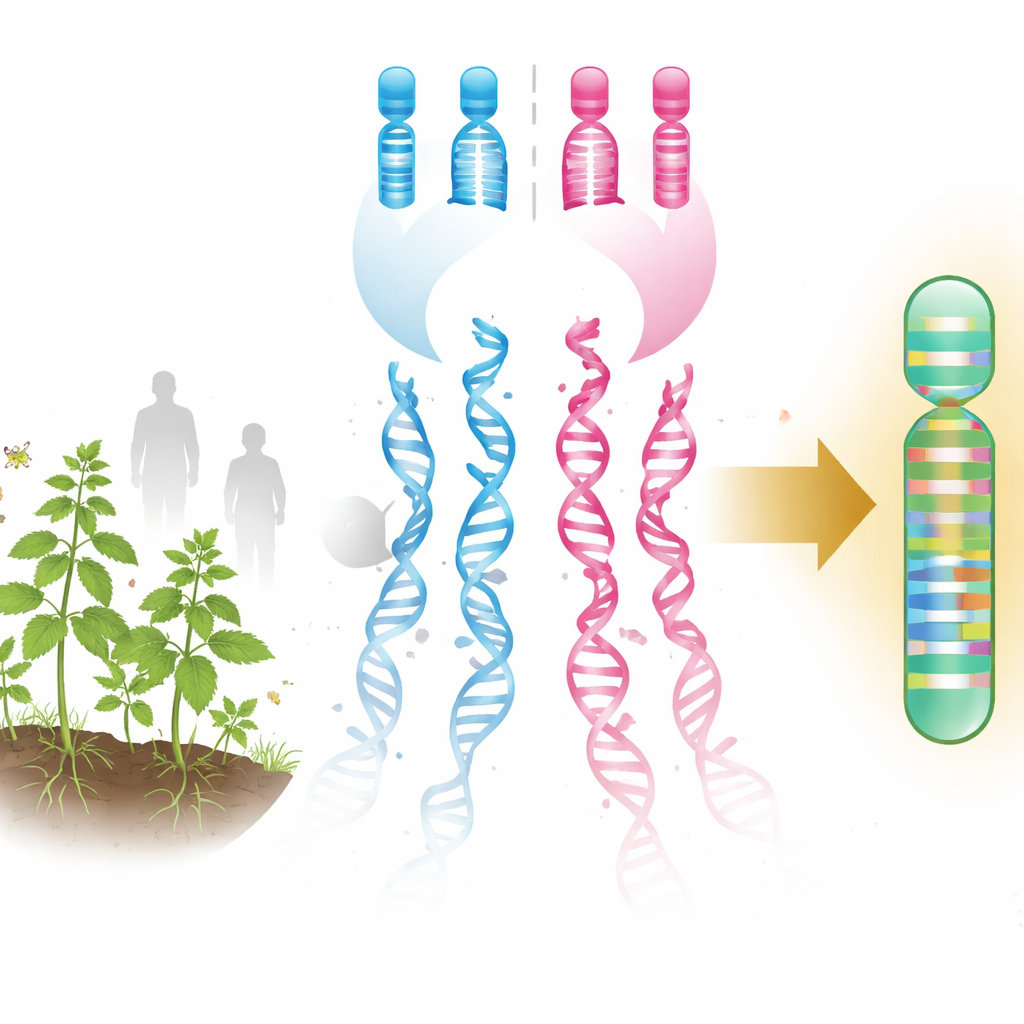
The team focused on Urtica dioica ssp. dioica, a form of stinging nettle with separate male and female plants. They selected a male plant that was the offspring of a previously sequenced female, allowing them to trace which parts of its genome came from the mother and which from the father. Using long‑read DNA sequencing and a technique called Hi‑C, which captures how pieces of DNA are physically connected inside the cell nucleus, they assembled two complete versions (haplotypes) of the male genome. Each haplotype represents one parental copy of the 13 chromosomes, providing a phased, highly detailed genetic map.
Surprising twists in the chromosomes
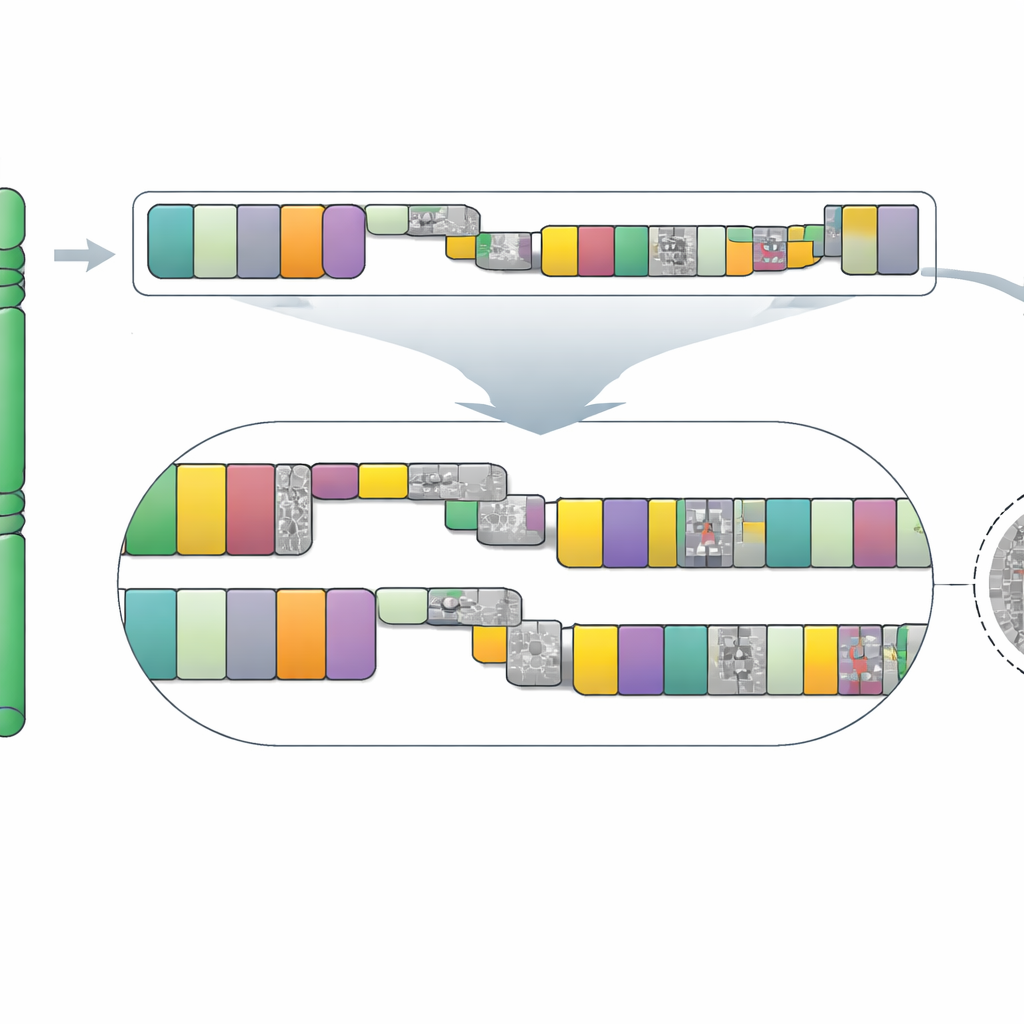
Once the genome was assembled, the researchers examined how the two haplotypes lined up. They found a striking amount of structural variation—large‑scale changes such as inversions (flipped sections), duplications, and rearrangements—especially on chromosomes 1, 2, 3, 6, and 8. These changes are not just small mutations but major shifts in the layout of DNA. Many of these structurally complex regions sit where genes are relatively sparse and repetitive DNA is abundant, suggesting that movable genetic elements and repeated sequences have played a big role in reshaping the nettle genome over time.
Unusual chromosome centers and the sting factor
The study also probed the “pinch points” of chromosomes, the centromeres, which are essential for proper chromosome separation during cell division. By analyzing patterns of repeated DNA across each chromosome, the authors confirmed that many nettle chromosomes are polycentric—having multiple centromere‑like regions—while others resemble more familiar acrocentric or metacentric types. Such polycentric structures are rare and may influence how often chromosomes exchange segments during reproduction. In addition, the team confirmed that two copies of genes encoding a pain‑inducing peptide, known from the nettle’s sting, reside on chromosome 9 in both male haplotypes, mirroring what had been seen in the female genome.
Tracing what comes from mum and dad
Because the sequenced male plant was the child of the previously sequenced female, the scientists could track inheritance at the level of whole chromosomes. By aligning the male and female haplotypes and measuring extremely high sequence matches, they identified which male chromosomes were maternally derived and, by exclusion, which came from the father. Some chromosomes showed long, uninterrupted blocks of maternal DNA, while others carried clear signs of recombination, where segments from the two female haplotypes had been shuffled together. Interestingly, chromosomes with many centromere‑like regions seemed to recombine less, echoing patterns seen in other organisms with unusual chromosome architecture.
A candidate region for plant sex determination
Among all 13 chromosomes, chromosome 8 stood out. One version of this chromosome in the male plant showed multiple large, nested inversions and an apparent extra 8‑million‑base segment packed with repetitive DNA, features often linked to sex‑determining regions in plants and animals. Because the male is thought to be the heterogametic sex in nettle—roughly analogous to the XY system in humans—this highly rearranged stretch of chromosome 8 is now a prime suspect for housing genes that decide whether a plant develops as male or female. While the study does not yet pinpoint the exact sex‑determining genes, it delivers a robust, independently validated male genome and highlights where to look next for the switches that control sex in this familiar but genetically intriguing plant.
Citation: Hirabayashi, K., Percy, D., González-Segovia, E. et al. A haplotype-phased male genome sequence of the stinging nettle, Urtica dioica ssp. dioica. Sci Data 13, 569 (2026). https://doi.org/10.1038/s41597-026-06960-7
Keywords: stinging nettle genome, plant sex determination, chromosome structure, repetitive DNA, dioecious plants