Clear Sky Science · en
A dataset on invasive alien plants of European Union concern
Why unwanted plants matter in special places
National parks and nature reserves are meant to be safe havens for wildlife, yet they are increasingly under quiet attack from plants that do not belong there. These invasive newcomers can spread fast, crowd out native species, and alter entire landscapes. The PREVALIEN project has built a detailed public dataset focused on such problem plants that are officially recognized as a concern for the European Union, with a special lens on Italy’s protected areas. By gathering and organizing information from many scattered sources, this work helps scientists, park managers, and policymakers understand where these species are, how they spread, and how best to stop them.
Unpacking the problem of invasive plants
Plants introduced from other parts of the world can be harmless garden ornaments—or they can turn into aggressive invaders that transform rivers, grasslands, and forests. Across the European Union, the economic damage linked to invasive species is estimated in the billions of euros every year, through lost crops, damaged infrastructure, and degraded ecosystems. To respond, the EU has created a legal framework that lists invasive alien species of “Union concern” and sets rules for preventing their arrival, catching new outbreaks early, and controlling those that have already taken hold. Turning these rules into effective on-the-ground action, however, requires precise, up‑to‑date information on each species—something that has historically been scattered across many different databases and reports.
A new data hub for high‑risk species
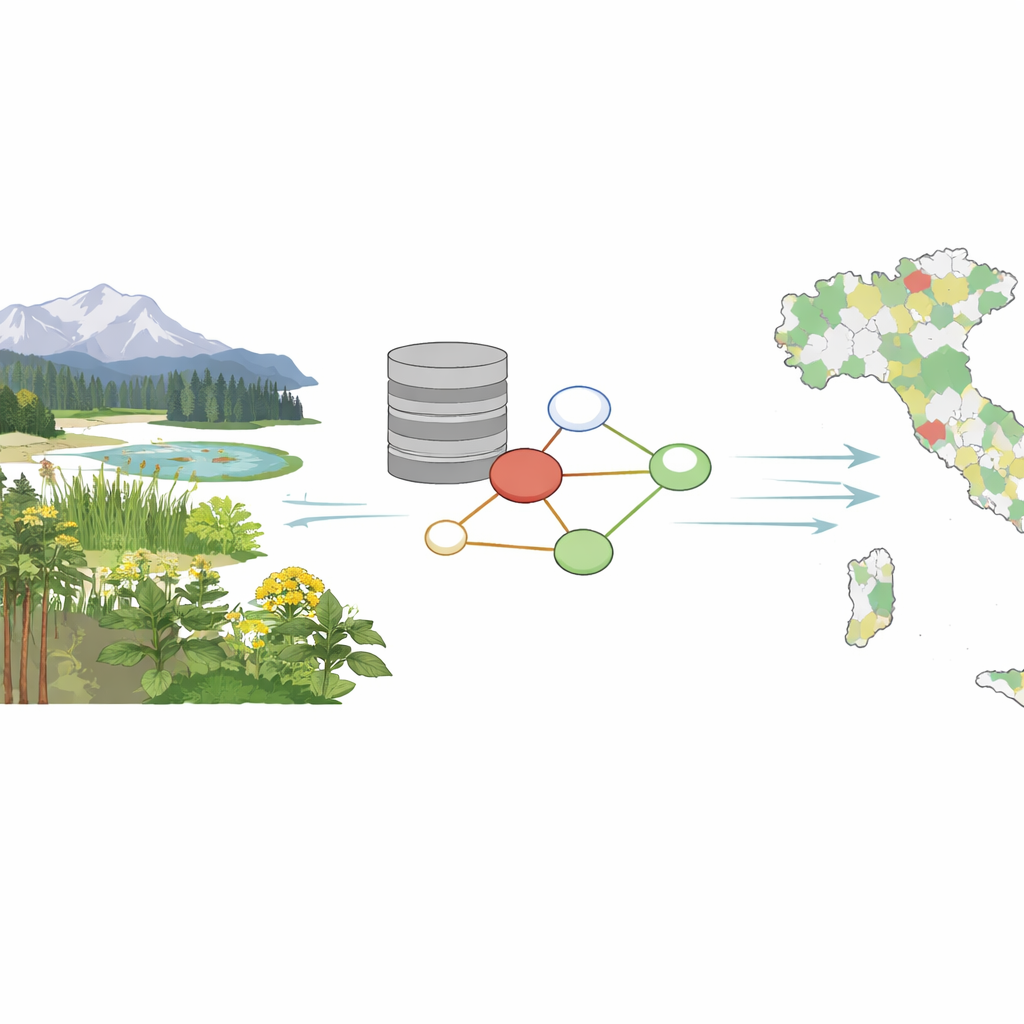
PREVALIEN is designed as a central hub for exactly this kind of information. It currently covers 41 species—40 vascular plants and one seaweed—that appear on the EU’s Union List. For each, the dataset reports their scientific identity, where they come from, where they have spread globally, which habitats they favor, how they are likely to be transported, and what is known about their impacts and management. The authors built PREVALIEN on a robust relational database system so that users can link, for example, a species’ traits and dispersal modes with its presence in particular parks or landscapes. The data are organized into 34 interconnected tables grouped around themes such as taxonomy, distribution, pathways of arrival and spread, environmental drivers, and control methods.
Zooming in on Italy’s protected areas
A distinctive feature of PREVALIEN is its focus on Italy’s network of national and regional parks—areas that harbor rich biodiversity but are also vulnerable to invasion. To map problem species in these places, the team combined a national 10×10 km grid of confirmed plant records with precise boundary maps for each protected area. By intersecting these two layers, they produced simple presence‑and‑absence records and then calculated how frequently invasive plants occur within each park. This allowed them to rank protected areas by invasion intensity and to highlight emerging hotspots. Alongside this, they compiled information on key traits such as seed dispersal modes—whether plants spread by wind, water, animals, or human activities—which helps anticipate how quickly and in which directions an invader might move.
From scattered sources to trusted information
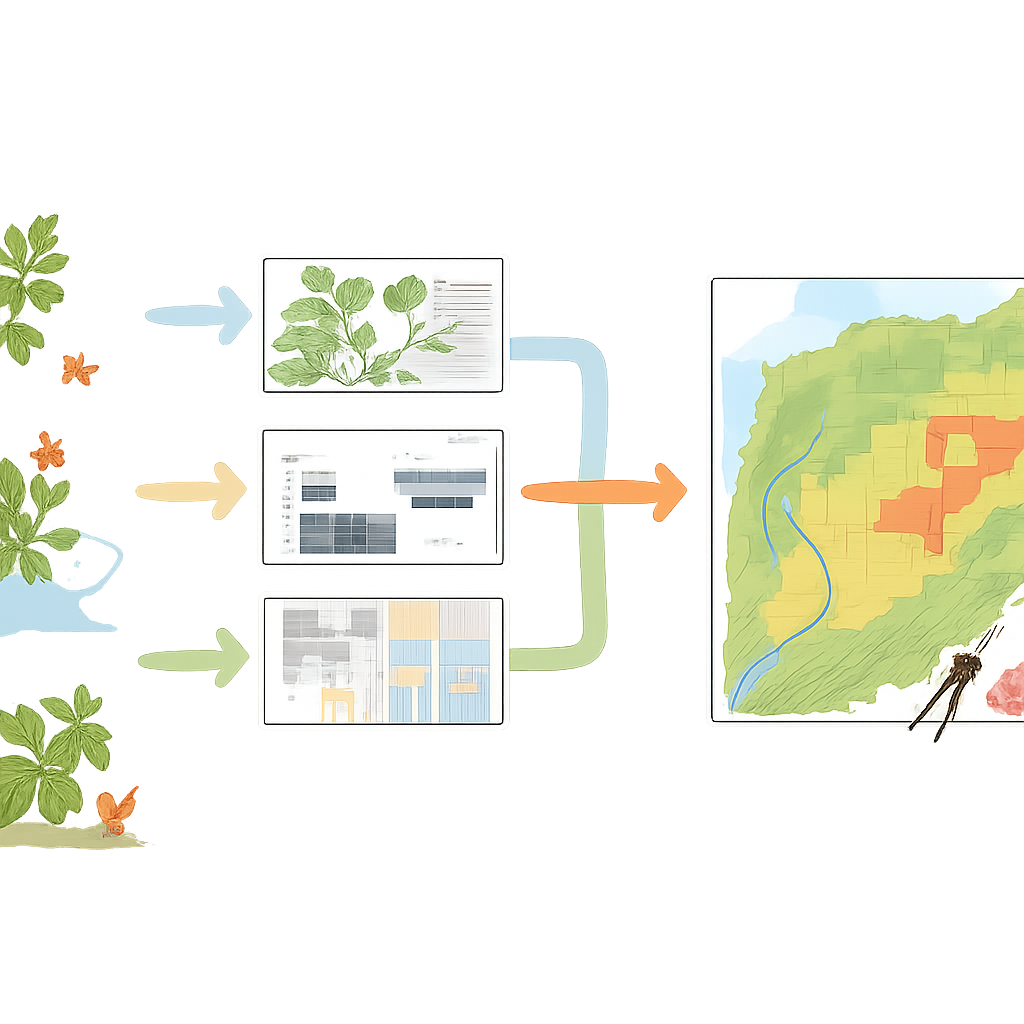
Because earlier international databases were often incomplete or inconsistent, the PREVALIEN team invested heavily in data quality. They started from official European pest risk assessments used to build the Union List, then filled gaps using major global and regional databases on alien species and traits. All names and synonyms were cross‑checked against multiple taxonomic resources to avoid confusion caused by changing scientific names. Automated checks looked for missing values, duplicates, and formatting errors, while subject‑matter experts from seven Italian universities manually reviewed and corrected records. Park managers were also surveyed directly to confirm local occurrences of the target species, adding a layer of on‑the‑ground validation.
How this resource can guide action
PREVALIEN is openly available in machine‑readable formats and is being linked into national biodiversity platforms to maximize its use. Researchers can mine it to study what makes certain protected areas or habitats especially vulnerable, or to model how changing climate and land use might shift invasion risks. Park authorities can use its presence‑absence maps, trait data, and pathway information to prioritize surveillance, focus removal efforts, or plan measures to block likely entry routes. While some gaps remain—especially regarding detailed impact measurements for Italy—the dataset is designed to be updated as new species are added to the EU list and new information becomes available. In simple terms, PREVALIEN turns a patchwork of scattered records into a coherent evidence base, giving Europe’s most treasured landscapes a better chance against fast‑moving plant invaders.
Citation: Santoianni, L.A., Barni, E., Bouvet, D. et al. A dataset on invasive alien plants of European Union concern. Sci Data 13, 542 (2026). https://doi.org/10.1038/s41597-026-06932-x
Keywords: invasive alien plants, protected areas, biodiversity data, European Union policy, Italy