Clear Sky Science · en
Carbon and nitrogen (δ13C, δ15N) isotope ratios of zooplankton in Lake Maggiore (Italy): a 13-year dataset
Why tiny lake drifters matter
When we picture threats to lake ecosystems, we often think of murky water or dying fish. Yet some of the best early warnings of trouble come from creatures so small we rarely notice them: zooplankton, the drifting animals that graze on algae and feed fish. This study presents a 13-year record of the chemical fingerprints in these tiny animals from Lake Maggiore in northern Italy, offering a powerful window into how energy and pollution move through a deep lake over time.
Watching a lake recover and change
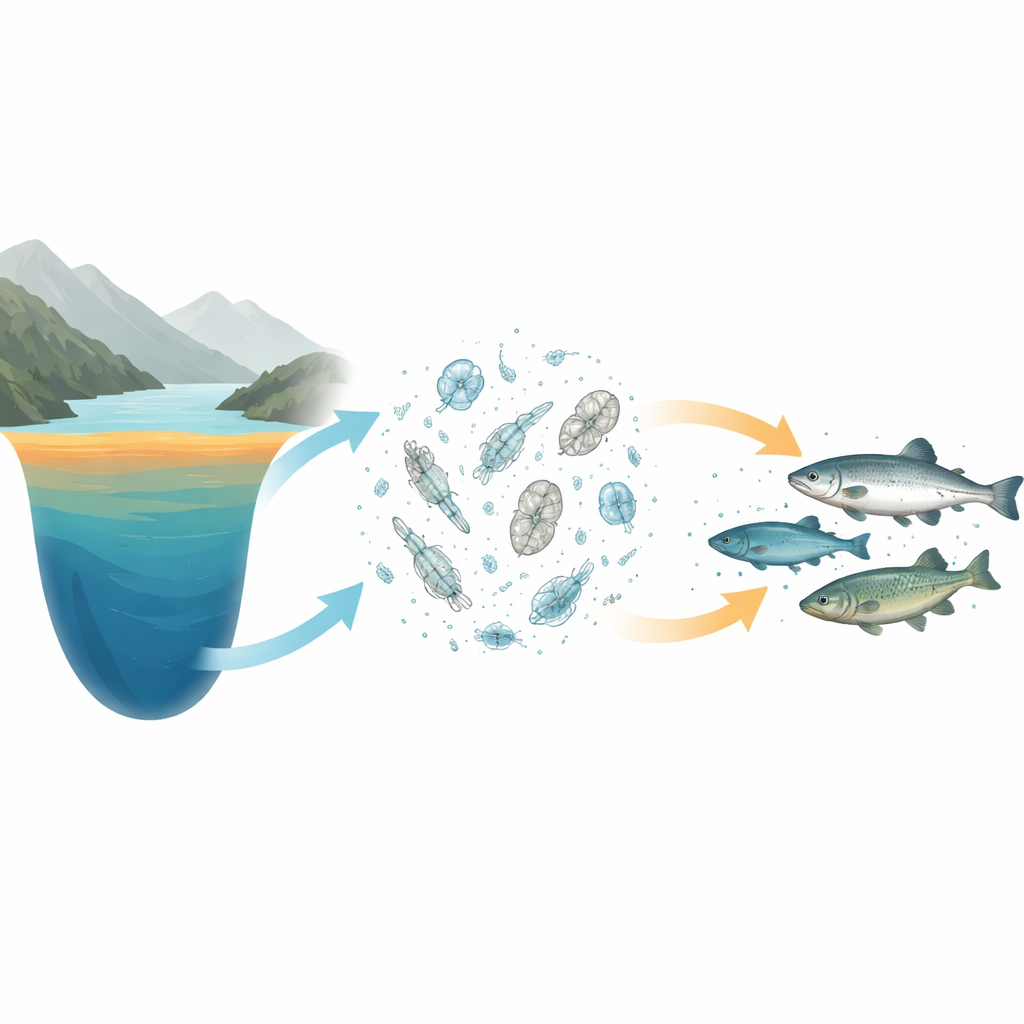
Lake Maggiore is a large, deep subalpine lake that once suffered from nutrient pollution but has since become much clearer and poorer in nutrients. For decades, researchers have tracked its basic water chemistry and zooplankton numbers. In 2010, they added a new layer: regular measurements of the ratios of two forms of carbon and nitrogen (called stable isotopes) in the main zooplankton groups. Because these isotopes shift in predictable ways as food moves up the food chain, they act like natural tracers that reveal who is eating what, and how this changes with the seasons and from year to year.
Following the clues in carbon and nitrogen
From 2010 to 2022, the team collected more than a thousand zooplankton samples at a central open-water station. They used special nets to capture three size groups: all net-collectable zooplankton (down to 80 micrometers) and two larger fractions chosen because they are eaten directly by fish. Under microscopes, they separated key species and life stages—such as water fleas (Daphnia), tiny crustaceans called copepods, and larger invertebrate predators—and measured their carbon and nitrogen isotope ratios along with the amount of carbon and nitrogen each contained. They also calculated how many individuals and how much biomass of each group were present, building a detailed picture of the pelagic food web.
Seasons, depth, and shifting food webs
The long record shows strong seasonal swings. Carbon values tend to be higher in summer and lower in winter, patterns linked to water temperature and which types of algae dominate the lake at different times. In winter, many zooplankton species share the same depth zone as Daphnia, a generalist filter-feeder that serves as a baseline for comparison. During summer stratification, when warm water sits on top of cooler deep water, some groups—especially certain copepods—develop more distinct carbon signatures that suggest they are feeding deeper in the water column, on different food sources than surface-dwelling species. Nitrogen values reveal the steps in the food chain: predators show higher nitrogen enrichment relative to their prey, and this difference becomes especially pronounced in winter, when many fish leave the open water to reproduce along the shores, temporarily easing pressure on pelagic invertebrate predators.

Tiny animals as pollutant sentinels
The same zooplankton that shuttle energy from algae to fish also move persistent pollutants, such as legacy DDT and industrial PCBs, through the lake. These chemicals are nearly undetectable in the water itself but accumulate in living tissue. By pairing biomass estimates and isotope-based food-chain positions with separate measurements of pollutants in the larger size fractions, researchers can infer how contaminants build up in different zooplankton groups without having to chemically analyze each taxon. The nitrogen signatures of pooled size fractions closely track their pollutant concentrations, underscoring how shifts in community composition and feeding position control contaminant transfer up the food web.
A long-term lens on a changing lake
This openly shared dataset—covering 13 years of carbon and nitrogen fingerprints, body composition, and abundance for the main pelagic zooplankton—provides a rare, high-quality baseline for a large deep lake. For non-specialists, its value lies in what it makes possible: clearer reconstructions of who eats whom, how climate-driven changes in temperature and mixing affect food pathways, and how long-banned chemicals still move silently from microscopic drifters into fish. In short, by listening closely to tiny creatures in the middle of the water column, scientists gain a sensitive lens on both ecosystem health and hidden pollution that matters for the entire lake and the people who depend on it.
Citation: Piscia, R., Caroni, R., Bettinetti, R. et al. Carbon and nitrogen (δ13C, δ15N) isotope ratios of zooplankton in Lake Maggiore (Italy): a 13-year dataset. Sci Data 13, 535 (2026). https://doi.org/10.1038/s41597-026-06928-7
Keywords: zooplankton, stable isotopes, Lake Maggiore, aquatic food webs, persistent organic pollutants