Clear Sky Science · en
Proteome Dataset of Serum and Albumin-Depleted Serum of Labeo rohita Under Cold Temperature Stress
Why Cold Fish Matter to Us
A common farmed fish across South Asia, the Indian carp Labeo rohita, helps feed millions of people. Yet as winters become harsher and weather more unpredictable, these warm‑loving fish are increasingly exposed to water that is colder than they can comfortably handle. This study digs deep into the fish’s blood to see how its body chemistry changes during a long spell of chill, creating a detailed molecular map that could help fish farmers keep stocks healthier and more resilient in a changing climate.
Fish in a Long Winter
To explore how rohu cope with the cold, researchers kept one group of fish in comfortable warm water and slowly cooled another group down to just 5 °C, a temperature low enough to strain but not immediately kill them. The cold was maintained for 45 days, simulating a prolonged cold spell that farmers might face in the real world. Throughout the trial, the team carefully controlled water quality and watched the fish for signs of distress, ensuring that any changes seen in their blood reflected the impact of temperature rather than poor rearing conditions.
Looking Inside the Blood
After this extended exposure, the scientists collected blood from both warm and cold groups and focused on the liquid portion known as serum, where many circulating proteins and hormones reside. Because one very abundant protein, albumin, can mask the presence of many others, they analyzed both whole serum and serum with albumin removed. Using a high‑resolution mass spectrometer, they identified hundreds to more than a thousand different proteins across the samples. 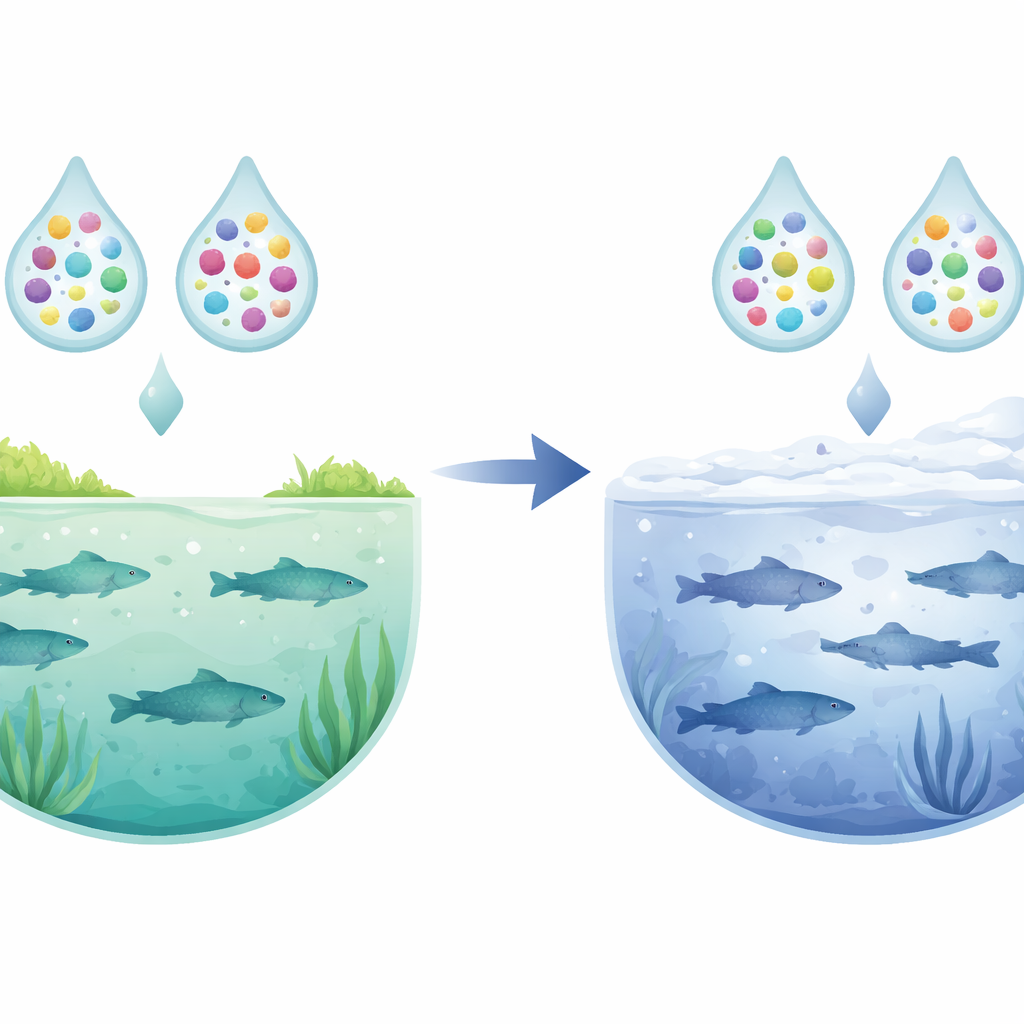
What Changes Under Cold Stress
The data revealed that cold‑stressed fish had a markedly reshaped protein landscape in their blood. Many proteins linked to energy production, the cell’s internal scaffolding, and responses to damage and stress changed their levels. Some proteins were found only in warm fish, others only in cold fish, and some in both but at very different amounts. When the team grouped these proteins according to their known roles in the cell, they saw strong signals pointing to metabolic slowdown, shifts in how cells maintain their shape, and activation of protective pathways that help the fish cope with low temperatures. Beyond proteins, hormone measurements showed that thyroid hormones and cortisol—often tied to metabolism and stress—dropped in the cold group, while sex hormones like estradiol and testosterone rose, suggesting a broad hormonal reset under chilly conditions.
From Raw Numbers to Useful Insight
To turn long lists of proteins into understandable patterns, the researchers used established bioinformatics tools. These tools cluster proteins into broader processes—such as “energy metabolism” or “cellular homeostasis”—and test whether particular processes are more affected than expected by chance. 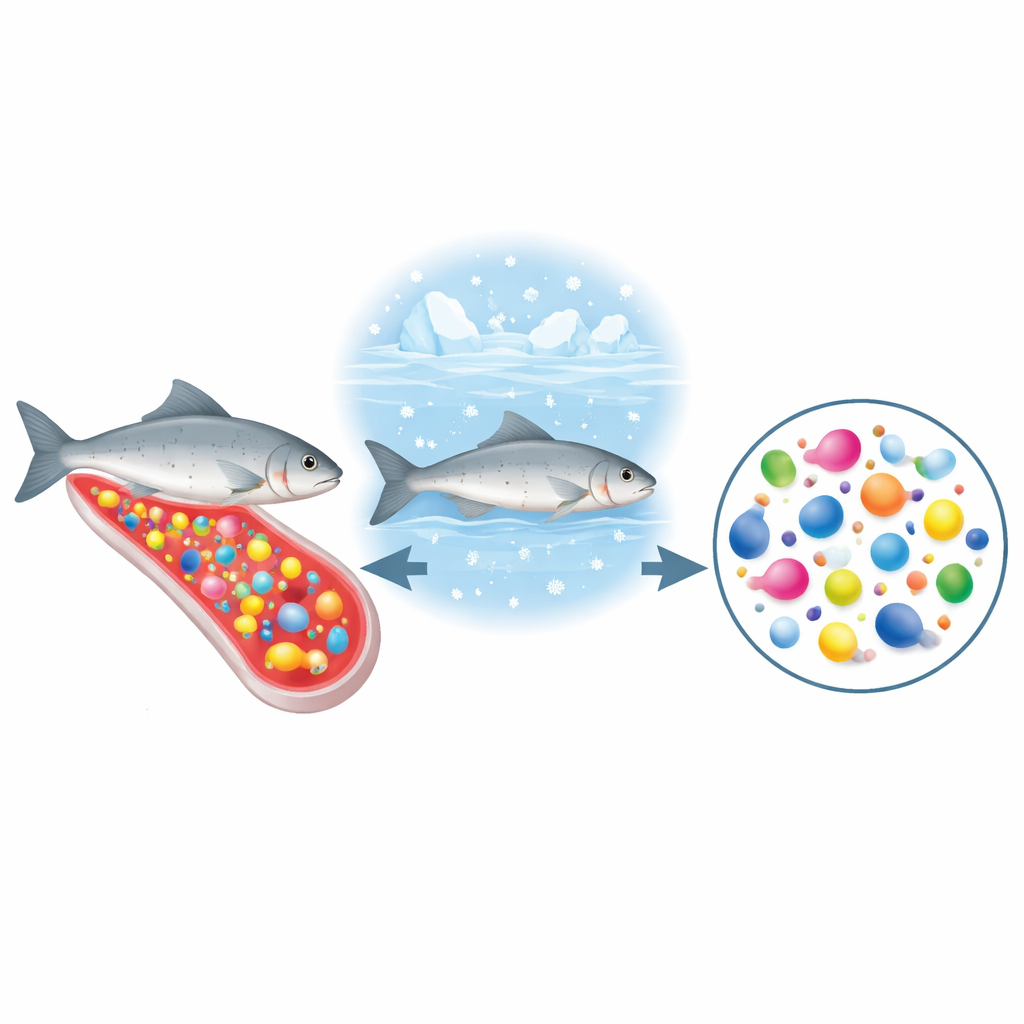
What This Means for Fish and Farmers
In simple terms, this work shows that long‑term cold stress pushes rohu into an emergency mode, rerouting energy from growth toward survival, reshaping its immune defenses, and shifting key hormones. The resulting dataset acts like a detailed blueprint of these changes, highlighting candidate proteins and hormones that could serve as early warning signs of cold stress in ponds and tanks. Over time, such molecular markers could guide selective breeding, better feeding plans, or other management steps that help farmers keep this vital food fish productive and healthy, even as climate variability brings more frequent and severe cold snaps.
Citation: Jayant Singh, P., Batta, A. Proteome Dataset of Serum and Albumin-Depleted Serum of Labeo rohita Under Cold Temperature Stress. Sci Data 13, 519 (2026). https://doi.org/10.1038/s41597-026-06921-0
Keywords: cold stress, fish proteomics, aquaculture, Labeo rohita, climate resilience