Clear Sky Science · en
Recovery of metagenome-assembled genomes from Spartina alterniflora root microbiome in Fujian Province, China
Why Hidden Life on Marsh Roots Matters
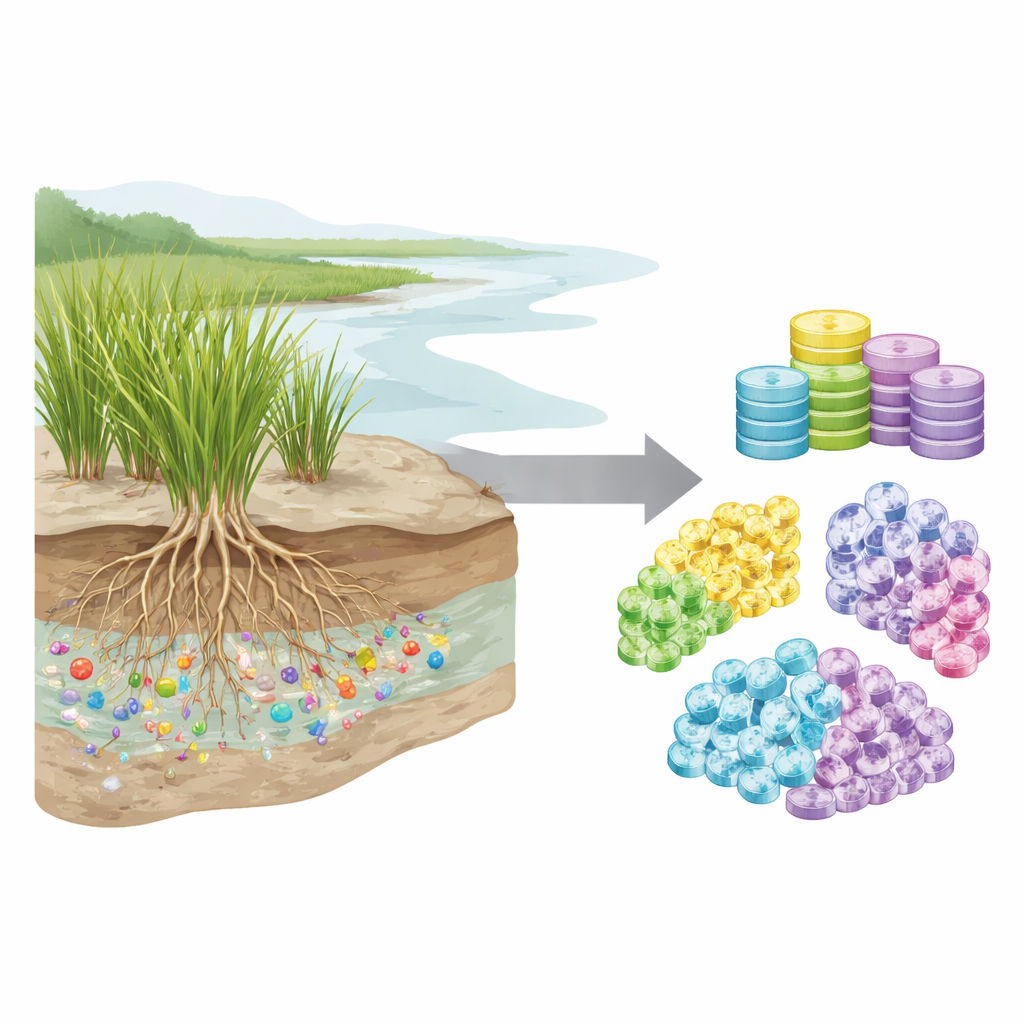
Along China’s southern coast, a tough grass called Spartina alterniflora has spread so quickly that it is now treated as a problem plant. Yet, like all plants, this marsh grass does not live alone: its roots are wrapped in a bustling community of microscopic partners. These tiny organisms can help the plant survive salty, low-oxygen mud and may even change how much nitrogen and sulfur flow through the coastal environment. This study dives into that hidden world, using powerful DNA techniques to map the root-dwelling microbes of Spartina along Chinese shorelines just as large-scale efforts are underway to remove the plant.
A Coastal Invader and Its Underground Partners
Spartina alterniflora, also known as smooth cordgrass, was deliberately introduced to China’s coasts in the late 1970s to stabilize shorelines. Since then, it has spread from north to south, carpeting estuaries such as Jinjiang, Luoyangjiang, and Jiulongjiang in South Fujian Province. While the plant can protect shores from erosion, it also crowds out native species and alters coastal habitats, triggering a nationwide campaign to pull it out. Scientists have realized, however, that the plant’s success depends not only on its own biology but also on the microbes living on and around its roots, which can help it cope with stresses like high salt and toxic sulfides in the mud.
Reading the DNA of Whole Microbial Communities
To understand who these root-dwelling partners are, the researchers collected cordgrass plants from eight sites along two estuaries and carefully cleaned the roots to focus on the organisms attached to them. Instead of trying to grow each microbe in the lab, they extracted all the DNA directly from the roots and used high-throughput sequencing to read hundreds of billions of DNA bases at once. With specialized computer tools, they stitched these short DNA fragments into longer pieces and grouped them into draft genomes, called metagenome-assembled genomes. This approach lets scientists capture the genetic blueprints of many microbes that may never have been grown or described before.
A Rich Cast of Microbes with Familiar Stars
The team recovered more than 800 such genomes from the cordgrass roots, most of them bacterial and a few archaeal, and then distilled them into just over 200 distinct microbial species. Many belonged to major bacterial groups often found in sediments and plant roots, such as Gammaproteobacteria, Alphaproteobacteria, Bacteroidia, and Campylobacterota. A family of bacteria called Sedimenticolaceae stood out across all sampling sites, making up between a few percent and nearly a third of the genomes in each location. These bacteria are known from salt marshes in the United States, where they can use sulfur compounds for energy and may help supply nitrogen to the plant. Finding them so consistently in Chinese marshes suggests they are key members of Spartina’s root community in both its native and invasive ranges.
Links Between Plant Roots, Clams, and New Microbial Lineages
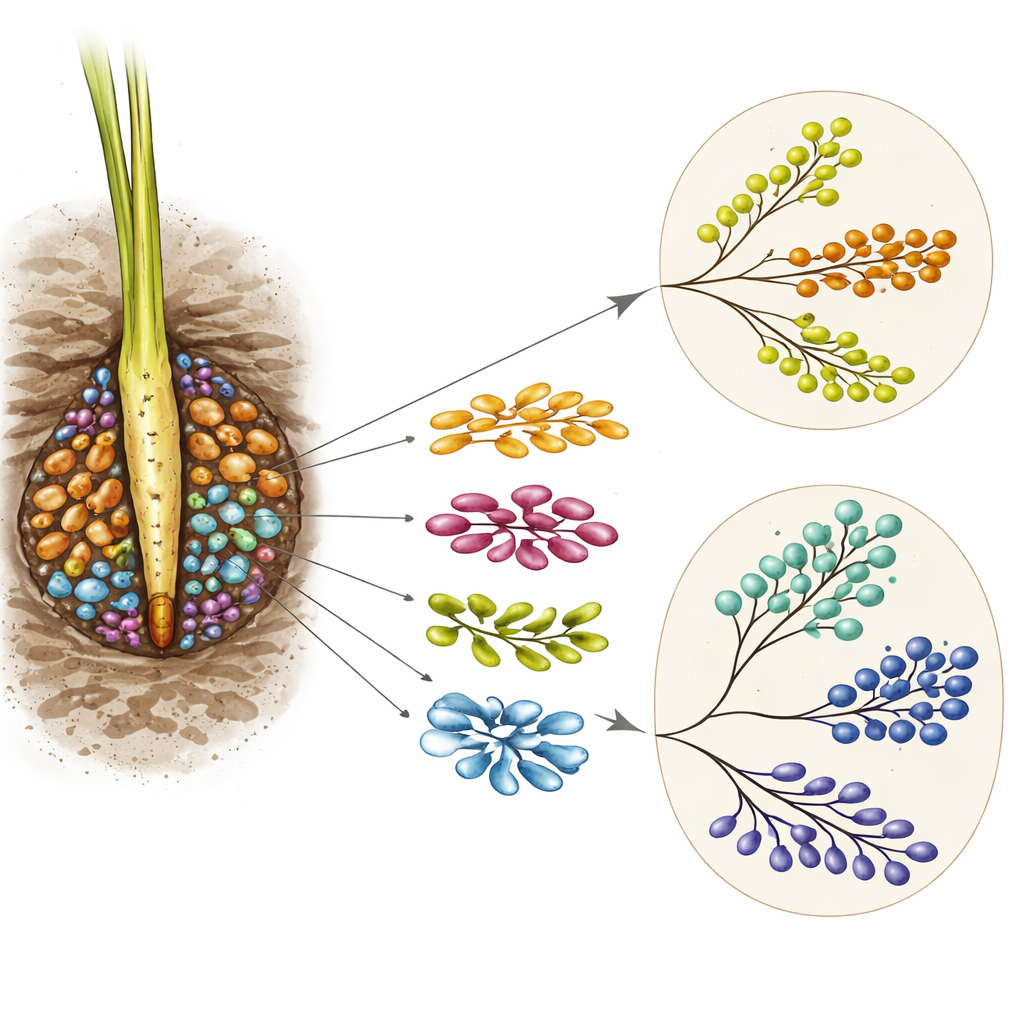
Focusing on a particular group of sulfur-using bacteria, the order Chromatiales, the researchers built an evolutionary tree that compared their newly recovered genomes with many reference genomes from public databases. Several of the Spartina-associated genomes fell into a genus called Candidatus Thiodiazotropha, which was previously known from roots of Spartina in the United States and from the gills of marine clams that also rely on sulfur-based energy. In the tree, bacteria from plant roots and animal hosts were intermingled, hinting that these microbes have shifted between very different partners over evolutionary time. Other recovered genomes did not match any known genera within the Sedimenticolaceae, forming two distinct branches that likely represent new, still-unnamed groups of bacteria adapted to the cordgrass root environment.
Why This New Genomic Map Is Important
By more than doubling the number of good-quality genomes available from Spartina root microbes, this work creates a detailed reference map of the hidden community living on an invasive but ecologically influential plant. These genomes will help researchers explore how root microbes help Spartina tolerate salt, low oxygen, and toxic compounds, and how they cycle nitrogen and sulfur in coastal mud. They also reveal unexpected links between microbes living in plant roots and those inhabiting marine animals, offering clues to how such partnerships evolve. As China works to control and remove Spartina from its shores, understanding its microscopic allies will be key to predicting how marsh ecosystems respond and how vital nutrient cycles may shift when this powerful plant and its microbial partners are gone.
Citation: Huang, Z., Petersen, J.M. Recovery of metagenome-assembled genomes from Spartina alterniflora root microbiome in Fujian Province, China. Sci Data 13, 541 (2026). https://doi.org/10.1038/s41597-026-06914-z
Keywords: Spartina alterniflora, root microbiome, salt marsh, metagenomics, symbiotic bacteria