Clear Sky Science · en
Chromosome-level genome assembly of Siberian kale (Brassica napus subsp. pabularia)
Why this leafy green matters
Siberian kale is more than a hearty salad ingredient. This leafy cousin of common rapeseed thrives in cold weather, resists disease, and sports deeply cut, frilly leaves that let light and air move more easily through crop canopies. These traits make it attractive for both nutrition and modern, highly mechanized farming. Yet, until now, scientists lacked a complete genetic blueprint for this plant, limiting efforts to understand where its useful qualities come from and how to breed even better varieties.
Meeting a special kind of kale
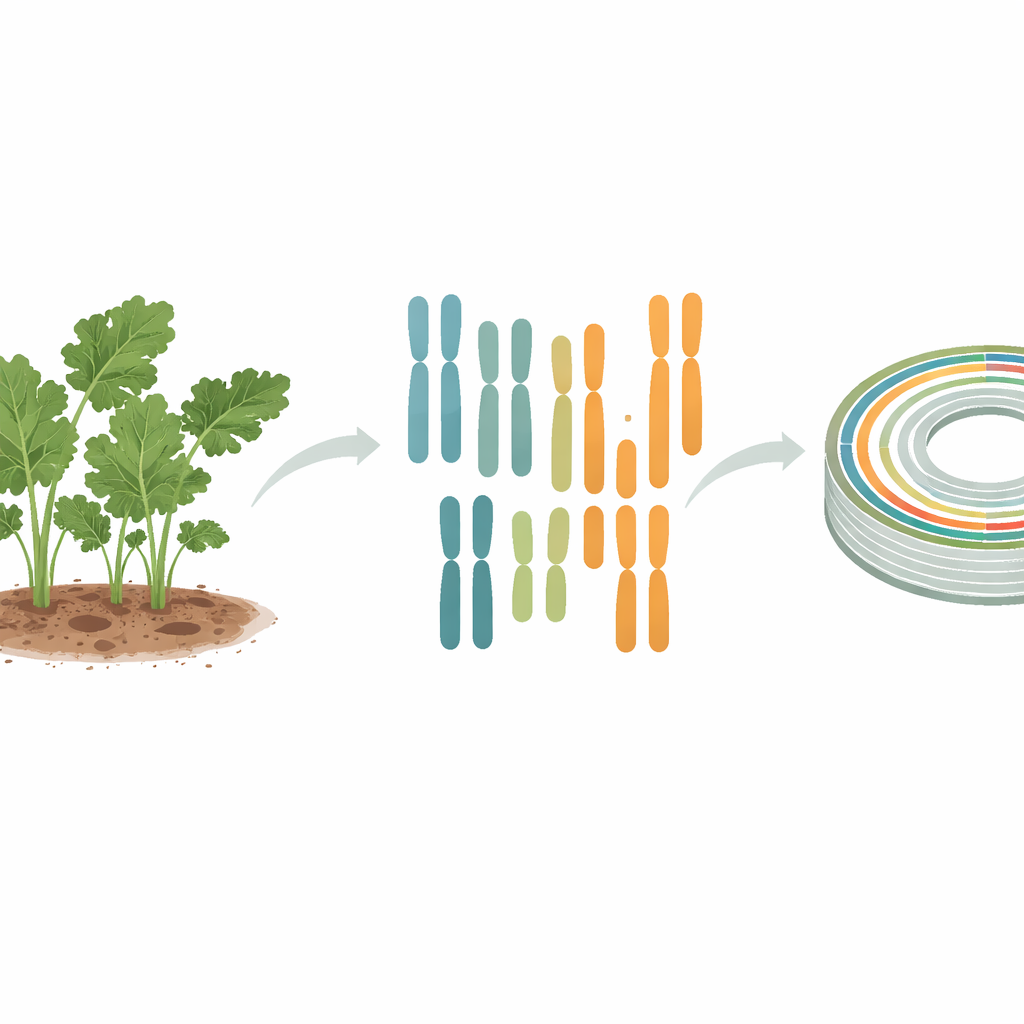
The study focuses on a variety called Beta, a fast-growing Siberian kale that stands upright, grows densely, and can be cultivated year-round. In the field, Beta plants have gray‑green, deeply lobed leaves with sparse hairs, bright yellow flowers, slender pods, and nearly spherical brown seeds. Botanically, Siberian kale belongs to the species Brassica napus, an ancient hybrid formed when two different cabbages—Brassica rapa and Brassica oleracea—combined their genomes thousands of years ago. As a result, Beta carries two full sets of chromosomes, one from each ancestral parent, giving it 38 chromosomes in total. This complex heritage helps explain its rich diversity of traits but also makes its genome more difficult to decode.
Building a high‑resolution genetic map
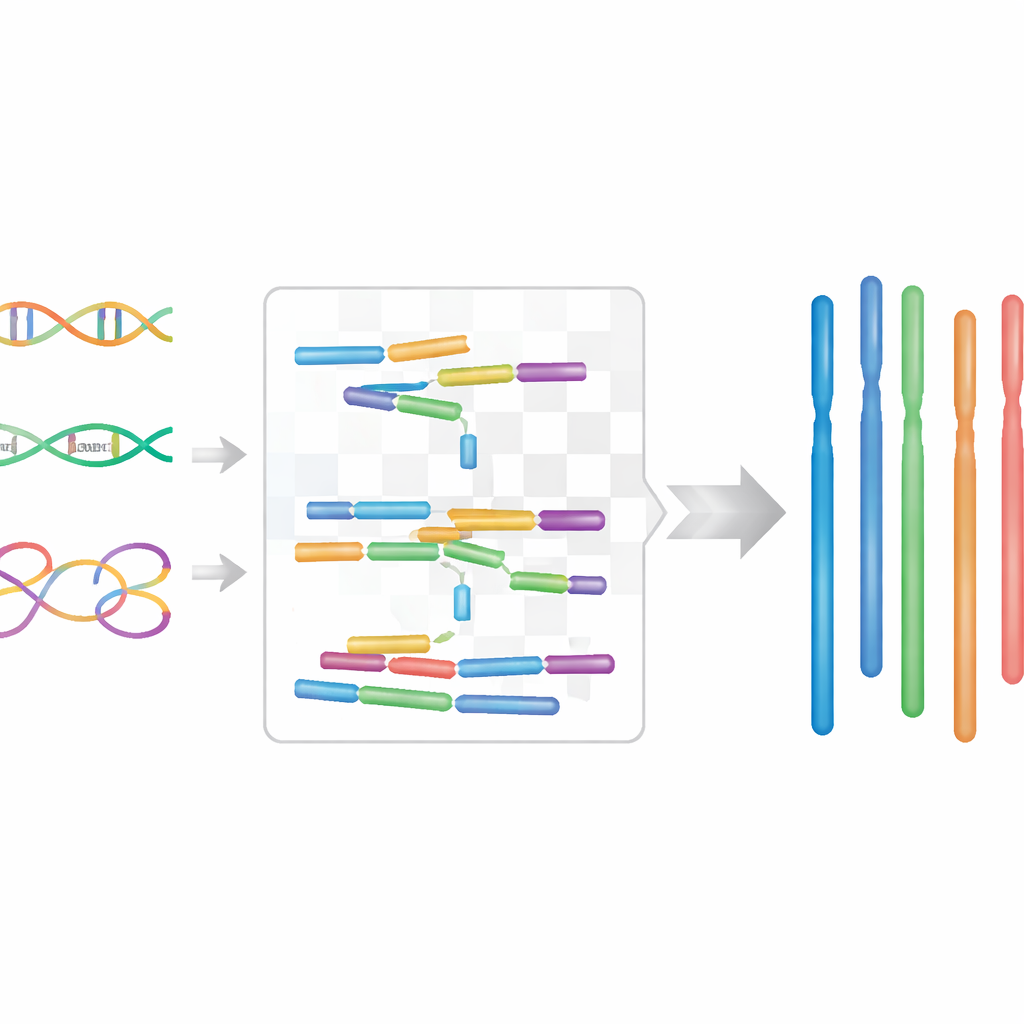
To capture the complete DNA sequence of Beta at chromosome scale, the researchers combined several cutting‑edge sequencing technologies. Short, highly accurate DNA reads from Illumina machines provided depth and quality checks, while long PacBio HiFi reads helped span repeated and tricky regions. A third technique, called Hi‑C, recorded how pieces of DNA interact in three‑dimensional space inside the nucleus, allowing the team to stitch contigs—continuous stretches of sequence—into full‑length chromosomes. The final assembly covered about 1.08 billion DNA letters, with nearly 90 percent arranged into 19 pseudo‑chromosomes that neatly matched the expected ten "A" and nine "C" chromosomes known from rapeseed. Quality tests showed the genome is extremely complete and accurate, making it a reliable reference for future work.
What the genome is made of
Once the DNA sequence was assembled, the team cataloged its contents. They found that more than half of the Beta genome consists of repetitive elements, especially mobile DNA segments known as long terminal repeat (LTR) retrotransposons, which cluster near chromosome centers. On top of this repeated landscape, the researchers predicted 98,882 protein‑coding genes, with typical gene sizes and structures for plants of this group. Over 90 percent of these genes could be matched to known functions or families using large public databases and comparisons with related species such as other Brassica crops and the model plant Arabidopsis. This rich gene catalogue offers a starting point for pinpointing genes that influence leaf shape, cold tolerance, nutrient content, and other desirable traits.
Putting Beta in the Brassica family tree
To see how Beta’s genome lines up with that of a widely studied oilseed rapeseed variety called ZS11, the scientists compared the two assemblies region by region. They found that about 86 percent of the Beta genome runs in parallel with ZS11, with high sequence similarity and matching chromosome structure. This tight correspondence confirms that the new assembly is not only complete but also structurally sound. At the same time, subtle differences highlight stretches of DNA that may underlie the Siberian kale’s unique leaf forms and its strong performance under cold and dense planting conditions.
From genome map to better crops
By producing a near‑complete, chromosome‑level genome for Siberian kale Beta, this work delivers a foundational reference for breeders and plant biologists. With this map in hand, researchers can now track genetic variations across Beta and its relatives, link them to visible traits, and more precisely select or engineer lines with improved yields, resilience, and nutritional value. For non‑specialists, the key message is simple: decoding the full genetic blueprint of this hardy kale opens the door to designing better Brassica vegetables and oilseeds, helping support sustainable, high‑density, and climate‑resilient agriculture.
Citation: Shan, X., Qu, M., Zhang, W. et al. Chromosome-level genome assembly of Siberian kale (Brassica napus subsp. pabularia). Sci Data 13, 553 (2026). https://doi.org/10.1038/s41597-026-06913-0
Keywords: Siberian kale genome, Brassica napus, leaf shape, plant breeding, cold-tolerant crops