Clear Sky Science · en
Haplotype-resolved T2T gap-free genomes of the winegrape cultivar Cabernet Sauvignon
A Closer Look at a Famous Wine Grape
Cabernet Sauvignon is one of the world’s best-known red wine grapes, prized for its deep color, firm tannins, and layered flavors. Behind these sensory traits lies a complex genetic blueprint that shapes how the vines grow, resist disease, and respond to soil and climate. This study delivers the most complete and finely detailed version of that blueprint to date, offering a new foundation for understanding what gives Cabernet its distinctive character and how it can be improved in the future.
Why Map the Genome of Cabernet Sauvignon?
Grapevines have long been a focus of genetic research because they are economically important and highly sensitive to their environment. Cabernet Sauvignon in particular has spread from its origins in France to vineyards across the globe, thriving in varied regions while maintaining a recognizable style. Yet, until now, scientists lacked a fully continuous, gap-free reference of its DNA. Earlier versions of the Cabernet genome, and of other grapes, contained missing segments and unresolved regions, especially in repetitive stretches of DNA. These blind spots made it difficult to trace how genes control key traits such as berry development, disease resistance, and the subtle influences of terroir on flavor.
Building a Complete Genetic Blueprint
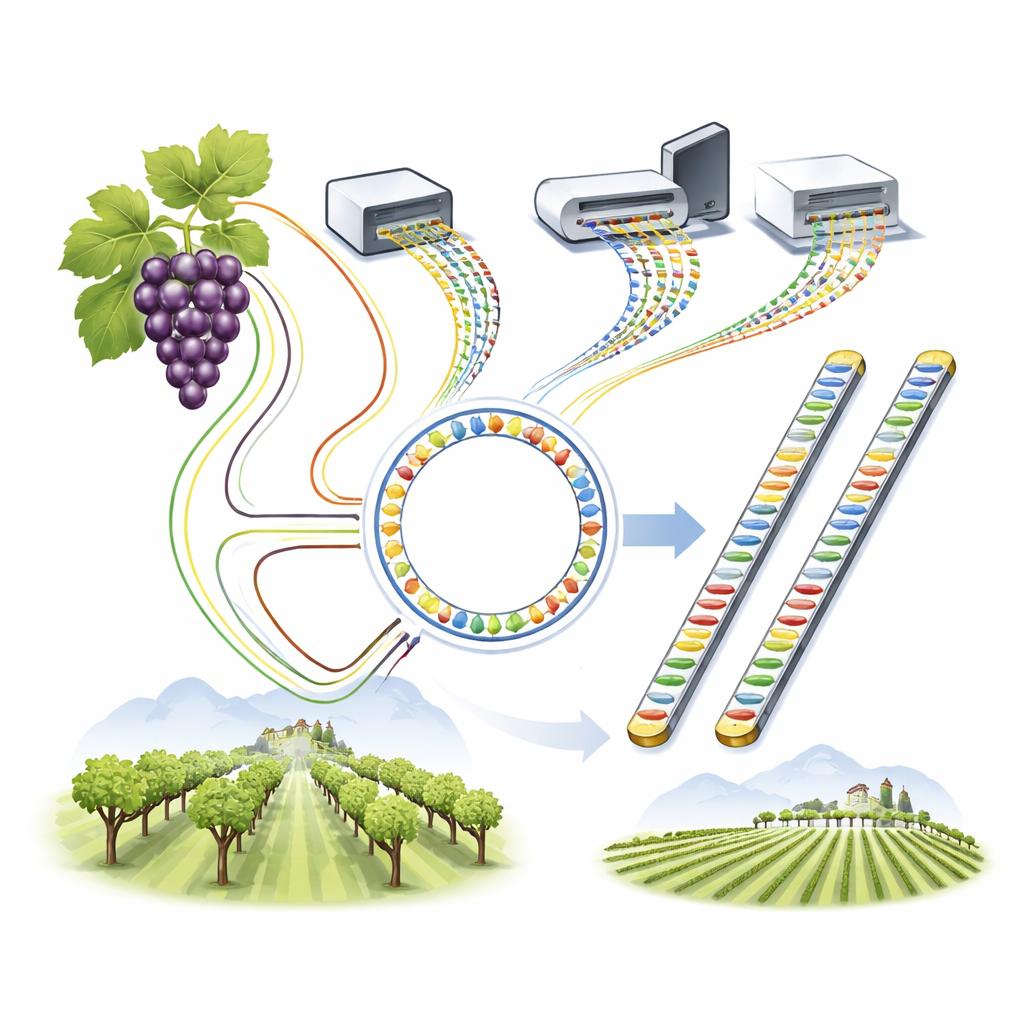
To overcome these limitations, the researchers combined several cutting-edge DNA sequencing technologies. They used highly accurate long reads from one platform, ultra-long reads from another, and three-dimensional contact data that shows how chromosomes fold in the cell nucleus. Together, these complementary views allowed them to assemble each of Cabernet Sauvignon’s two chromosome sets—from one end of the chromosome to the other—without gaps. The final result is two complete versions, or haplotypes, each consisting of 19 chromosomes and roughly 492 million DNA letters. Careful checks showed that nearly all known essential plant genes are present, and that virtually all sequencing reads map back cleanly to the new assemblies, indicating high accuracy and continuity.
What the New Map Reveals
With the complete genome in hand, the team identified more than 36,000 genes in one haplotype and about 35,000 in the other. They cataloged where genes sit along the chromosomes, how densely they are packed, and how much of the genome is made up of repeated elements such as mobile DNA. They then compared Cabernet’s genome to those of other grape varieties, including important reference strains and well-known cultivars like Chardonnay. These comparisons showed that, overall, the chromosomes line up in a fairly orderly way across varieties, but Cabernet also harbors its own distinctive large-scale twists and rearrangements.
Hidden Flips in the DNA
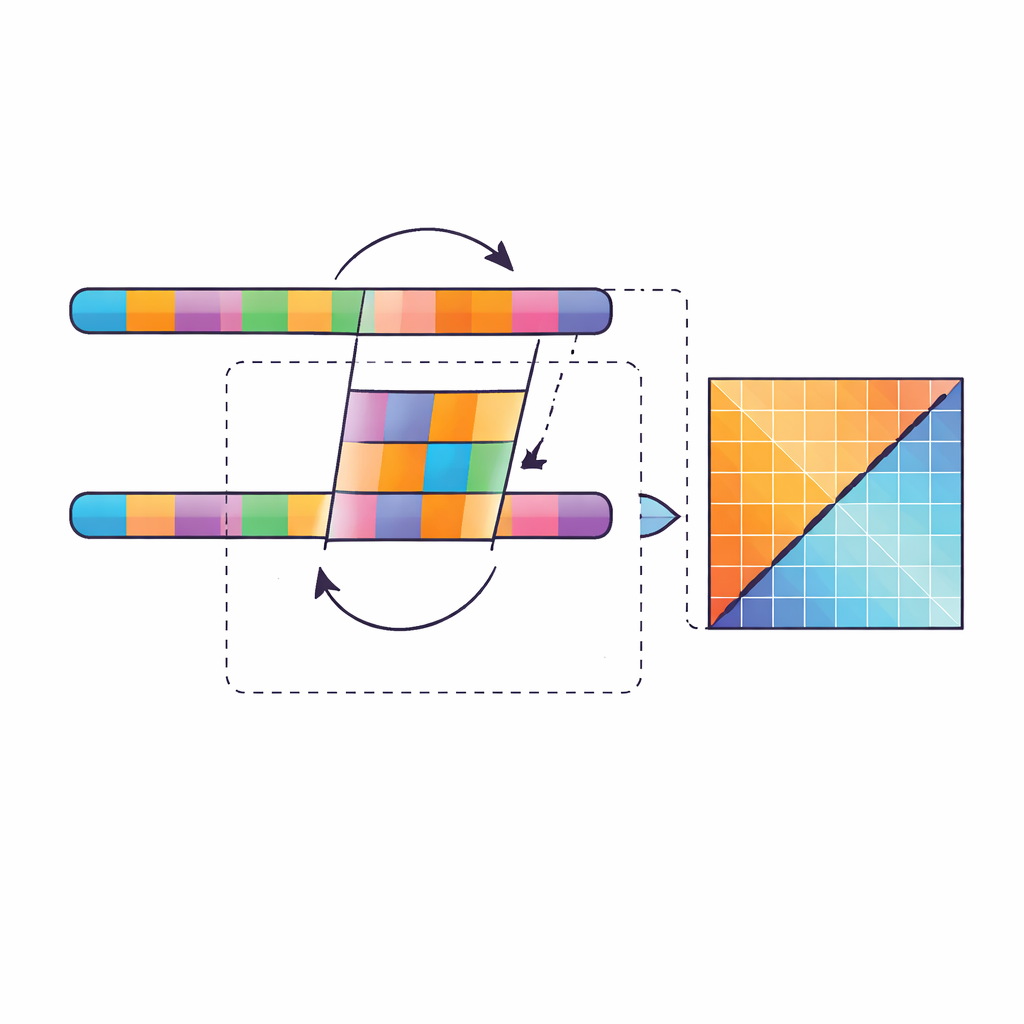
One of the most striking discoveries was a set of very large DNA inversions—sections of chromosomes that appear flipped in orientation—within Cabernet’s two haplotypes. These megabase-scale inversions were found on several chromosomes and confirmed using independent lines of evidence, including alignment of the two haplotypes, raw sequencing reads that span the inversion boundaries, and contact maps that reflect how DNA regions interact in three-dimensional space. The fact that similar inversions appear when comparing to previously published Cabernet genomes suggests that these are not artifacts of a single plant or technical error, but stable features of the variety’s genetic makeup. Such rearrangements can influence how genes are switched on or off and may underlie some of the grape’s characteristic traits.
A New Tool for Future Grapes
Beyond the technical achievement of creating gap-free chromosome sequences, this work delivers a practical resource for grape science and breeding. The fully resolved Cabernet Sauvignon genome will help researchers pinpoint genes linked to flavor, aroma, color, tannins, and resilience to pests and diseases. It also offers a precise reference for studying how environment and cultivation practices shape wine quality at the molecular level. In simple terms, the study provides a clean, complete map of Cabernet’s DNA—one that will guide future efforts to protect vineyards, refine wine styles, and perhaps even design new grape varieties inspired by this classic cultivar.
Citation: Khan, F.S., Sun, T., Wang, X. et al. Haplotype-resolved T2T gap-free genomes of the winegrape cultivar Cabernet Sauvignon. Sci Data 13, 545 (2026). https://doi.org/10.1038/s41597-026-06910-3
Keywords: Cabernet Sauvignon genome, grapevine genetics, wine grape breeding, structural variation, telomere-to-telomere assembly