Clear Sky Science · en
Chromosome-level genome assembly and annotation of the emblematic silver-lipped pearl oyster Pinctada maxima Jameson 1901
Pearls, Oysters, and Hidden Blueprints
South Sea pearls are among the most prized gems in the world, and many come from the silver-lipped pearl oyster, Pinctada maxima. Behind every shimmering pearl lies an intricate biological story written in DNA. This study offers the first detailed, chromosome-level genetic map of this iconic oyster, opening the door to better pearl farming, healthier oyster stocks, and deeper insight into how these animals build pearls and shells in the first place.
The Star Oyster of the Pearl Trade
Pinctada maxima lives in tropical waters around northern Australia and Southeast Asia and produces large white, silver, and golden pearls that dominate the global cultured pearl market. For coastal communities, these pearls are a vital source of income. Yet farmers face serious challenges. Young oysters sometimes die in large numbers due to a mysterious condition called juvenile pearl oyster mortality syndrome, threatening livelihoods and creating uncertainty for the industry. Breeding programs that use genetics to select stronger, high-quality pearl producers are underway, but until now they have lacked a complete picture of the oyster’s genetic blueprint.
Building a High-Quality Genetic Map
To fill this gap, the researchers sequenced the DNA of a single silver-lipped pearl oyster using several advanced technologies. Long DNA fragments were read with one platform, while other tools produced many short, accurate reads. They also used a method that captures how pieces of DNA are folded and physically close within the cell, which helps place fragments into full-length chromosomes. By carefully combining and polishing these datasets, they assembled a genome of about 1.27 billion DNA letters, grouped into 14 chromosomes, with most of the sequence anchored in the right place. Checks against a large set of essential mollusc genes showed that nearly 88 percent were present and mostly in single copies, signaling a very complete and reliable assembly. 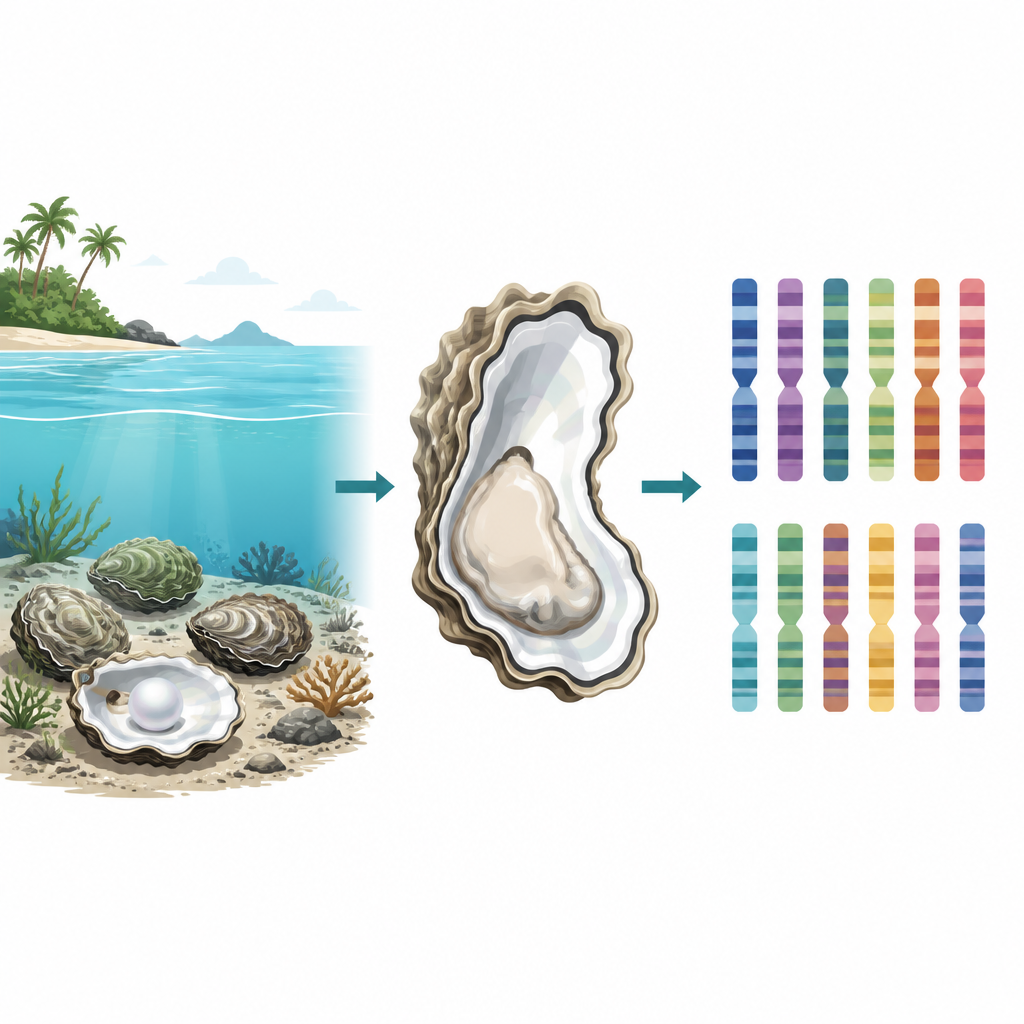
What the Genome Reveals Inside
The team then explored what is inside this newly assembled genome. They found that almost two thirds of it is made of repeated DNA, including many mobile genetic elements, a higher proportion than in a closely related pearl oyster species. After using computer tools and protein databases, they predicted more than 25,000 protein-coding genes and mapped where these genes and repeats sit along each chromosome. Some chromosomes hold far more genes than others, and patterns of base composition vary across the genome. Together, these features form a detailed landscape that scientists can now search for genes linked to pearl formation, shell building, growth, and disease resistance. 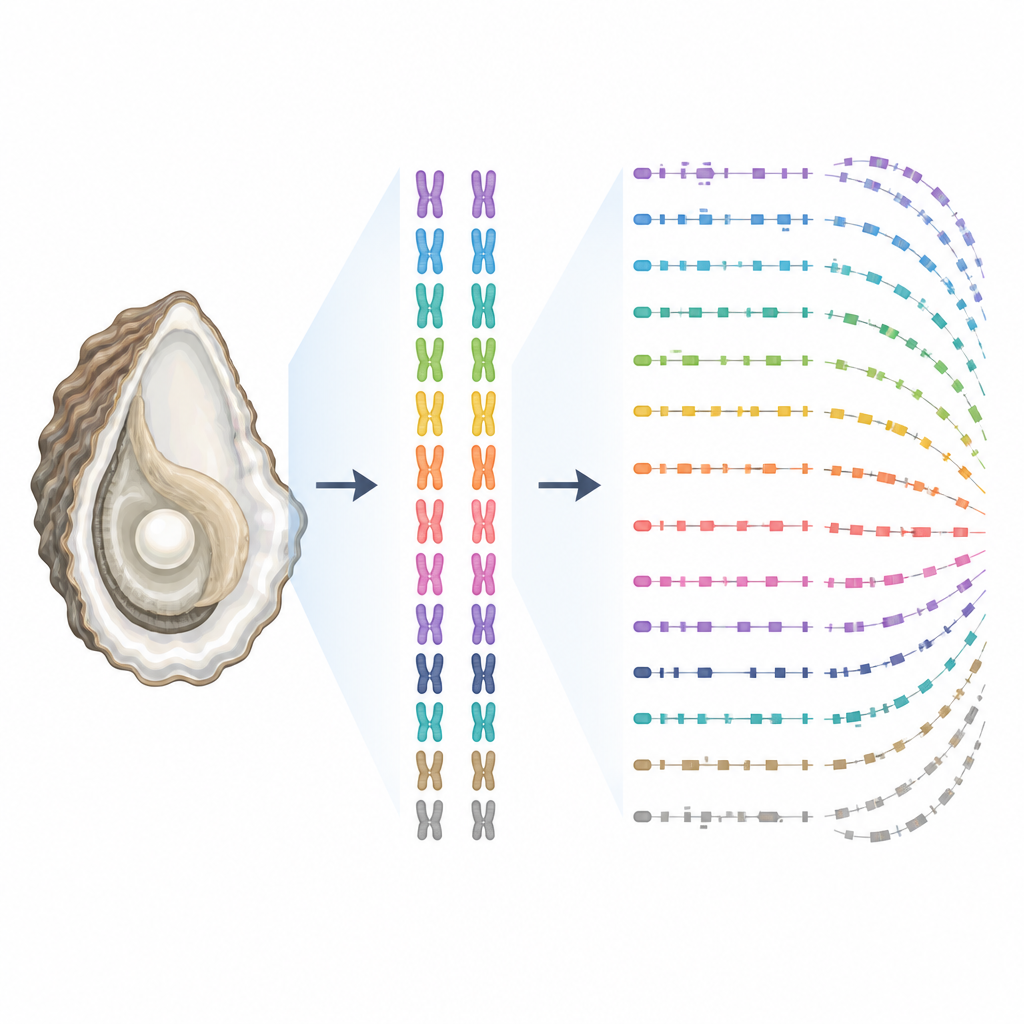
Placing the Oyster on the Tree of Life
Beyond the species itself, the authors compared the silver-lipped oyster genome to those of many other bivalves. Using shared genes, they reconstructed evolutionary relationships and timing across clams, mussels, oysters, and related molluscs. They also looked at how chromosomes of Pinctada maxima line up with those of another pearl oyster, Pinctada fucata. Many chromosomes match in long blocks, but some show rearrangements or limited similarity. These differences likely reflect millions of years of separate evolution between oyster lineages with different shell and tooth structures, and may be tied to how each species forms its shell and pearls.
From Genome to Better Pearls and Healthier Seas
In simple terms, this work gives scientists and breeders a high-resolution map of the silver-lipped pearl oyster’s DNA. With it, they can more easily pinpoint genes that influence pearl quality and identify variants that help oysters withstand disease and changing environments. While this study does not solve these challenges on its own, it provides the essential reference that future research and selective breeding efforts will build upon, helping secure the future of South Sea pearls and the communities that depend on them.
Citation: Benestan, L., Cormier, A., Destanque, T. et al. Chromosome-level genome assembly and annotation of the emblematic silver-lipped pearl oyster Pinctada maxima Jameson 1901. Sci Data 13, 753 (2026). https://doi.org/10.1038/s41597-026-06905-0
Keywords: pearl oyster genome, Pinctada maxima, South Sea pearls, aquaculture genetics, bivalve evolution