Clear Sky Science · en
Dolphinfish (Coryphaena hippurus) Biologging Dataset in the Eastern Pacific Ocean
Why Track a Fast-Moving Ocean Traveler?
Dolphinfish, often called mahi-mahi in seafood markets, are among the ocean’s fastest-growing and most widely caught open‑water fish. Yet, until recently, scientists knew surprisingly little about where they travel, how deep they dive, or how they use different parts of the eastern Pacific Ocean. This article introduces a large, publicly available tracking dataset that follows individual dolphinfish in detail, opening the door for new discoveries that can help keep both fisheries and ocean ecosystems healthy. 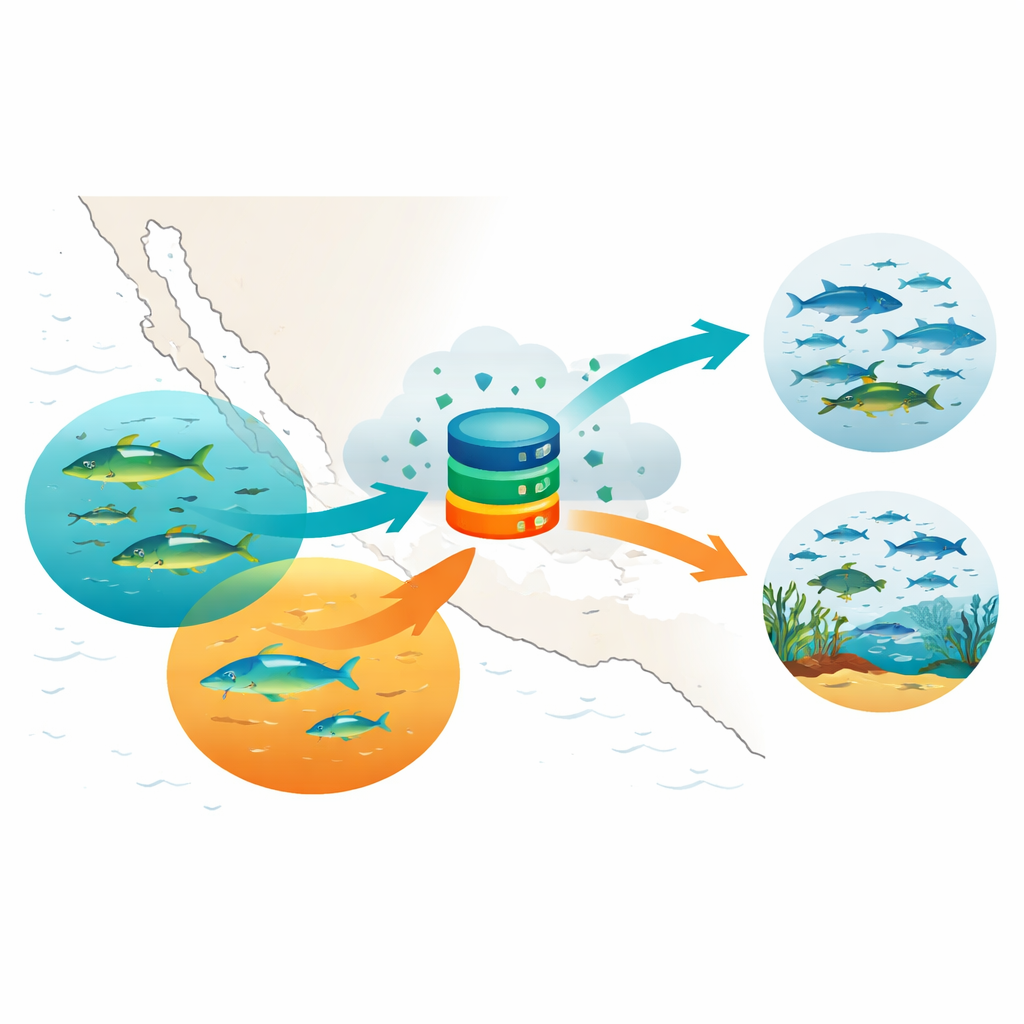
A Long-Term Tagging Effort on the High Seas
Since 2010, researchers in Mexico and the United States have worked with sport and commercial fishers to catch and tag dolphinfish off Baja California in the north and Oaxaca in the south. Over 15 years, they tagged 313 individual fish, using both simple plastic tags and more advanced electronic “biologging” tags that record depth, temperature, and light. These efforts spanned different seasons—summer and fall in Baja, winter in Oaxaca—to capture how dolphinfish behave across changing ocean conditions. The work targets a species that is ecologically important, supports major regional fisheries, and holds cultural value in coastal communities.
How High-Tech Tags Follow Fish
The centerpiece of the project is a set of pop‑off archival tags, small electronic devices attached near the dorsal fin. These tags store information on where a fish swims vertically in the water column, the temperatures it experiences, and, indirectly, how it moves horizontally across the ocean. After a programmed period, or if certain depth conditions are met, the tag releases from the fish, floats to the surface, and transmits summarized data to satellites. In this program, 153 such tags were deployed, with successful data returns from 109 of them, lasting from less than a day up to nearly five months, with an average of about a month at liberty.
What the Dataset Contains
For each tagged fish, the archive includes raw sensor data and processed estimates of its movement over time. Depth and temperature records come either as detailed time series or as daily summaries, depending on the tag model. A specialized movement model combines light levels at dawn and dusk, sea‑surface temperature, and known start and end locations to reconstruct likely paths every 12 hours, along with an uncertainty zone around each estimated position. Accompanying tables describe when and where each tag was deployed, the fish’s size and sex, the type of tag used, and how the tag was programmed. Together, these files provide a rich picture of dolphinfish life in both northern and southern sectors of the eastern Pacific. 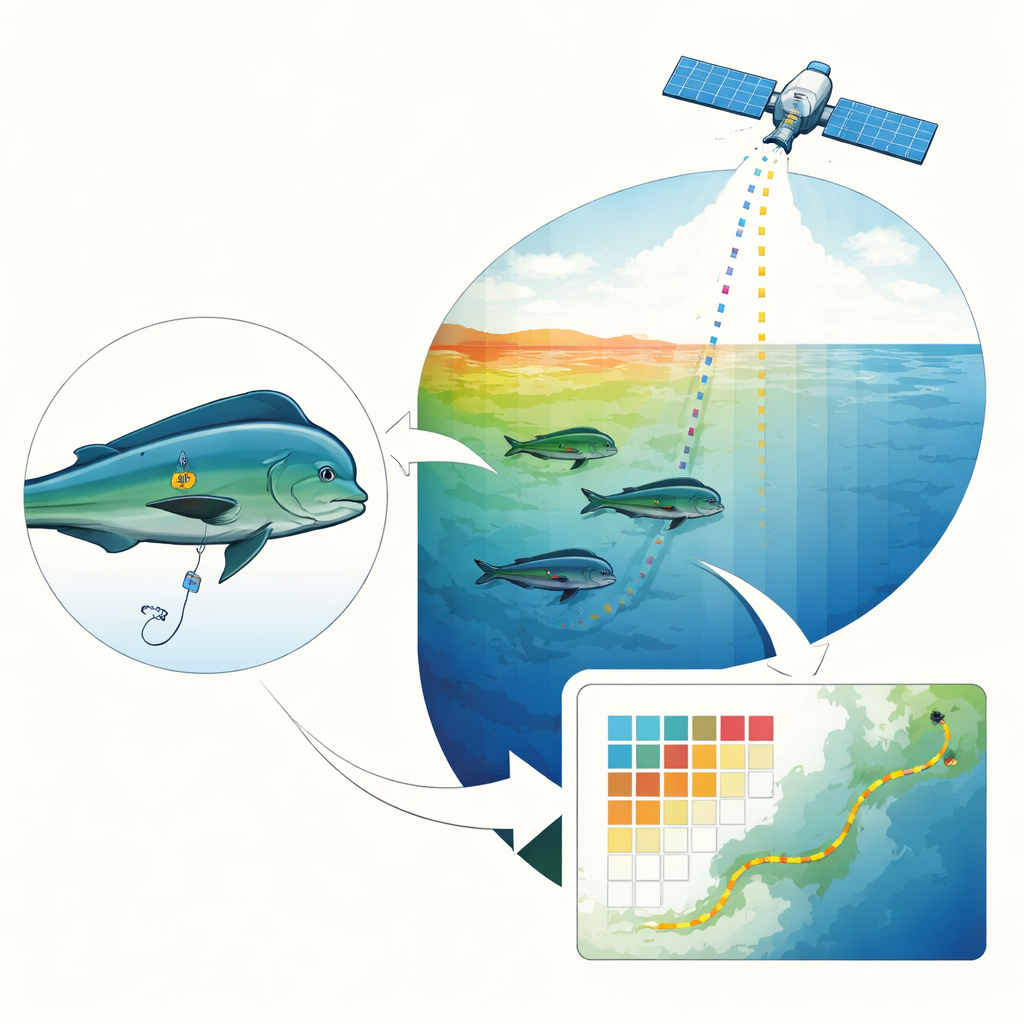
From Raw Signals to Reliable Tracks
The authors emphasize that the published tracks and time series come straight from the tag manufacturer’s servers, with minimal filtering. They advise users to look carefully at depth, temperature, and light records to identify times when tags may have detached from the fish and drifted on their own. To make movement estimates more realistic, the team tested several assumptions about how fast a dolphinfish can travel, running the geolocation model at different maximum swimming speeds and selecting the version that best matched satellite temperatures and light patterns while keeping uncertainty small. They also highlight practical details—such as changes in tagging technique to improve retention—that should be considered when comparing fish from different years or regions.
Why This Matters for Oceans and People
The resulting open dataset, hosted through the U.S. Animal Tracking Network and the DataONE Research Workspace, is a tool for anyone interested in pelagic (open‑ocean) ecology, from academic scientists to fisheries managers and conservation organizations. It can be used to explore questions about seasonal migrations, how dolphinfish relate to floating objects or temperature fronts, or how their habits might respond to climate‑driven changes in the ocean. In simple terms, this paper does not offer a single headline result; instead, it delivers a carefully documented, long‑term record of real fish in a real ocean, giving others the raw material needed to design better, evidence‑based rules for fishing and to understand how these fast‑moving animals fit into the wider marine ecosystem.
Citation: Perle, C.R., O’Sullivan, J., Ortega-Garcia, S. et al. Dolphinfish (Coryphaena hippurus) Biologging Dataset in the Eastern Pacific Ocean. Sci Data 13, 525 (2026). https://doi.org/10.1038/s41597-026-06890-4
Keywords: dolphinfish, biologging, fish tagging, eastern Pacific Ocean, fisheries management