Clear Sky Science · en
Chromosome-scale genome assembly and annotation of Garuga floribunda var. gamblei (King ex W. W. Sm.) Kalkman
A Hidden Tree With a Big Story
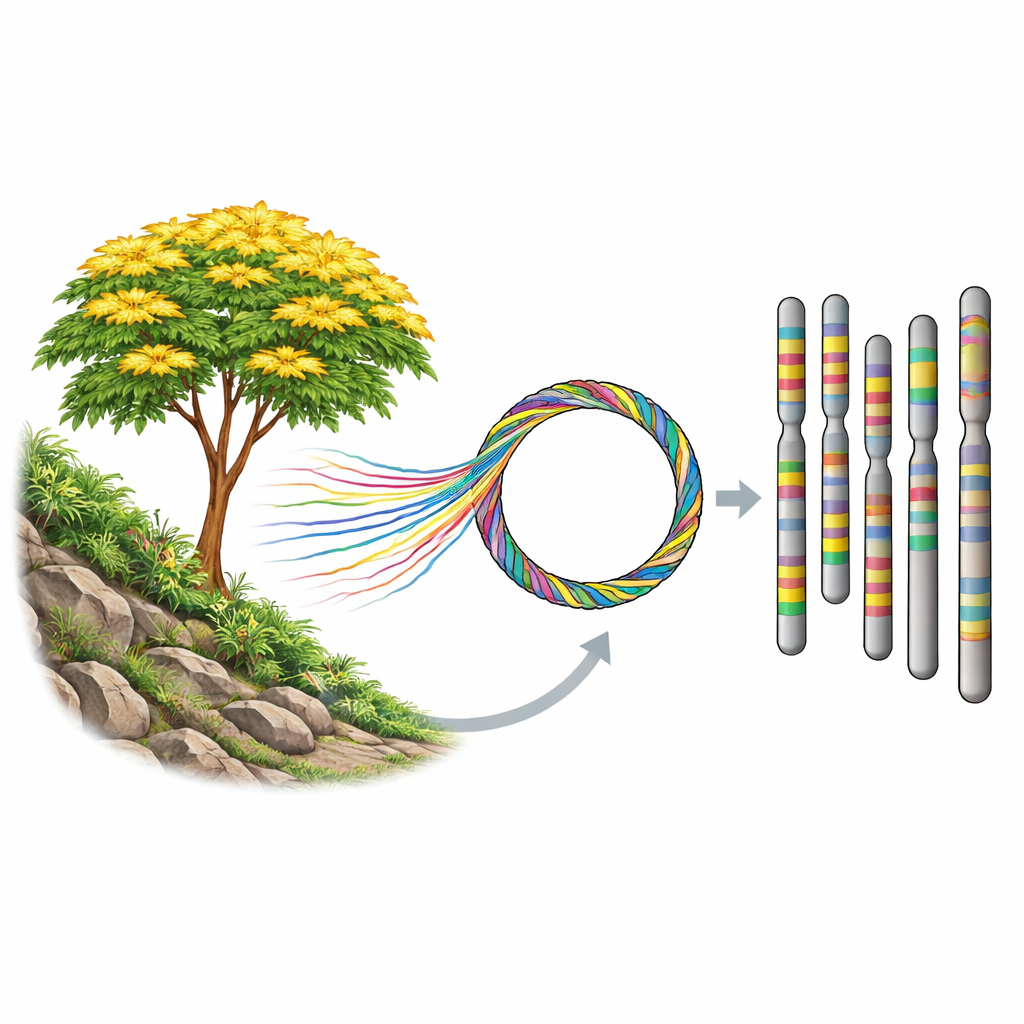
In the tropical hills of southern Asia grows an unobtrusive tree with bright yellow blossoms and valuable red wood. Called Garuga floribunda var. gamblei, it is now so rare in parts of China that many of its former forest homes have been replaced by farms, plantations, or cities. To protect and better use this little-known species, scientists need to understand its genetic blueprint. This study delivers that missing foundation by decoding the tree’s entire set of chromosomes at high resolution, opening the door to conservation planning, breeding, and deeper insight into its evolutionary past.
Why This Little-Known Tree Matters
Garuga floribunda var. gamblei belongs to the incense and resin tree family Burseraceae, a group that includes species important for timber, oils, and traditional medicine. In China, this tree has long been valued for its dense, reddish wood and showy flowers, yet its wild populations have shrunk to the point that it approaches the category of species with extremely small populations. Very few studies have examined its genes, family relationships, or population health. Without that information, it is difficult to design smart recovery programs, manage remaining stands, or explore its potential uses. A detailed genome offers a way to see, in one shot, the thousands of genes that underlie traits like growth, wood quality, and stress tolerance.
Reading the Tree’s Genetic Blueprint
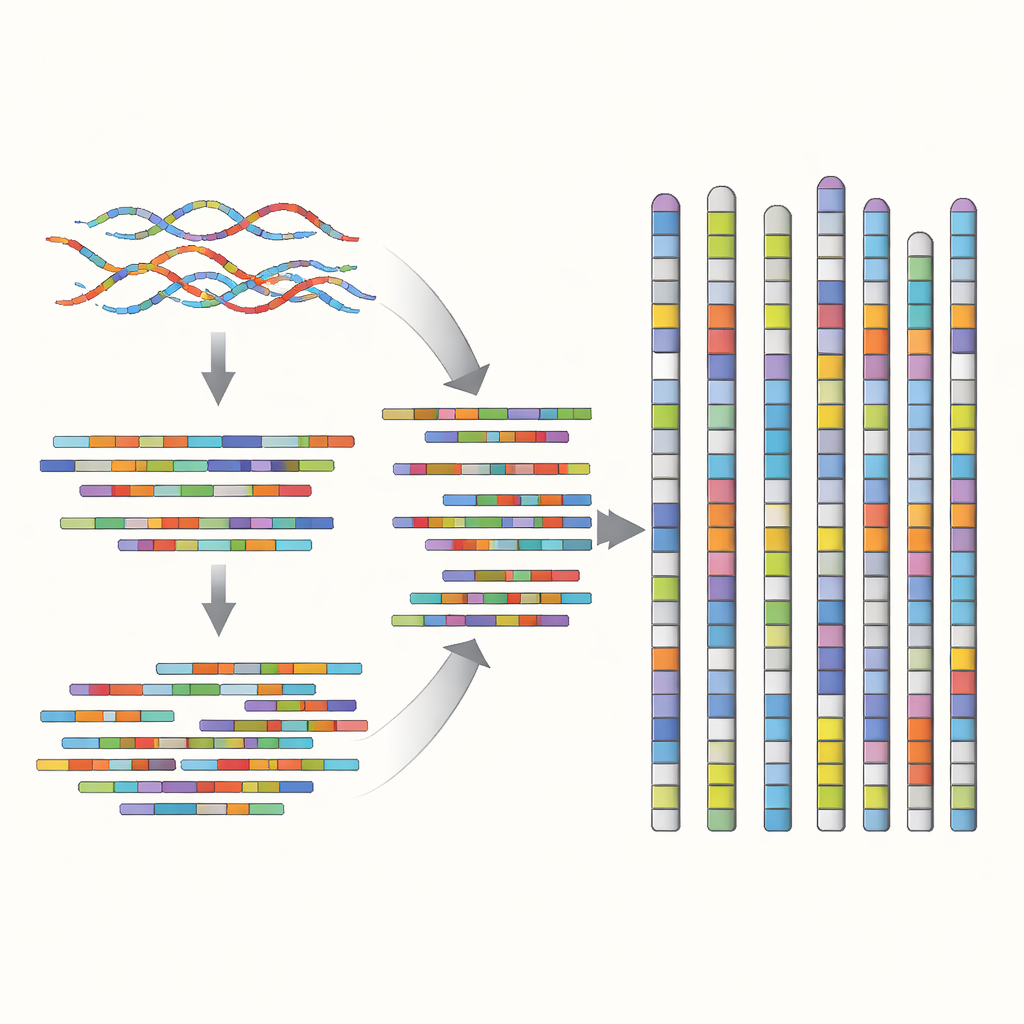
To build this genetic reference, the researchers collected leaves, flowers, and fruits from a single tree in Yunnan Province, China. They then used several complementary DNA-reading technologies. Long, highly accurate PacBio HiFi reads captured broad stretches of the genome; short Illumina reads helped polish away remaining errors; Hi-C data revealed which pieces of DNA sit near one another inside the cell’s nucleus, allowing the team to assemble whole chromosomes; and RNA sequencing from multiple tissues highlighted which stretches of DNA actually serve as working genes. By combining these data, they stitched together a genome of about 449 million “letters,” an amount consistent with earlier rough size estimates for the species.
From Raw Data to Full Chromosomes
The assembled genome was arranged into 13 large, chromosome-like pieces that together hold over 95 percent of the sequence. Quality checks showed that this assembly is both highly accurate and nearly complete. When the team compared it with a standard set of genes expected in land plants, they found over 97 percent present, meaning very few genes appear to be missing or broken. They also measured the amount of repeated DNA—stretches that occur many times and can be difficult to assemble correctly. About one-third of the genome is made up of such repeats, especially a class of mobile elements called long terminal repeat retrotransposons. Their widespread but orderly distribution suggests that even these troublesome regions were assembled reliably.
Genes, Messages, and Repeats
Looking more closely, the scientists identified 19,620 regions that code for proteins, the working molecules that build and maintain the tree’s cells. Most of these genes could be matched to known families and functions by comparing them with large international databases, indicating that the new genome fits well within broader plant biology. The team also cataloged more than 14,000 pieces of non-coding RNA, including transfer RNAs, ribosomal RNAs, and small regulatory RNAs, which help control how genes are turned on and off. Together with the map of repeats and other structural features, this provides a rich, layered view of the tree’s genetic landscape.
What This Means for Forests and the Future
For non-specialists, the key message is straightforward: the authors have produced a reliable, chromosome-level map of a rare and economically important tropical tree. With this map, researchers can now trace how Garuga and its relatives evolved, pinpoint genes involved in valuable traits like wood quality or resilience to environmental stress, and design more informed plans to conserve dwindling wild populations. In practical terms, the study turns a once “genetically invisible” species into a well-charted organism, giving conservationists and forest managers a powerful tool to help ensure that its yellow-flowered canopy remains part of tropical landscapes for generations to come.
Citation: Chen, R., Rao, R. & Yue, LL. Chromosome-scale genome assembly and annotation of Garuga floribunda var. gamblei (King ex W. W. Sm.) Kalkman. Sci Data 13, 504 (2026). https://doi.org/10.1038/s41597-026-06886-0
Keywords: plant genome, tropical tree, forest conservation, chromosome assembly, Burseraceae