Clear Sky Science · en
Data from long-term experiments in temperate croplands to evaluate soil organic carbon models
Why the carbon under our feet matters
Much of the world’s climate story is hidden underground, locked up in the dark, crumbly material we call soil organic carbon. This buried carbon helps keep our climate stable, supports fertile fields, and makes crops more resilient to drought and erosion. Scientists use computer models to predict how farming practices will change this hidden carbon bank over decades, but those models are only as good as the data used to test them. This paper presents a rare, carefully assembled dataset from long-running farm experiments across temperate regions, designed to give soil carbon models the hard reality check they urgently need.
Bringing scattered field trials into one picture
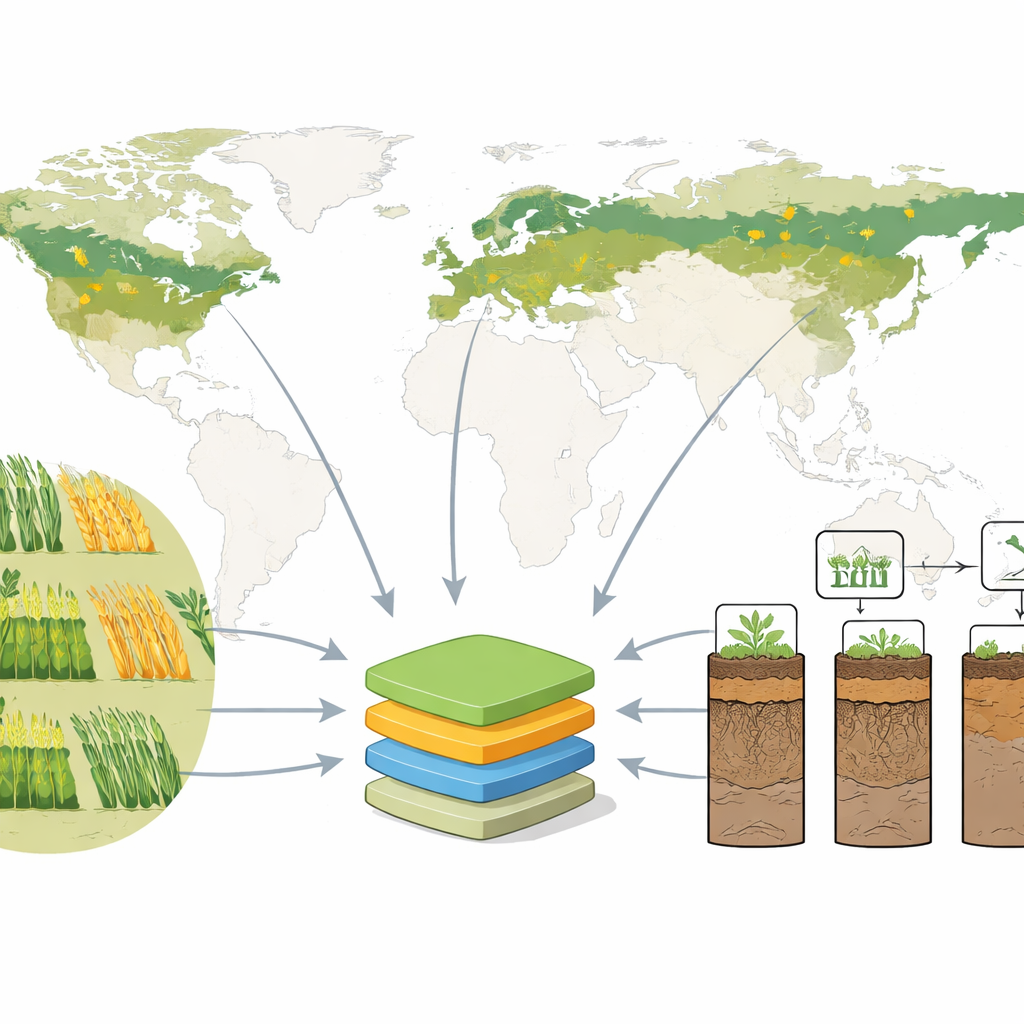
The authors gathered data from 34 long-term experiments in crop fields spread across several temperate countries, with a strong focus on Western Europe but also including sites in the United Kingdom, Sweden, Denmark, Germany, the United States, Australia, and Argentina. These experiments track how different farming practices—such as fertilization, residue management, crop rotations, and long-term bare fallow—affect soils over spans of 7 to almost 100 years. In total, the team harmonized information from 167 different management treatments, compiling 1,328 measurements of soil carbon in the upper soil layer and 4,588 records of individual crop cycles. By placing these diverse sites into a common framework, they created a shared testing ground for several leading soil carbon models.
Following the carbon from sky to soil
To understand how much carbon enters the soil each year, the researchers reconstructed what happens to plant material above and below ground. They started from measured crop yields and used well-established relationships between harvestable grain, stems and leaves, and roots to estimate how much plant matter is left on or in the soil. They did this for both main crops and cover crops, and distinguished carbon from residues on the surface, from roots, and from extra inputs such as manures, composts, and other recycled organic materials. This approach makes it possible to link simple field measurements, like yield, to the flow of carbon into the soil that models need to simulate.
Adding climate, soil, and management detail
Soil carbon models also need to know how weather, soil properties, and daily farming decisions shape decomposition and storage. The team therefore added climate histories for each experiment, including temperature, rainfall, and water demand, mostly reconstructed from modern reanalysis products and national weather archives. They paired these with estimates of soil moisture and soil temperature in the top layer, and with basic soil traits such as texture, acidity, and nutrient balance. Management details—such as whether a field was plowed deeply, left untilled, irrigated, kept bare, or covered by crops—were recorded in a standardized way. The result is a set of linked tables that describe not just the carbon in the soil, but the whole context in which that carbon changes through time.
What the long-term experiments reveal
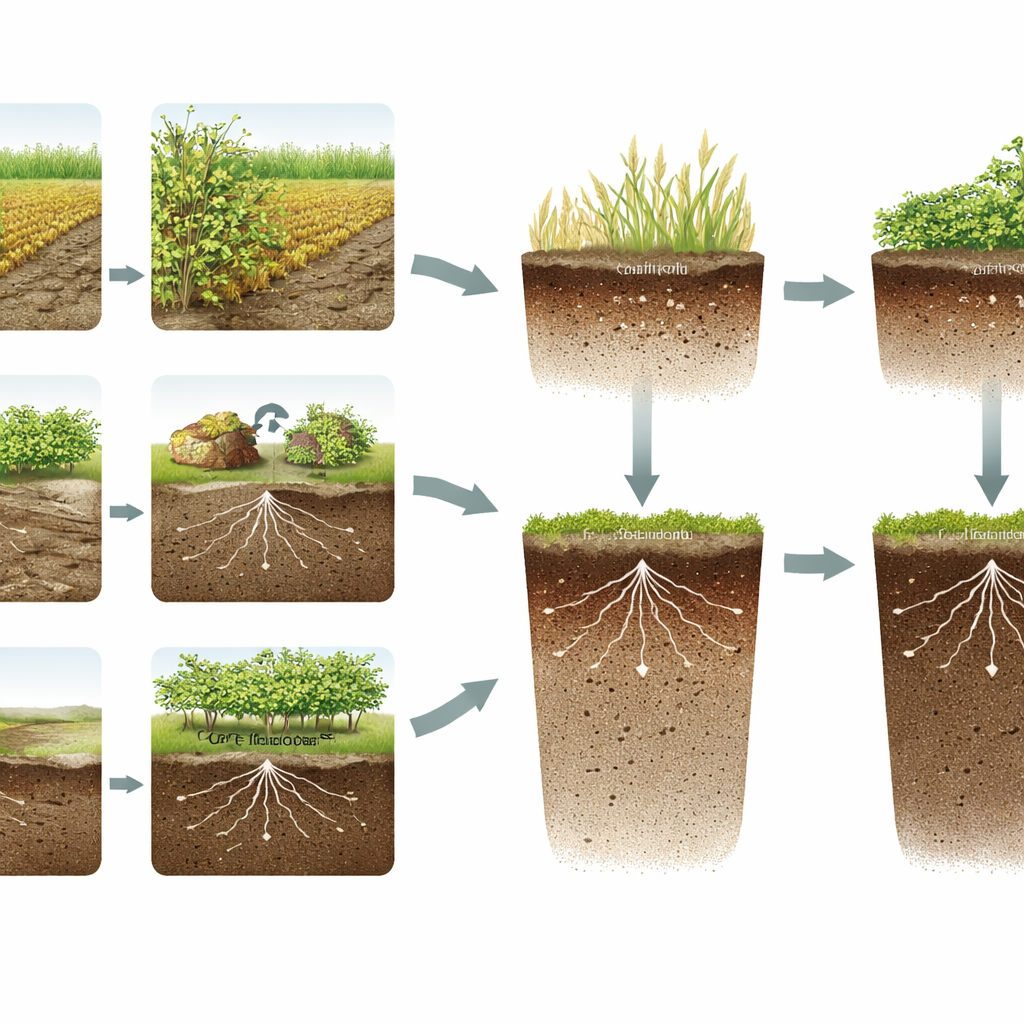
When the authors explored the assembled data, they saw a wide range of carbon outcomes. Some treatments, especially long-term bare fallow plots where no plants were grown, showed sharp declines in soil carbon over time. Others, particularly those receiving repeated organic additions such as manures or composts, displayed strong gains. Overall, many treatments experienced slight carbon losses between the first and last measurement, in line with concerns about gradual soil degradation under conventional cropping. The dataset also shows that belowground carbon inputs from roots are both crucial and poorly measured, forcing the use of informed estimates based on aboveground growth. These patterns, along with the climate and soil information, give modelers a rich testbed to see when and why their simulations succeed or fail.
How this resource will be used
The final product is a public, reusable dataset tailored to the needs of widely used soil carbon models such as RothC, Century, AMG, MIMICS, ICBM, Millennial, and CTOOL. Rather than preparing separate files for each model, the authors provide a common structure from which users can build model-specific inputs and even run several models side by side. Although the collection is still biased toward Western European croplands and relies on some estimated variables, it represents a major step toward open, transparent testing of soil carbon predictions. For a lay reader, the takeaway is clear: we now have a powerful, shared evidence base to check how well our digital tools track the slow but vital changes in the carbon bank beneath our farms—and to guide practices that keep more of that carbon safely in the ground.
Citation: Fujisaki, K., Ferchaud, F., Clivot, H. et al. Data from long-term experiments in temperate croplands to evaluate soil organic carbon models. Sci Data 13, 482 (2026). https://doi.org/10.1038/s41597-026-06863-7
Keywords: soil organic carbon, long-term field experiments, cropland management, carbon modeling, climate-smart agriculture