Clear Sky Science · en
An integrated database of combustion properties of metallic materials
Why burning metals matter
From the fuel that powers rockets to the lightweight alloys in airplanes and cars, many modern technologies rely on metals that can either release energy in a flash or stubbornly resist catching fire. When metals burn, they can drive propulsion systems—or trigger dangerous accidents. This article describes a newly built database that pulls together scattered measurements of how different metallic materials ignite and burn, giving engineers and scientists a powerful reference for designing both safer structures and more energetic propellants.
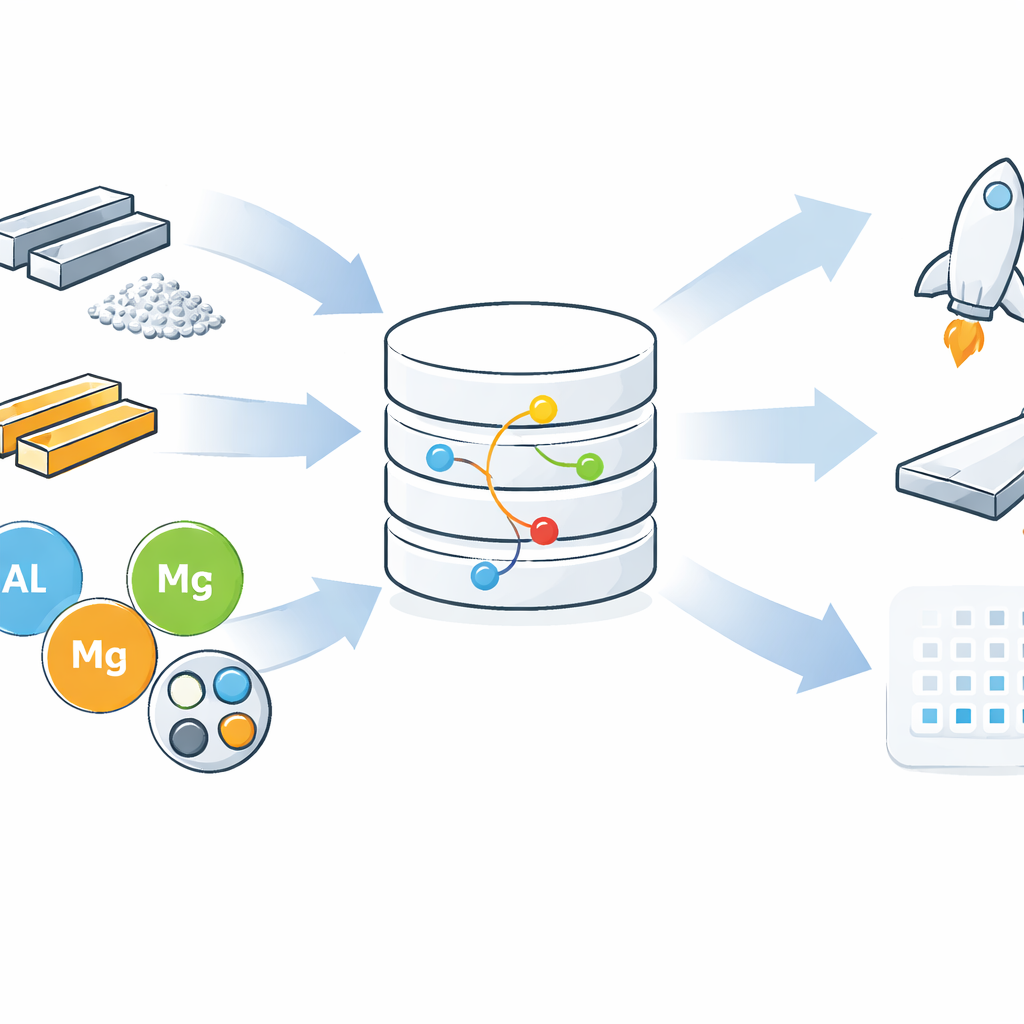
Bringing scattered fire tests into one place
For decades, researchers have measured how metals behave in oxygen-rich environments, reporting quantities such as how much heat is released, how quickly flames spread, and how long it takes a sample to ignite. These results, however, have been buried in dozens of separate studies, each using its own test setups, sample shapes, and ways of reporting data. The authors combed through more than 160 papers and ultimately extracted 725 high-quality data points from 45 publications, covering pure metals and a wide range of alloys based on aluminum, titanium, magnesium, iron, copper–zirconium, and more complex mixtures. Each entry links a specific alloy composition to key combustion measurements and to the experimental conditions under which those measurements were obtained.
What the database contains
The database focuses on five core properties that describe how a metal burns. Combustion enthalpy captures the total energy a material can release when it reacts with oxygen. Ignition temperature and ignition delay time describe how easily the material starts burning, while combustion rate and threshold pressure characterize how fast and under what conditions the burning can sustain itself. To make comparisons meaningful, the authors also record important context: sample geometry (such as bars, blocks, rods, or powders), gas pressures and mixtures, heating methods, and other test details. For example, when earlier studies reported how fast a flame front moved along rods of different diameters, the team converted those numbers into a common volumetric rate so that data from different laboratories could be compared on equal footing.
Seeing patterns in how metals catch fire
Because the data are organized in a consistent way, underlying patterns in metal combustion become easier to spot. The authors checked the reliability of the compiled values by reproducing known trends. For pure metals, higher ignition temperatures typically line up with higher ionization energies, a basic electronic property. For magnesium alloys, adding elements whose oxides melt at relatively low temperatures tends to lower the ignition point, while elements forming high-melting oxides can raise it. In particle-based tests, smaller metal particles and richer oxidizing atmospheres shorten the ignition delay. For bulk samples, combustion rates and minimum pressures for self-sustained burning cluster neatly by alloy family when the same test conditions are used, suggesting that the data set is internally consistent and physically reasonable.
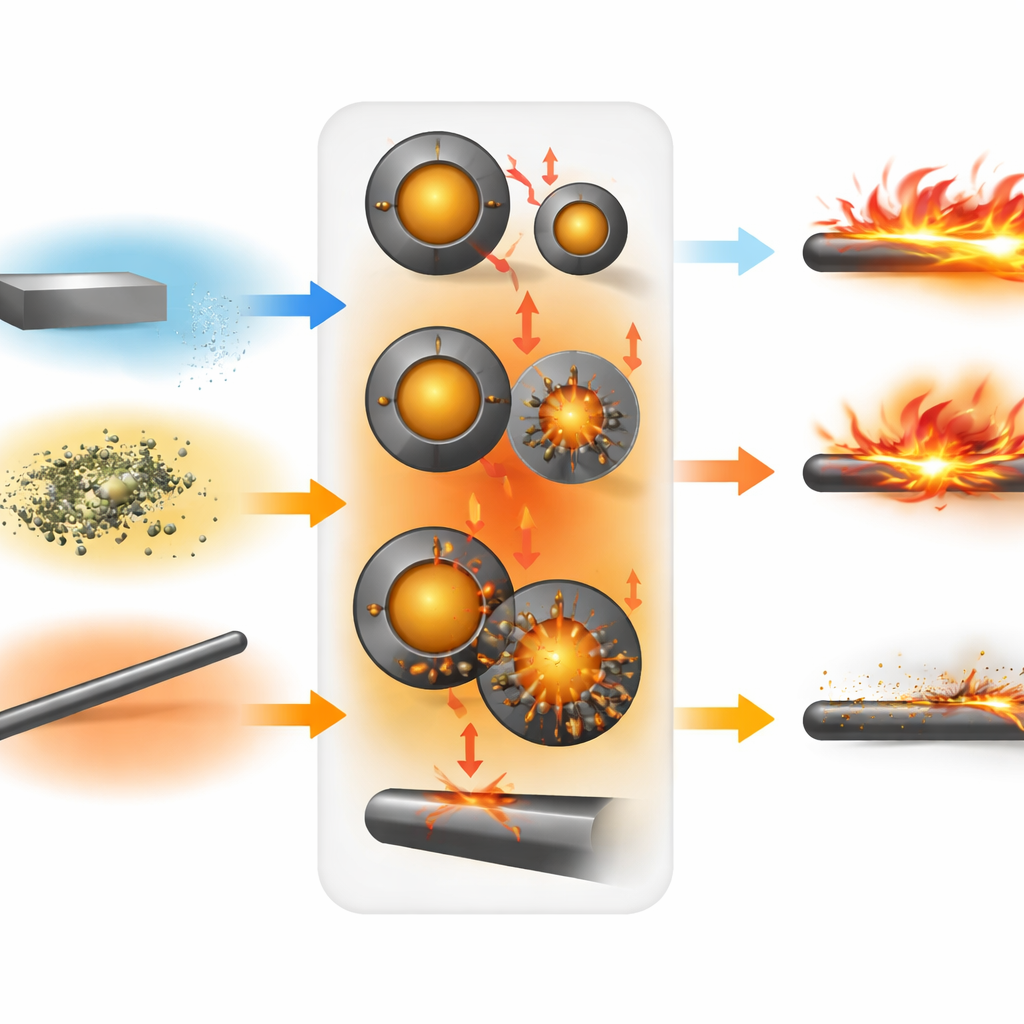
A tool for designing safer and stronger materials
Beyond confirming known relationships, the unified database is designed with data-driven modeling in mind. By tying together alloy chemistry, sample shape, test environment, and combustion behavior, it provides a ready-made training ground for machine-learning models that can explore new compositions far beyond those tested so far. Such models could help identify titanium or magnesium alloys that are much harder to ignite for use in aircraft or medical oxygen systems, or pinpoint aluminum-based mixtures that burn more efficiently as propellants. Because the database and its documentation are freely available online, other researchers can build on it, add new measurements, or plug it directly into their own computational tools.
What this means for everyday technology
In plain terms, this work turns scattered fire-test reports into a single, structured map of how metals burn. With it, scientists can better predict when a structural component might become a fire hazard and how to tweak alloy recipes to either tame or amplify combustion. Over time, this shared resource should help accelerate the development of lighter vehicles, safer oxygen equipment, and more efficient energy materials, all by making the fiery behavior of metals easier to understand and engineer.
Citation: Wang, P., Ke, H. & Xue, Y. An integrated database of combustion properties of metallic materials. Sci Data 13, 460 (2026). https://doi.org/10.1038/s41597-026-06862-8
Keywords: metal combustion, flammable alloys, ignition data, materials database, fire-safe design