Clear Sky Science · en
A chromosome-level genome assembly of Hemibarbus maculatus
A small fish with a big genetic story
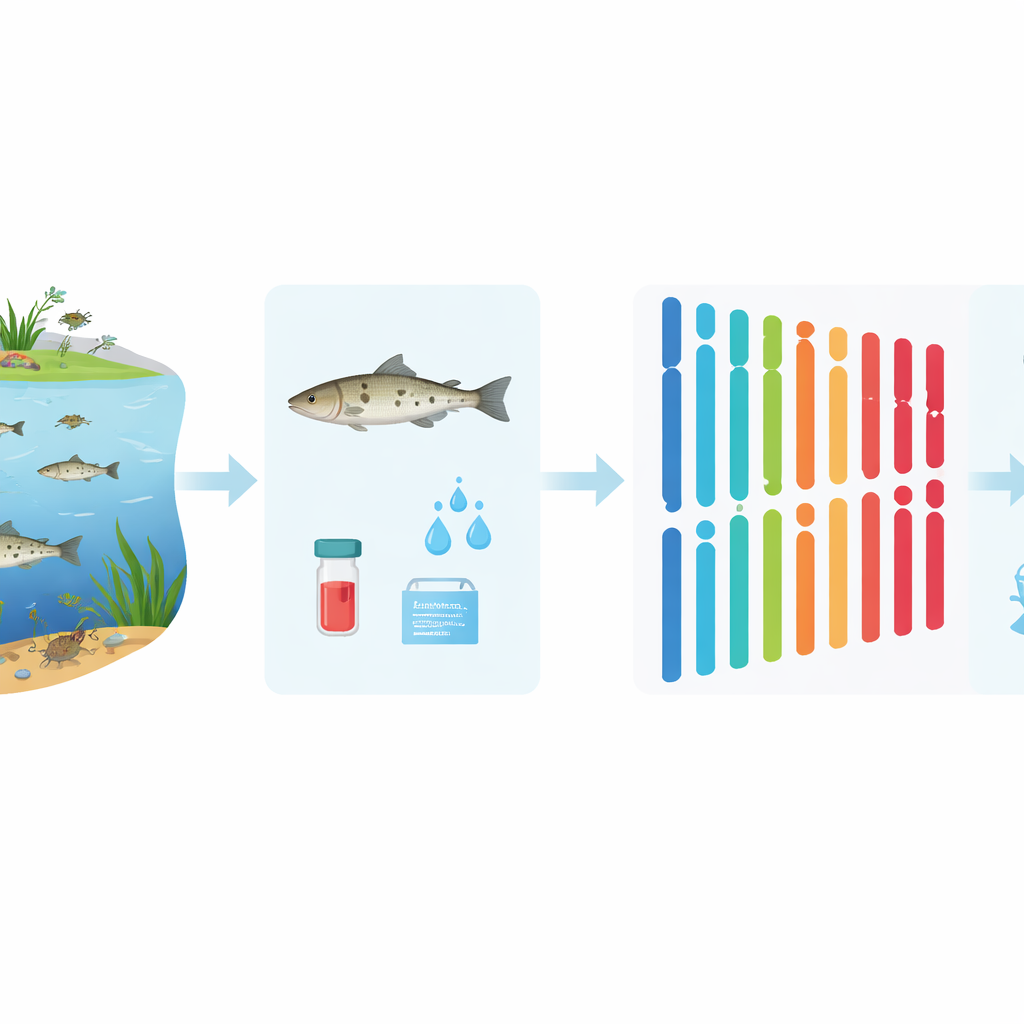
Across rivers and lakes in East Asia, a modest-looking fish called Hemibarbus maculatus quietly supports local fisheries and helps keep freshwater food webs in balance. Until now, however, scientists lacked a detailed genetic blueprint for this species, limiting efforts to breed it efficiently, protect wild populations, or understand how it fits into the broader evolutionary history of carps and minnows. This study changes that by delivering the first near-complete, chromosome-level genome for H. maculatus, turning this unassuming fish into a powerful model for both aquaculture and ecology.
Why this river fish matters
Hemibarbus maculatus is a common cyprinid fish found in China, Korea, Japan, and the Amur River basin. It is valued as a food fish because its flesh is tender and protein-rich, yet relatively low in fat. At the same time, it plays a key ecological role as an omnivore that feeds on bottom-dwelling invertebrates, small crustaceans, insect larvae, and zooplankton, helping to regulate who eats whom in freshwater ecosystems. Despite this importance, most past research has focused on how to farm and feed the fish, rather than on its underlying biology. Without a reliable reference genome, scientists have had to rely mainly on small fragments of mitochondrial DNA, which offer only a narrow window into the species’ past and its potential for adaptation.
Building a genetic blueprint from end to end
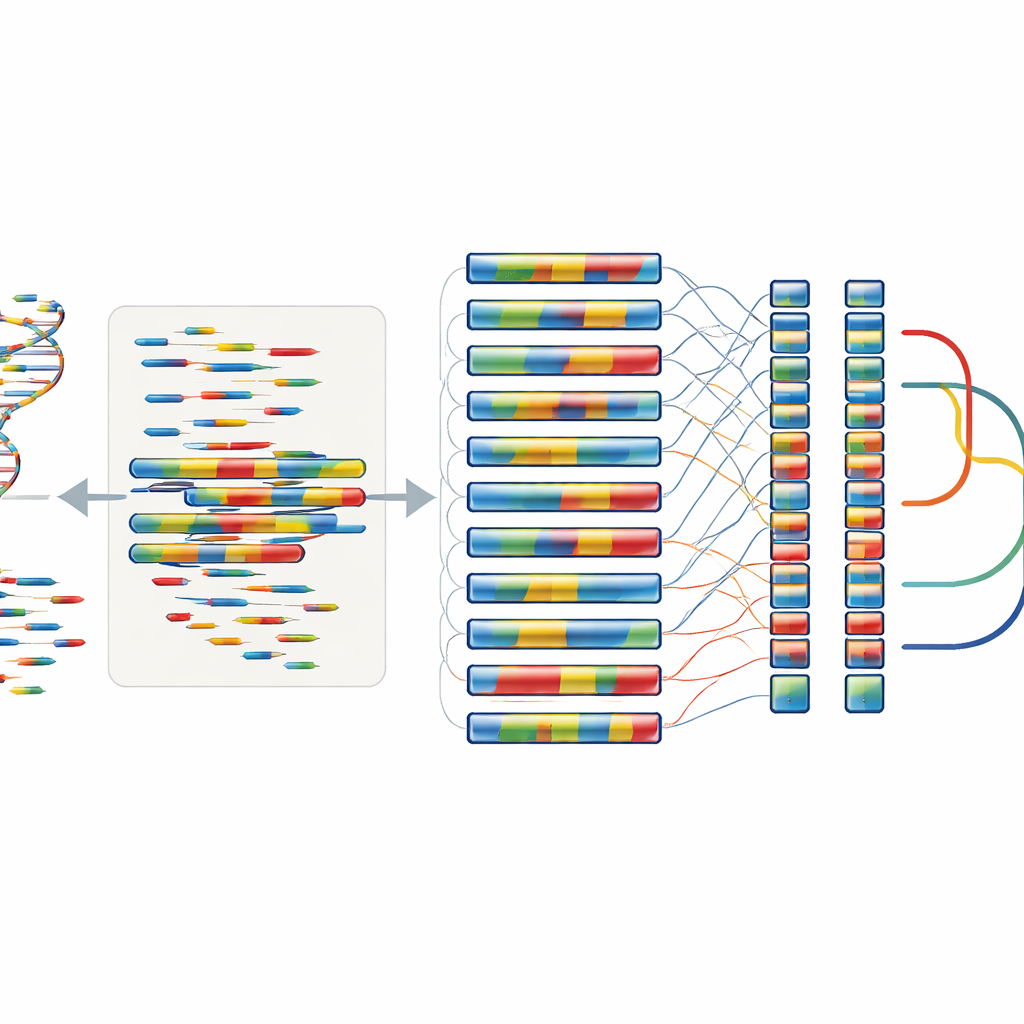
To construct a complete genome, the researchers collected tissues from an adult male H. maculatus from China’s Oujiang River and extracted both DNA and RNA. They combined several cutting-edge sequencing approaches. Long, highly accurate DNA reads from a PacBio HiFi platform provided the backbone needed to span complex regions of the genome. Short-read data helped estimate genome size and quality, while a technique called Hi-C captured how pieces of DNA are physically arranged and folded inside chromosomes. Specialized assembly software then stitched these data together, using the three-dimensional contact patterns from Hi-C to organize over 98% of the 1.08-billion-base-pair genome into 25 pseudochromosomes that closely match the species’ real chromosomes.
What the genome reveals inside
The finished assembly is both continuous and complete: standard quality checks showed that more than 99% of expected core genes are present, and nearly all sequencing reads map cleanly back to the genome. About 30% of the DNA consists of repetitive elements, including various kinds of transposable elements that can copy and move within the genome. Using an automated annotation pipeline supported by RNA data from multiple organs, the team identified 23,892 protein-coding genes and over 32,000 gene transcripts. Almost all of these could be matched to known gene families in major biological databases. When the researchers compared gene structures—such as gene length and exon patterns—between H. maculatus and several related fish, they found very similar distributions, reinforcing that the new genome is biologically realistic rather than an assembly artifact.
Placing the fish on the family tree
Beyond describing one species, the new genome helps clarify how H. maculatus and its relatives in the carp and minnow family are related. The team compared thousands of single-copy genes shared across ten species representing different cyprinid subfamilies. From these, they reconstructed a family tree and estimated when branches split. The analyses place H. maculatus in a close-knit group with Rhinogobio nasutus and Pseudorasbora parva. The results suggest that H. maculatus and R. nasutus diverged around 12.3 million years ago, and that their shared ancestor with P. parva lived roughly 18.3 million years ago, during a period when freshwater habitats were rapidly diversifying. These timings align with previous, more limited genetic studies, but now rest on far richer whole-genome evidence.
From genome map to real-world impact
By delivering a high-quality, chromosome-level genome, this work provides a foundational resource for anyone studying H. maculatus, from fish breeders to evolutionary biologists and conservation planners. Breeders can now search the genome for markers linked to traits such as growth, disease resistance, or environmental tolerance, paving the way for more precise and sustainable aquaculture. Ecologists and geneticists can use the same map to track wild populations, explore how they adapt to different rivers and climates, and probe how key genes evolve across the carp and minnow family. In short, the study turns a once data-poor species into a genetically well-charted one, opening new paths to both protect its ecosystems and better harness it as a food resource.
Citation: Lian, Q., Sheng, P., Guo, A. et al. A chromosome-level genome assembly of Hemibarbus maculatus. Sci Data 13, 529 (2026). https://doi.org/10.1038/s41597-026-06856-6
Keywords: fish genome, freshwater ecology, aquaculture, evolutionary genetics, cyprinid fishes