Clear Sky Science · en
Genome sequencing and assembly of Neolissochilus pnar, the largest cavefish species of Mahseer
A Giant Hidden in the Dark
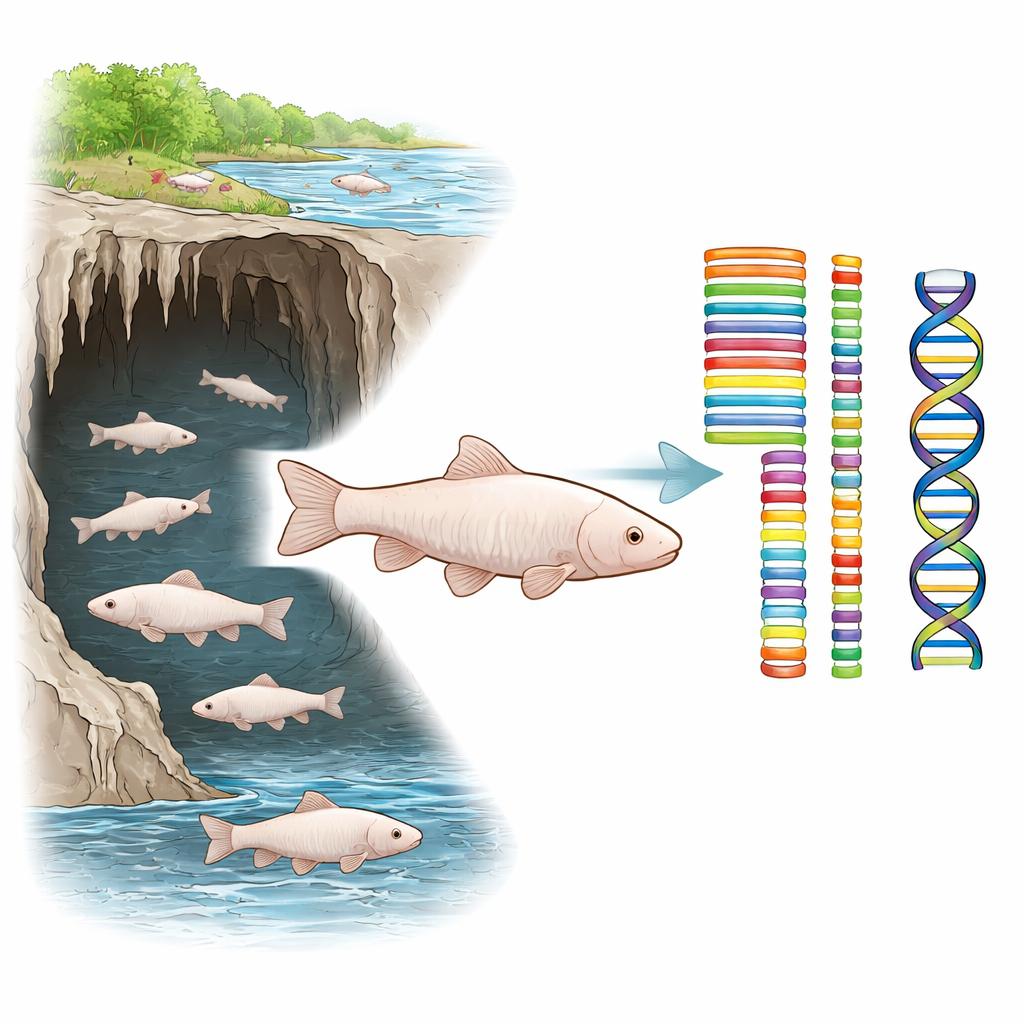
Deep inside limestone caves in northeast India lives a remarkable creature: the world’s largest known cavefish, Neolissochilus pnar. Unlike its river‑dwelling relatives, this fish is ghost‑pale and essentially blind, having lost its eye structures as an adult. Scientists have now decoded its full genetic blueprint, creating a detailed map of its DNA. This genome offers a rare window into how animals adapt to life in total darkness and provides a critical tool for protecting a species that may exist nowhere else on Earth.
Life in an Underground World
The caves of Meghalaya, where N. pnar is found, are among India’s biodiversity hotspots. Food is scarce and sunlight never reaches the underground streams that run through them. Over time, cave animals often evolve special traits: reduced or absent eyes, loss of body color, and heightened senses of touch or smell. N. pnar fits this pattern. Young fish still have small eyes, but adults lose visible eyes altogether and become completely unpigmented, distinguishing them from closely related mahseer that live in surface rivers. Because this fish is restricted to only a few cave systems, any disturbance to its habitat—such as pollution or groundwater overuse—could quickly push it toward extinction, making its genetic information especially valuable.
Reading the DNA Blueprint
To understand this unusual fish at the deepest level, researchers collected specimens with proper permissions and extracted high‑quality DNA. They used a modern sequencing technology that reads very long stretches of DNA, which helps assemble a much more accurate and continuous genome. From these data, they built a draft genome of about 1.56 billion DNA letters, broken into just over 1,400 large pieces. Independent quality checks showed that more than 99% of the expected genes are present, meaning the final genome is both nearly complete and reliable enough to serve as a reference for future biological and conservation studies.
What the Genome Reveals
The team then explored what is actually inside this genetic blueprint. Nearly half of the genome consists of repeated DNA, including many mobile elements that can copy and move around the genome. They cataloged over 1.4 million short repeating sequences and predicted more than 75,000 gene models, of which around 37,500 could be matched to known genes in other species. These genes span a wide range of roles, from basic cellular functions to those likely involved in growth, development, and sensory systems. The researchers also identified thousands of enzyme‑coding genes and grouped many genes into standard biological categories, laying the groundwork to pinpoint the ones that may control traits like eye loss and lack of pigmentation.
Fitting into the Tree of Cave Life
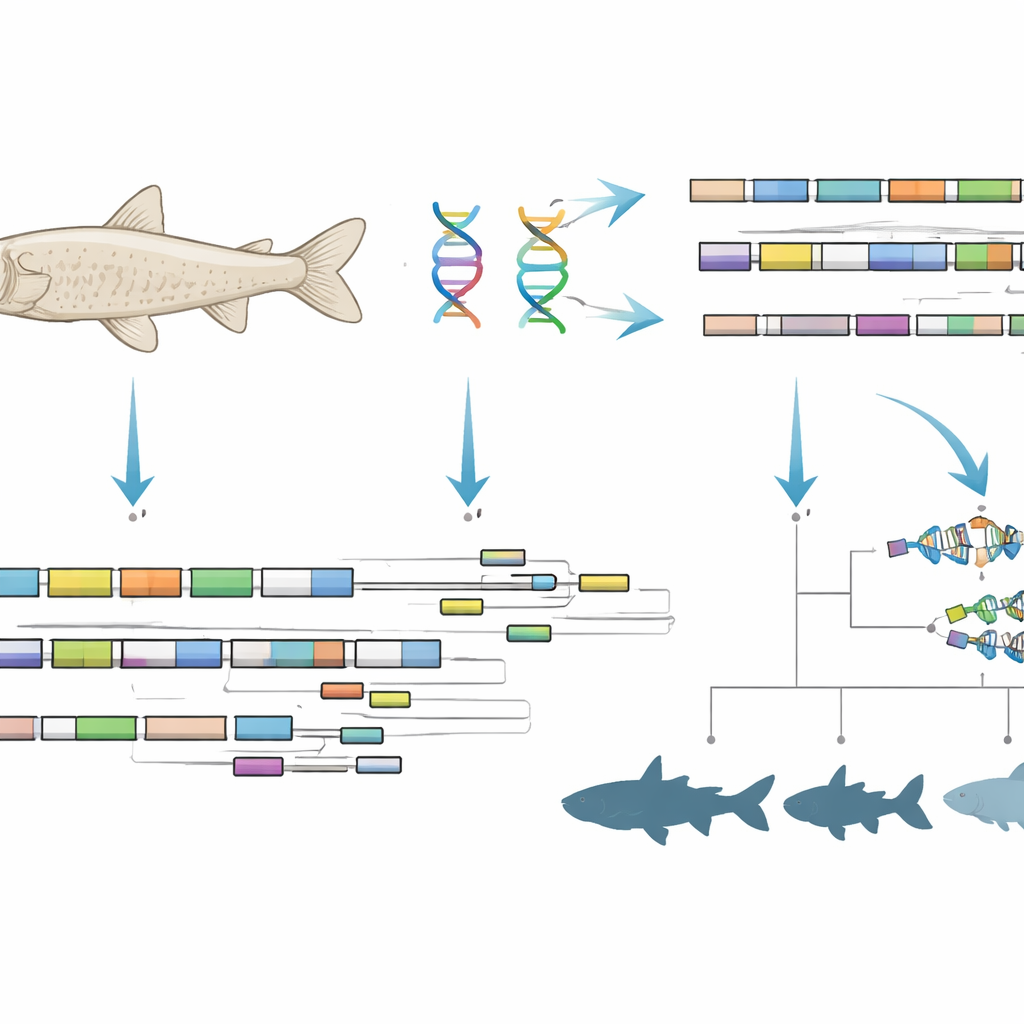
To see how N. pnar relates to other cave‑adapted fishes, the scientists compared its genes with those from several other underground and surface species. By focusing on genes present in only one copy in each species, they built an evolutionary tree. In this tree, N. pnar clusters closely with other cave‑dwelling members of the same broader fish family, reinforcing its status as a distinct lineage that has independently adapted to life in the dark. They also aligned large sections of its genome with that of a related mountain fish, showing broad similarities in chromosome organization while confirming that N. pnar carries its own unique genetic signature.
Why This Hidden Giant Matters
At its core, the study delivers a high‑quality reference genome for a rare and vulnerable cavefish. For non‑specialists, this means scientists now have a detailed instruction manual for how this giant, pale, and nearly blind fish is built. With it, they can hunt for the specific genes and genetic changes that drive the loss of eyes, the fading of color, and other cave‑ready traits, and they can better track the health and diversity of its dwindling populations. Just as important, the work underscores that the survival of N. pnar—and the evolutionary story it tells—depends on protecting the fragile cave ecosystems it calls home.
Citation: Mohindra, V., Chowdhury, L.M., Mukhim, D.K.B. et al. Genome sequencing and assembly of Neolissochilus pnar, the largest cavefish species of Mahseer. Sci Data 13, 468 (2026). https://doi.org/10.1038/s41597-026-06842-y
Keywords: cavefish, genome sequencing, evolutionary adaptation, Mahseer, conservation genetics