Clear Sky Science · en
A comprehensive, multi-method dataset of plant-frugivore interactions in a Mediterranean hotspot
Why fruit-eating wildlife matters
When we think about saving nature, we often count how many species live in a place. But just as important are the hidden relationships between them—for example, when animals eat fruits and carry the seeds elsewhere. These everyday encounters help forests regenerate, allow plants to keep pace with climate change, and support entire food webs. This study introduces FRUGINT, an unusually rich dataset that tracks who eats whose fruits in Doñana National Park in southwestern Spain, a Mediterranean hotspot where birds, mammals, and plants are tightly linked through fruit and seed.
A living bridge between plants and animals
Many woody plants around the world depend on animals to move their seeds. In Mediterranean habitats, up to two-thirds of shrub and tree species bear fleshy fruits that invite animals to feed. Birds and mammals gain energy-rich meals, while plants gain a ride for their seeds to new, suitable sites. When these partnerships break down—because of habitat loss, hunting, or climate change—plants may fail to spread or keep up with shifting conditions, threatening forest health and services such as carbon storage. Yet, until now, detailed information on these plant–animal ties outside the tropics has been surprisingly scarce, especially for large, diverse regions like Doñana.
Taking the pulse of a Mediterranean hotspot
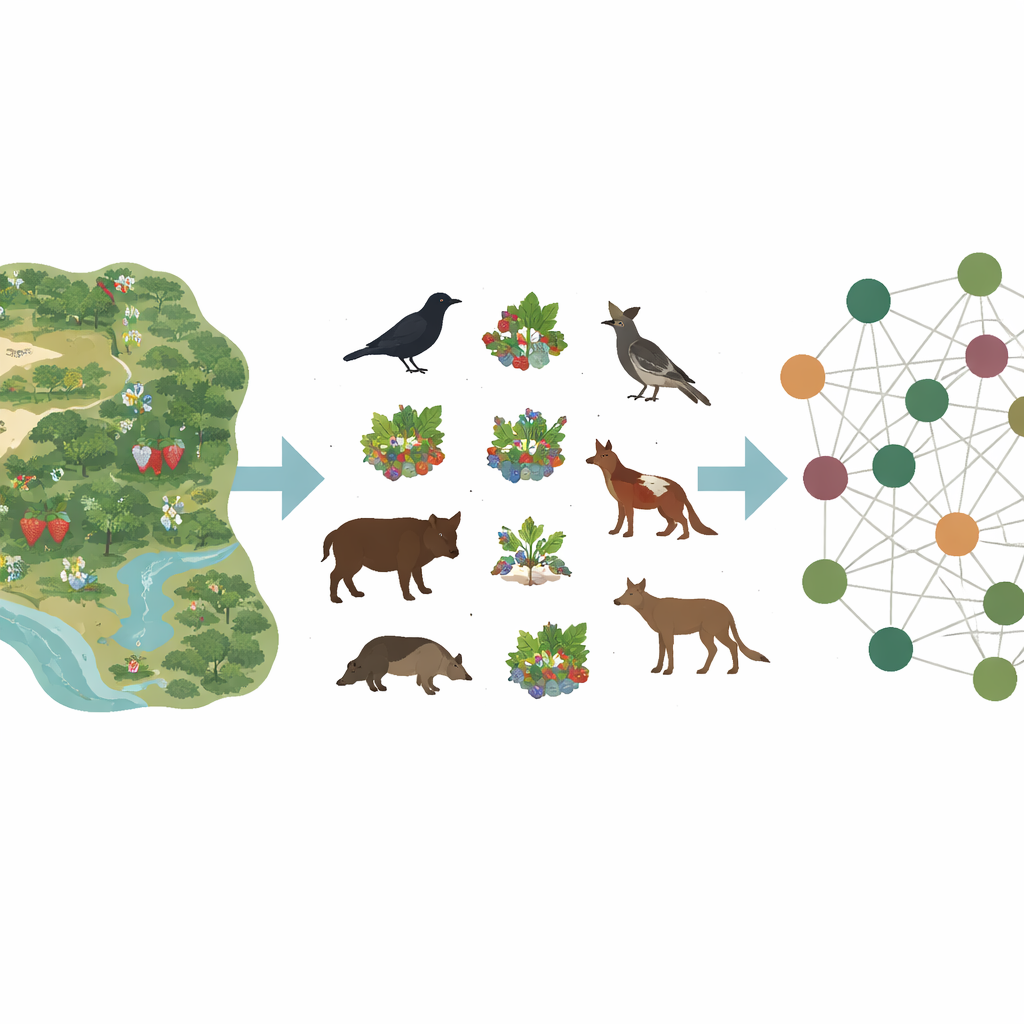
Doñana National Park sits where Europe meets Africa and contains an intricate mosaic of dunes, scrublands, forests, marshes, and river woodlands. Every year, millions of migrating birds pass through, joining local birds, mammals, and a diverse array of fruiting plants. The FRUGINT team pulled together field data from 12 studies carried out between 1980 and 2025, covering nine fruiting seasons from June to April. The result is a community-wide view of 26 fleshy-fruited plant species and 78 fruit-eating vertebrates, mostly birds but also many mammals and a few reptiles. In total, they recorded 37,923 individual interaction events and 481 unique plant–frugivore pairings, representing almost all fleshy-fruited species known in the area.
Many eyes and tools in the field
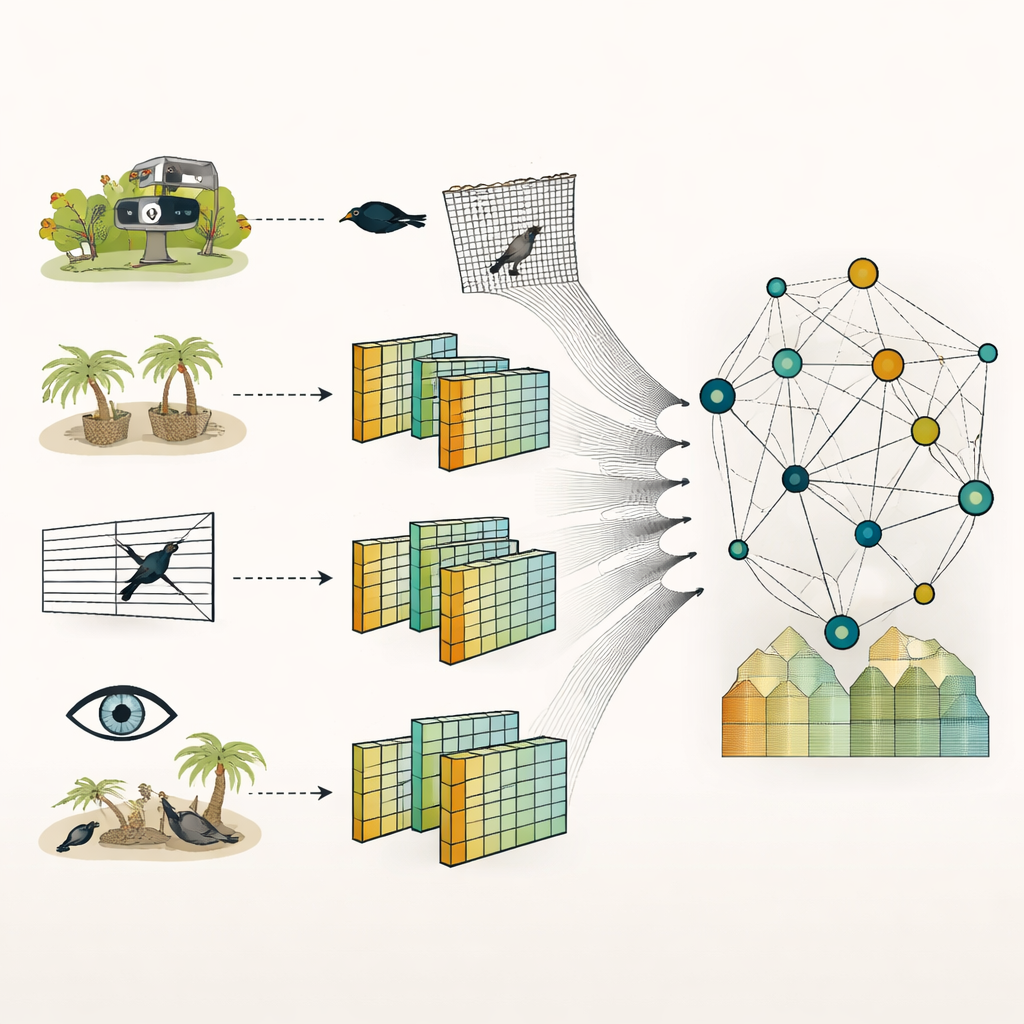
Capturing such a busy web of interactions is difficult because encounters vary through time, space, and among species. No single method can see everything. FRUGINT therefore combines six complementary approaches: camera traps and continuous video focused on fruiting plants; DNA barcoding of droppings and seeds collected in traps; bird captures with mist-nets to examine their faeces; direct visual observations along walking transects; and careful reading of animal footprints in sandy soil. Cameras excel at detecting mammals and both day and night visitors. DNA barcoding shines at revealing which birds dispersed which seeds, even when feeding was never witnessed. Mist-nets and field watches pick up agile or wary birds that cameras may miss, while tracks capture shy, nocturnal mammals that leave clear footprints.
From scattered clues to a single big picture
Each method produces its own partial map of who interacts with whom. To turn these pieces into a single, coherent picture, the researchers first standardized all records to a common unit: a "visit" from an animal to a plant, whether inferred from a video, a dropping, or a footprint. For each method, they then built a matrix that tallied how often each plant–animal pair was recorded, and converted those counts into relative frequencies. Finally, they averaged across methods to obtain, for every pair of species, a probability that a randomly observed interaction in Doñana would involve that pair. This approach boosts the detection of rare interactions and reduces biases arising from the strengths and weaknesses of any one method. Pooling methods increased the number of distinct interactions far beyond what any individual technique could capture alone.
What this dataset can teach us
FRUGINT is more than a large list of feeding records. Because each plant and animal species is also described by detailed traits—such as fruit size and nutrient content for plants, and body size, beak shape, and diet for animals—the dataset allows scientists to explore why certain partners interact, how networks change across habitats, and which species are most critical for keeping seed dispersal functioning. The standardized probabilities can feed into models that predict how interaction networks might shift under future climate, land-use change, or wildlife declines, and can guide restoration efforts by highlighting key fruiting plants and animal dispersers that sustain the broader community.
A map for protecting invisible ties
To a layperson, FRUGINT can be thought of as an intricate, data-rich map of who feeds whom in one of Europe’s most important wetlands. By carefully combining many lines of evidence, the authors approximate the odds that any given bird or mammal will move the seeds of a particular plant. This makes it possible to treat relationships—not just species themselves—as a core part of biodiversity. In a world where climate and landscapes are rapidly changing, such maps are crucial for understanding how forests regenerate, where conservation gaps lie, and which invisible ties between plants and animals we most urgently need to protect.
Citation: Moracho, E., Arroyo, J.M., Arroyo-Correa, B. et al. A comprehensive, multi-method dataset of plant-frugivore interactions in a Mediterranean hotspot. Sci Data 13, 459 (2026). https://doi.org/10.1038/s41597-026-06835-x
Keywords: seed dispersal, plant–animal interactions, Mediterranean ecosystems, biodiversity networks, Doñana National Park