Clear Sky Science · en
Chromosome-level genome assembly of the Leopard Wrasse Macropharyngodon Meleagris
Why this reef fish matters
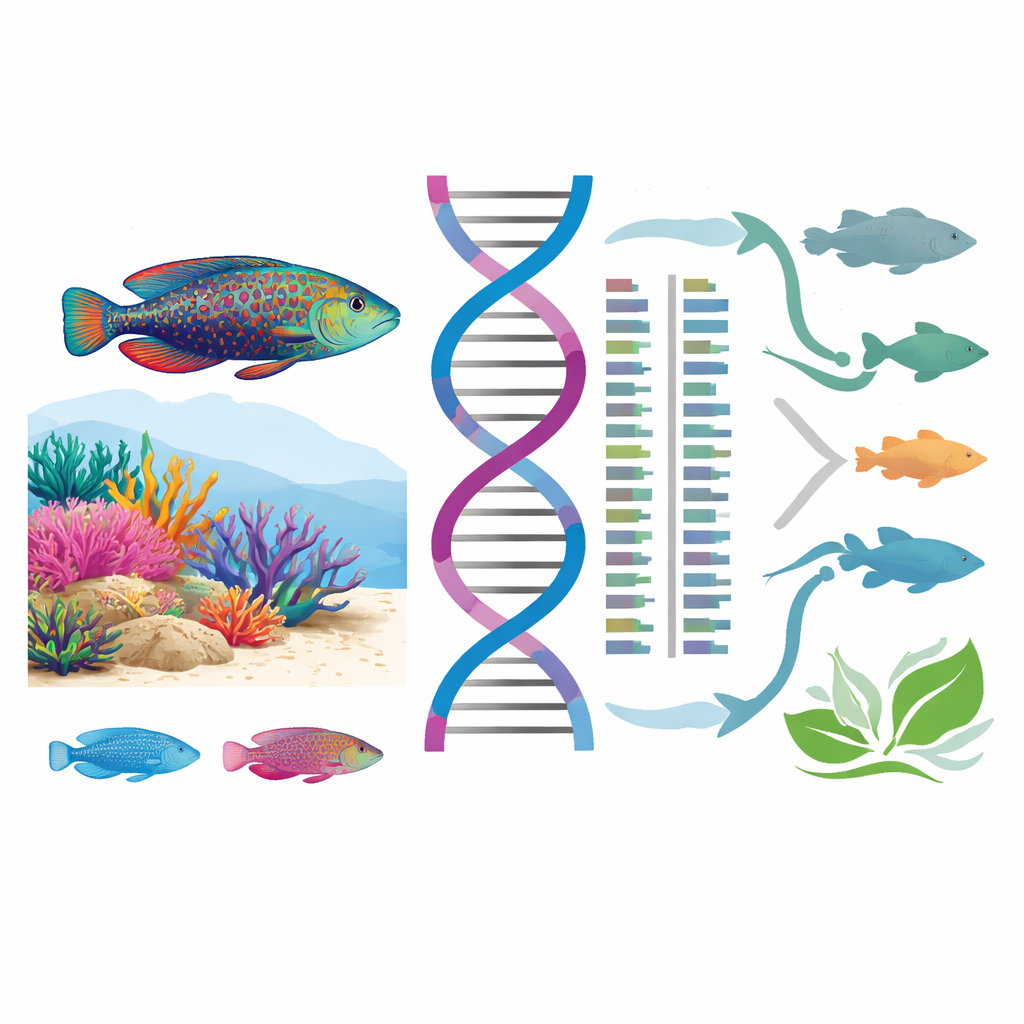
The leopard wrasse is a small, brilliantly patterned reef fish that digs in sand and coral rubble to crush hard-shelled prey. Beyond its good looks, it belongs to a family of fishes known for surprising intelligence, tool use, and complex social lives. This study delivers the first chromosome-level genetic blueprint for the leopard wrasse, giving scientists a powerful new reference to explore how such behaviors, vivid colors, and unusual teeth and sex changes evolve in coral reef fish.
Getting the DNA blueprint
To build this genetic map, researchers collected a single young leopard wrasse from a coral reef and extracted DNA from its muscle tissue. They then used a combination of cutting‑edge sequencing technologies. Short DNA fragments were read with a high-throughput Illumina machine, while much longer fragments were captured using PacBio HiFi sequencing, which reads long stretches with high accuracy. A third method, called Hi‑C, recorded which pieces of DNA sit close together inside the cell’s nucleus, helping the team stitch the fragments into full-length chromosomes rather than scattered pieces.
From fragments to full chromosomes
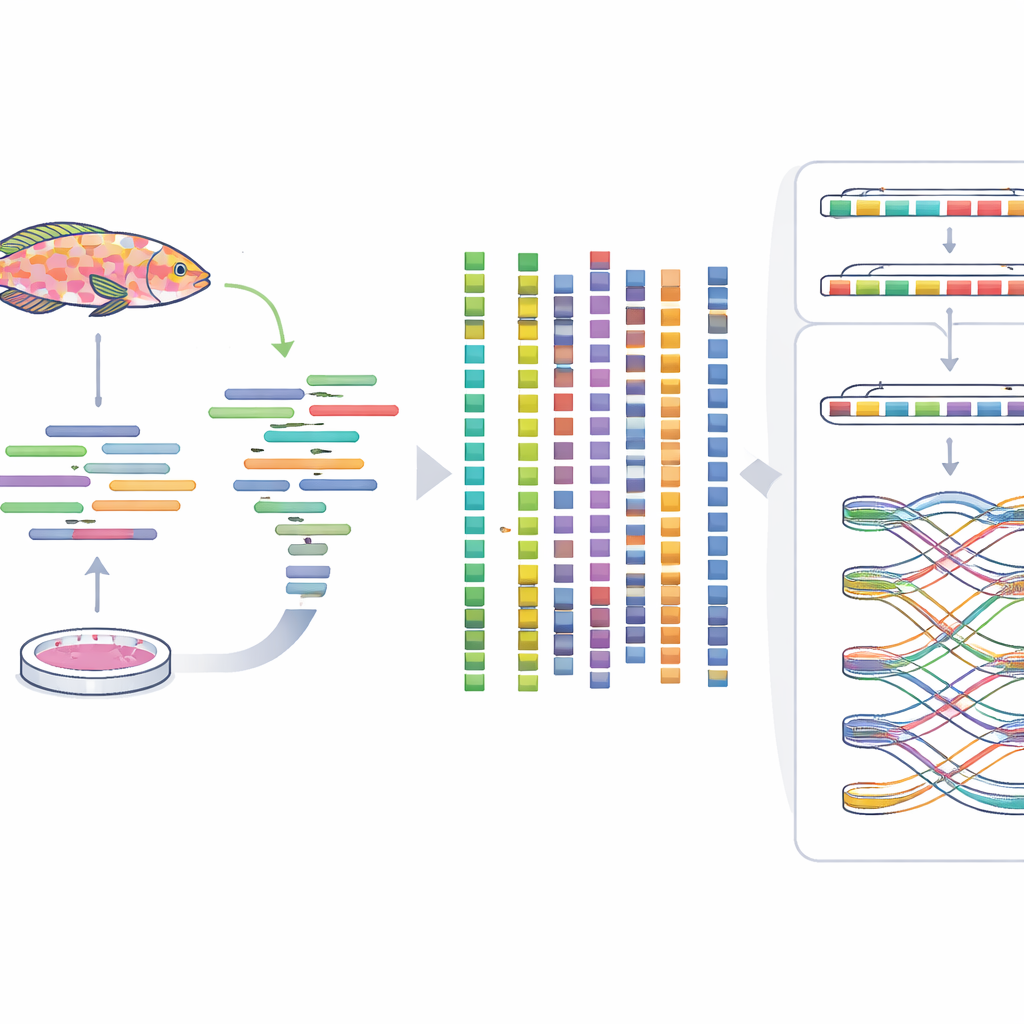
Powerful software assembled the long DNA reads into continuous stretches, polished them with the short reads, and removed redundant pieces arising from natural genetic variation. The Hi‑C contact information then acted like a three‑dimensional puzzle guide, showing which assembled pieces belonged on each chromosome and in what order. The final result was a genome of about 667 million DNA letters, neatly organized into 24 chromosomes. Measures of completeness showed that nearly all expected fish genes were present and intact, and that more than 98% of the original DNA data lined up cleanly with the finished assembly, indicating high accuracy.
What the genome is made of
Once the chromosomes were in place, the team asked what kinds of sequences they contained. They found that just over a quarter of the leopard wrasse genome is made of repeated DNA, much of it belonging to mobile genetic elements that can copy and paste themselves around the genome. Many of these elements appear to have been active recently, especially a class called DNA transposons and another called LTR retrotransposons. The activity pattern of these repeats differs among related wrasse species, hinting that bursts of jumping DNA may have helped drive unique features in certain lineages, such as those in the same subgroup as the leopard wrasse.
Finding and interpreting the genes
To locate genes, the researchers combined several lines of evidence: computer predictions based on sequence patterns, similarities to known genes from other well-studied fishes, and actual RNA molecules extracted from leopard wrasse brain, gill, and kidney tissues. This integrated approach revealed 21,940 protein‑coding genes, most of which could be matched to known functions in public databases. The gene set itself passed strict quality checks, with the vast majority corresponding to complete, conserved genes found across bony fishes. These annotated genes now provide starting points to investigate traits such as tooth shape, color patterns, environmental tolerance, and the ability of these fish to change sex.
Seeing the bigger family picture
The team also compared the leopard wrasse genome with those of 18 other wrasse and parrotfish species. They found that chromosomes are remarkably similar in structure across this group: long stretches of genes appear in the same order on corresponding chromosomes, like pages shared across related books. This synteny reinforces the idea that the new assembly is both accurate and evolutionarily informative. At the same time, differences in repeat content and other features among species offer clues about how particular lineages adapted to different diets, habitats, and lifestyles on reefs.
What this means for reefs and research
In plain terms, this work turns the leopard wrasse from a beautiful mystery into a genetically accessible model. Scientists now have a reliable, chromosome‑level reference they can use to study how reef fish evolve complex behaviors, striking appearances, and resilience or vulnerability to environmental change. By comparing this genome with those of other wrasses and reef fishes, researchers can better understand how coral reef communities came to be so diverse—and how they might respond to future challenges such as warming seas and habitat loss.
Citation: Yu, H., Qu, M., Li, C. et al. Chromosome-level genome assembly of the Leopard Wrasse Macropharyngodon Meleagris. Sci Data 13, 464 (2026). https://doi.org/10.1038/s41597-026-06817-z
Keywords: leopard wrasse genome, coral reef fish, chromosome-level assembly, transposable elements, Labridae evolution