Clear Sky Science · en
A chromosome-scale assembly and comparative genomics of the Yunnanopilia longistaminata
A Hidden Forest Delicacy Comes into Genetic Focus
In the misty forests of southern China grows a little-known vegetable with a big reputation. Yunnanopilia longistaminata is prized by local communities for its tender shoots, rich in vitamin C and other nutrients, and can sell for a premium price because it is so rare. Yet scientists have known surprisingly little about this plant at the most basic level: its DNA. This study changes that by delivering the first complete, chromosome-scale map of its genome, opening the door to better conservation, potential cultivation, and deeper understanding of how this unusual forest vegetable evolved.
Why This Rare Plant Matters
Yunnanopilia longistaminata belongs to a small and understudied plant family found mainly in tropical and subtropical regions. People in Yunnan and Guangxi have long harvested its shoots as a seasonal forest vegetable, valued for taste as well as possible medicinal benefits. But its wild populations are tiny and under pressure from overharvesting. Because no member of its plant family had ever had its full genome decoded, botanists struggled to classify it precisely, trace its evolutionary roots, or design modern breeding programs. A high-quality genome for this species is therefore not just a scientific milestone—it is also a tool to help prevent a unique food resource from disappearing.
Building a Complete Genetic Blueprint
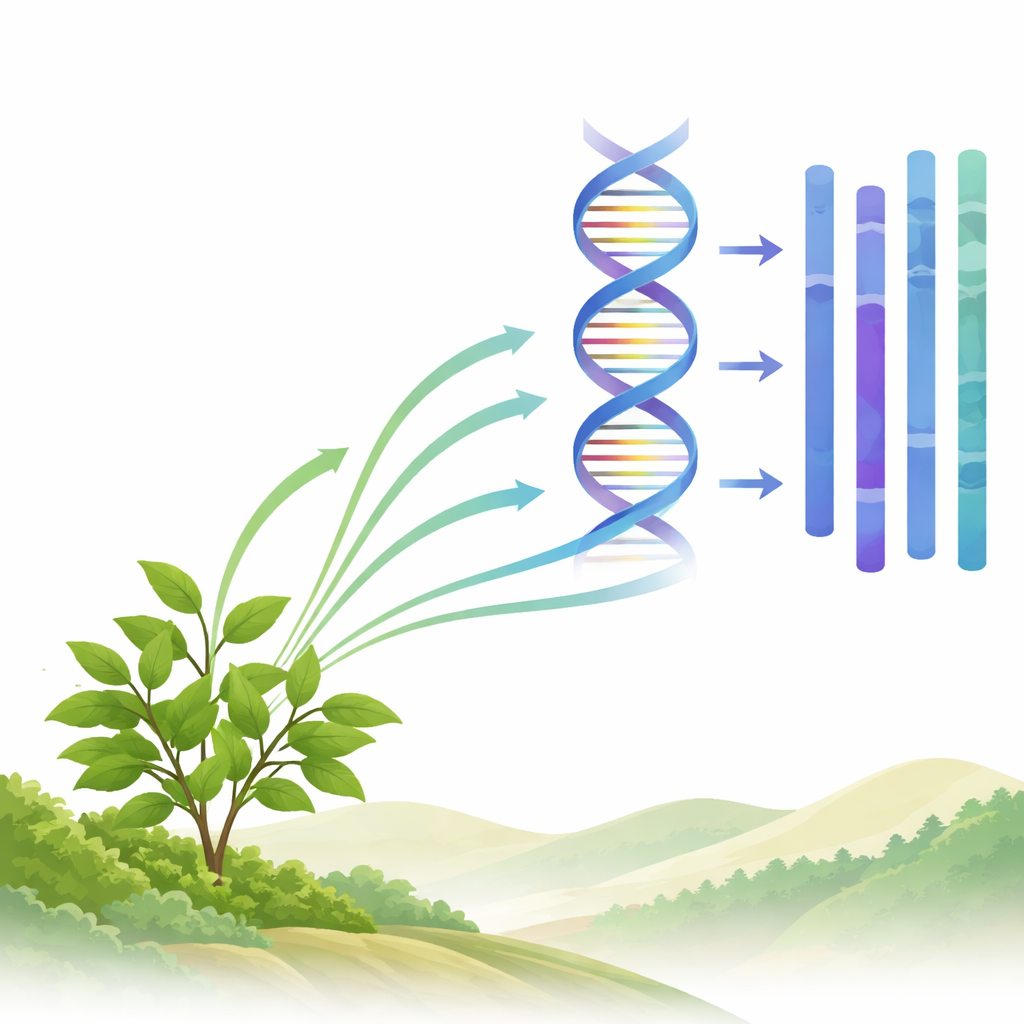
To capture the plant’s DNA in fine detail, the researchers combined several cutting-edge sequencing technologies. Long DNA fragments were read using Nanopore sequencing, while a method called Hi-C helped determine how those fragments are arranged along chromosomes inside the cell. By weaving these data types together, the team assembled a genome of about 871 million DNA “letters,” neatly organized into ten chromosomes. Quality checks showed that more than 95% of the standard set of plant genes could be found intact, and nearly all of the DNA sequence was accurately placed. In other words, the scientists did not just get fragments of the genome—they produced a nearly complete and highly reliable blueprint.
What the Genome Reveals Inside
Looking more closely, the team found that the genome is packed with repeated DNA, especially mobile pieces known as retrotransposons that copy and paste themselves throughout the genome. These repeats make up over three quarters of the entire DNA content. Amid this landscape, the researchers identified just over 22,000 protein-coding genes, most of which could be matched to known gene functions from other species. They also cataloged thousands of small regulatory RNAs. The pattern of where genes and repeats sit along the chromosomes—genes more common toward the ends, repeats clustered near the centers—matches what has been observed in many other flowering plants, underscoring that this forest vegetable is shaped by the same broad genetic forces.
Tracing Deep Ancestry and Special Abilities
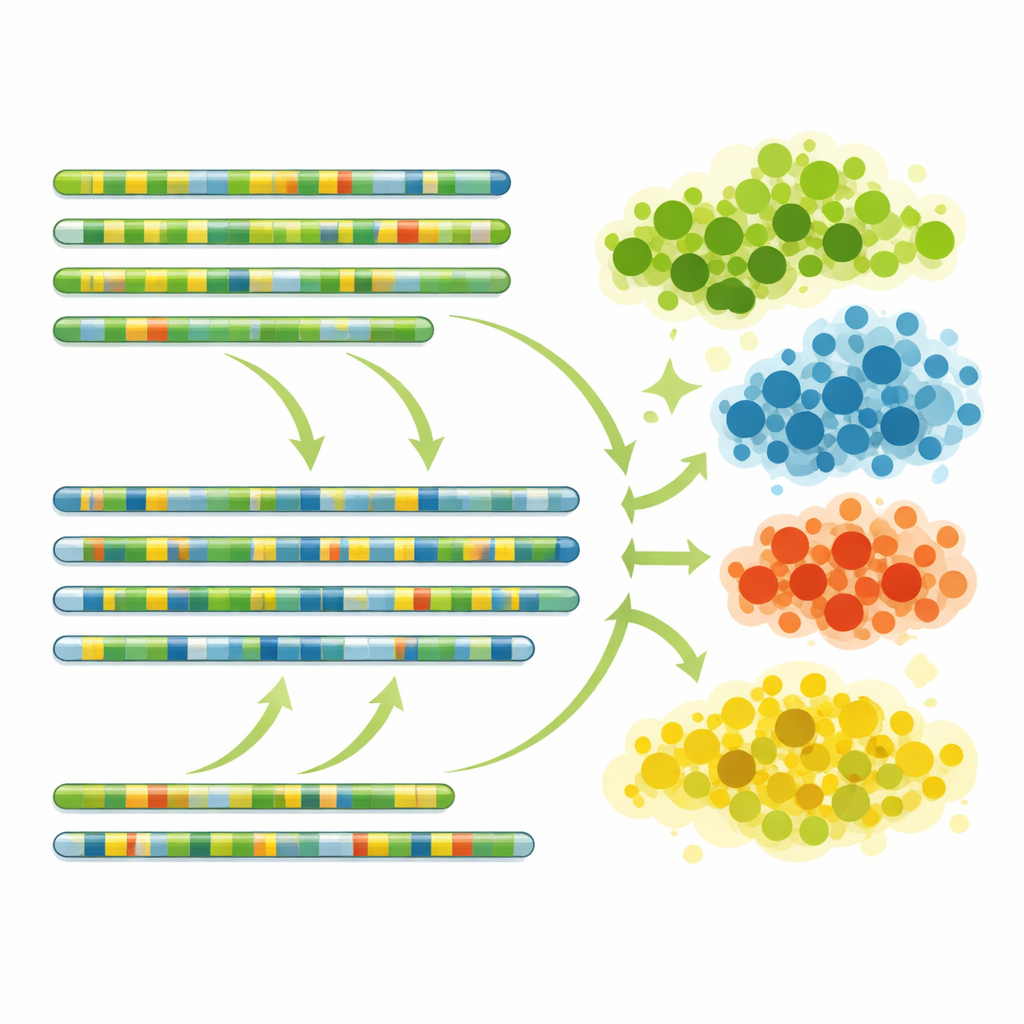
By comparing its genes with those of eleven other flowering plants, including grapevine, sunflower, and sandalwood, the authors placed Yunnanopilia longistaminata on the plant family tree. It forms a distinct branch alongside sandalwood species, and the analysis suggests their lineages split tens of millions of years ago. The genome also bears the marks of at least two ancient “doublings,” events in which the entire set of chromosomes was duplicated. Such whole-genome duplications give plants raw genetic material that can later evolve new roles. In Yunnanopilia, gene families that expanded after these events are especially involved in chemical metabolism and defense—for example, pathways that produce complex plant oils and aromas, and systems that help ward off pathogens. This hints that its valued flavor and hardiness may be linked to the way its genome has been reworked over deep time.
From Genome Map to Future Uses
The authors conclude that this first high-quality genome for Yunnanopilia longistaminata provides a crucial foundation for both science and stewardship. With the full set of genes and their organization now known, researchers can begin to pinpoint those responsible for taste, nutrition, and stress tolerance, and breeders can explore ways to cultivate the plant rather than relying solely on wild harvests. At the same time, the genome clarifies where the species fits in the wider plant tree of life and how ancient genome duplications helped shape its unique traits. For a rare forest delicacy on the brink, a precise genetic map could be the key to ensuring that future generations can still enjoy—and study—this remarkable plant.
Citation: Zhou, Y., Liu, G., Wang, L. et al. A chromosome-scale assembly and comparative genomics of the Yunnanopilia longistaminata. Sci Data 13, 563 (2026). https://doi.org/10.1038/s41597-026-06750-1
Keywords: plant genome, forest vegetable, genetic diversity, whole-genome duplication, conservation biology