Clear Sky Science · en
Chromosome-level genome assembly and annotation of Pampus argenteus and Pampus punctatissimus
Why decoding these fish matters
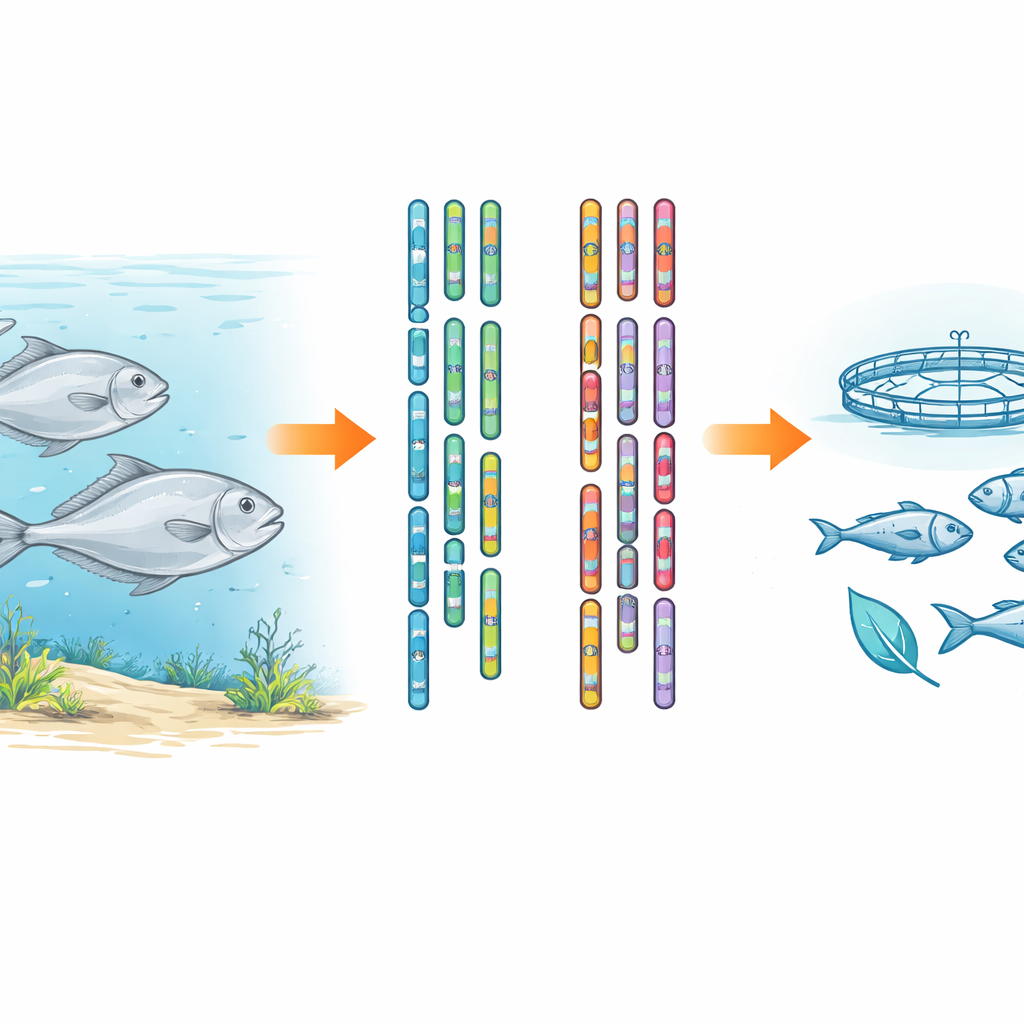
The silver pomfrets Pampus punctatissimus and Pampus argenteus are small, flat fish that loom large in coastal economies. They grow quickly, taste rich, and together contribute hundreds of thousands of tons to annual seafood catches in Asia. Yet their wild stocks are under pressure from heavy fishing and changing coastal environments. This study delivers a new kind of map for these fish: a complete, chromosome-by-chromosome readout of their DNA, designed to help scientists and fishery managers understand how these animals grow, adapt, and can be better protected and farmed.
Fish that feed coasts and communities
Both pomfret species live in shallow waters from the coasts of China, Japan, and Korea to the northern Indian Ocean. Their fast growth and thick, flavorful flesh make them prime targets for commercial fishing, especially in China, where they are a staple of coastal markets and restaurants. In 2023, catches of pomfret species, including these two, reached more than 340,000 tons. At the same time, the very demand that makes them valuable has fueled overfishing. Habitat loss and pollution are further shrinking natural populations, raising concerns over how long wild stocks can sustain current catch levels.
Turning fish tissue into a genetic atlas
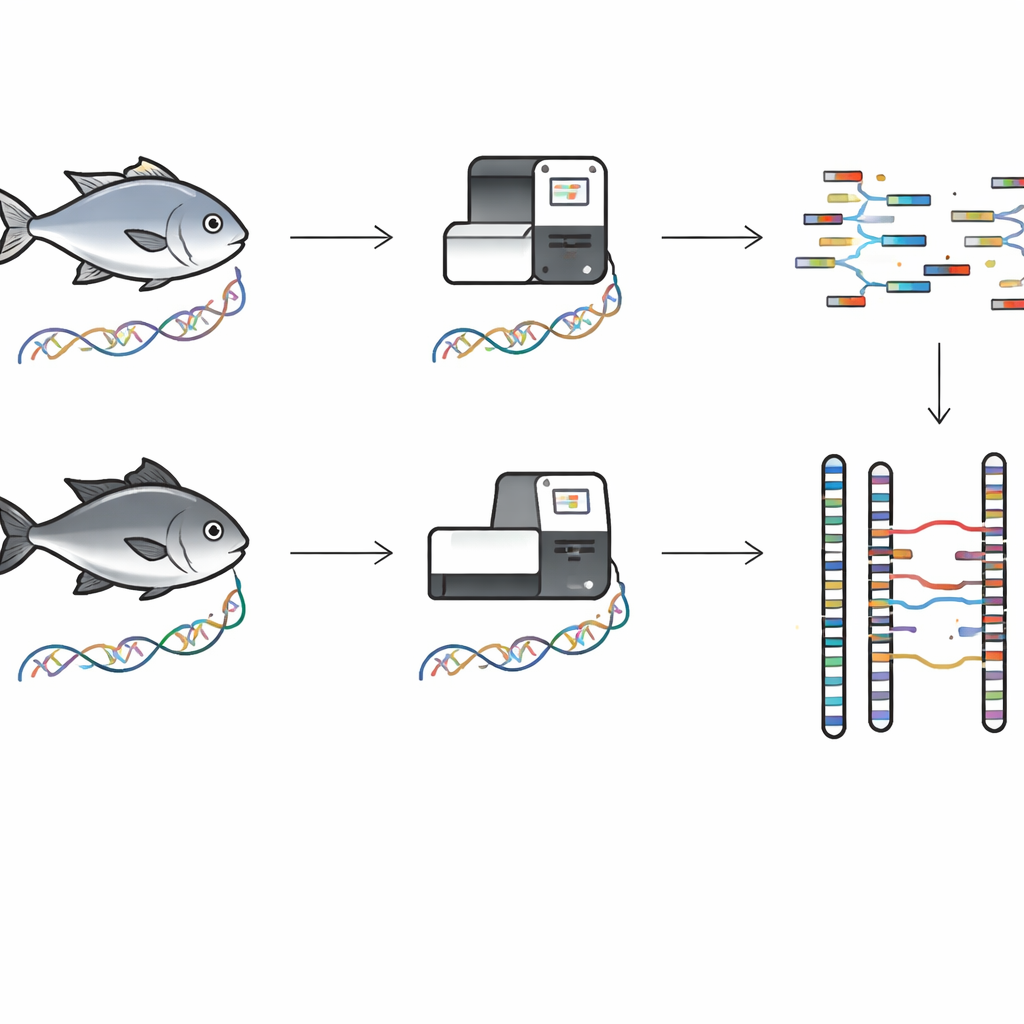
To build a detailed genetic map, the researchers collected young fish and raised them under carefully controlled tank conditions, ensuring healthy animals and high-quality DNA. They extracted DNA from muscle tissue and used a blend of cutting-edge sequencing tools. Long-read platforms captured extended stretches of DNA, while short-read machines helped polish the sequence. A technique called Hi-C was then used to figure out which DNA pieces sit next to each other in three-dimensional space inside the cell nucleus, allowing the team to assemble the sequence into full-length chromosomes rather than scattered fragments. The result was near-complete genome assemblies for both species, each organized into 24 chromosome-like structures.
Checking the quality of the new maps
Producing a genome is not enough; scientists need to know how complete and accurate it is. The team used standardized tests that look for thousands of key genes expected in bony fish and found that over 98–99% were present in both species, a sign of very high completeness. Sequencing reads mapped back to the new genomes at rates above 99%, indicating that very little information is missing or misplaced. The researchers also cataloged the many repeated segments that pepper the DNA and predicted tens of thousands of protein-coding genes, most of which could be matched to known functions from public databases. The overall structure and gene features closely resembled those of other well-studied fish, reinforcing confidence in the new maps.
Seeing similarities and differences between close cousins
With both genomes in hand, the scientists compared their layouts. They found large blocks of genes that remain in the same order between the two species, like shared chapters in slightly different editions of a book. These conserved regions confirm that the chromosome assemblies are robust and offer clues to how the pomfret lineage has evolved. The team also annotated various small RNA genes that help control gene activity, adding further detail to the biological blueprint. All raw data and final assemblies have been deposited in public repositories, making them freely available for future studies of growth, stress resistance, and other traits important for aquaculture and conservation.
What this means for the future of pomfrets
For non-specialists, the key message is that we now have high-resolution instruction manuals for two of the world’s most important pomfret species. These chromosome-level genomes will help researchers pinpoint genes linked to fast growth, meat quality, and resilience to low oxygen or polluted waters. In turn, that knowledge can guide selective breeding programs, improve hatchery practices, and inform science-based fishing limits. By investing in this invisible layer of information—the DNA script that builds each fish—this work lays the groundwork for keeping pomfret on plates and in oceans in a way that is both productive and sustainable.
Citation: Zhu, F., Jiang, S., Jia, C. et al. Chromosome-level genome assembly and annotation of Pampus argenteus and Pampus punctatissimus. Sci Data 13, 517 (2026). https://doi.org/10.1038/s41597-026-06739-w
Keywords: pomfret genomics, marine fisheries, fish genome assembly, aquaculture breeding, conservation genetics