Clear Sky Science · en
Chromosome-scale reference genome assembly and annotation of Prunus scopulorum
Why a Mountain Cherry’s DNA Matters
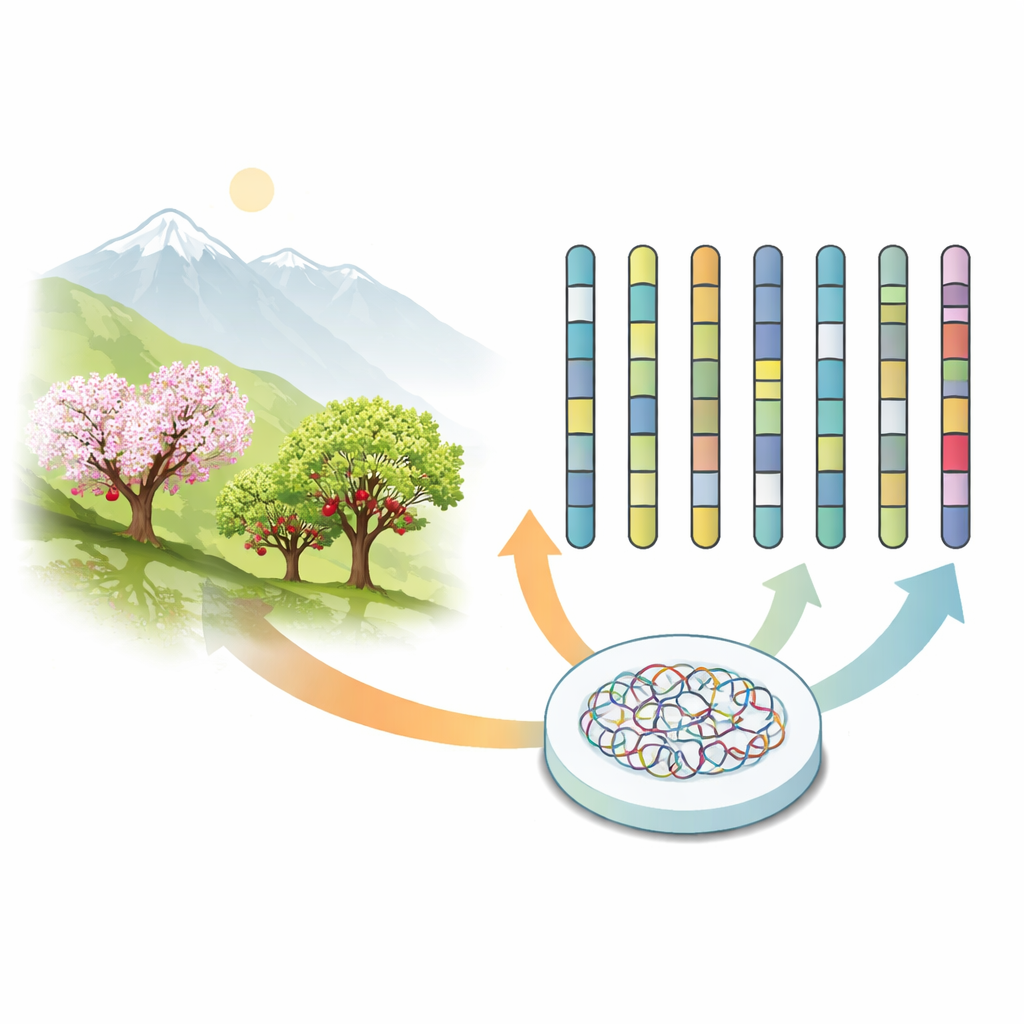
High in China’s Qinling Mountains grows a little-known wild cherry tree with small, bitter fruit but impressive toughness against cold and harsh conditions. While its taste may never rival dessert cherries, this rugged species, Prunus scopulorum, could hold genetic clues to hardier, more resilient cherry varieties. In this study, researchers decoded and carefully mapped the complete genome of this mountain cherry, creating a detailed reference that breeders and ecologists can now use to explore flavor, climate tolerance, and the evolutionary story of cherries.
A Wild Cherry with a Special Home
Prunus scopulorum, sometimes called the Qinling cherry, is found mainly on sunny slopes and ravines between 700 and 1,200 meters in the Qinling region and neighboring provinces. At first glance it looks much like other Chinese cherries, with five-petaled blossoms and round fruits. But its fruits are smaller, with distinctive colors, flavors, and especially a pronounced bitterness that sets it apart from familiar sweet cherries. These unusual traits likely reflect long-term adaptation to its mountain habitat. Because it occupies such a narrow range and has unique qualities, P. scopulorum is a valuable genetic resource for understanding cherry diversity and for improving cultivated varieties.
Reading the Cherry’s Genetic Blueprint
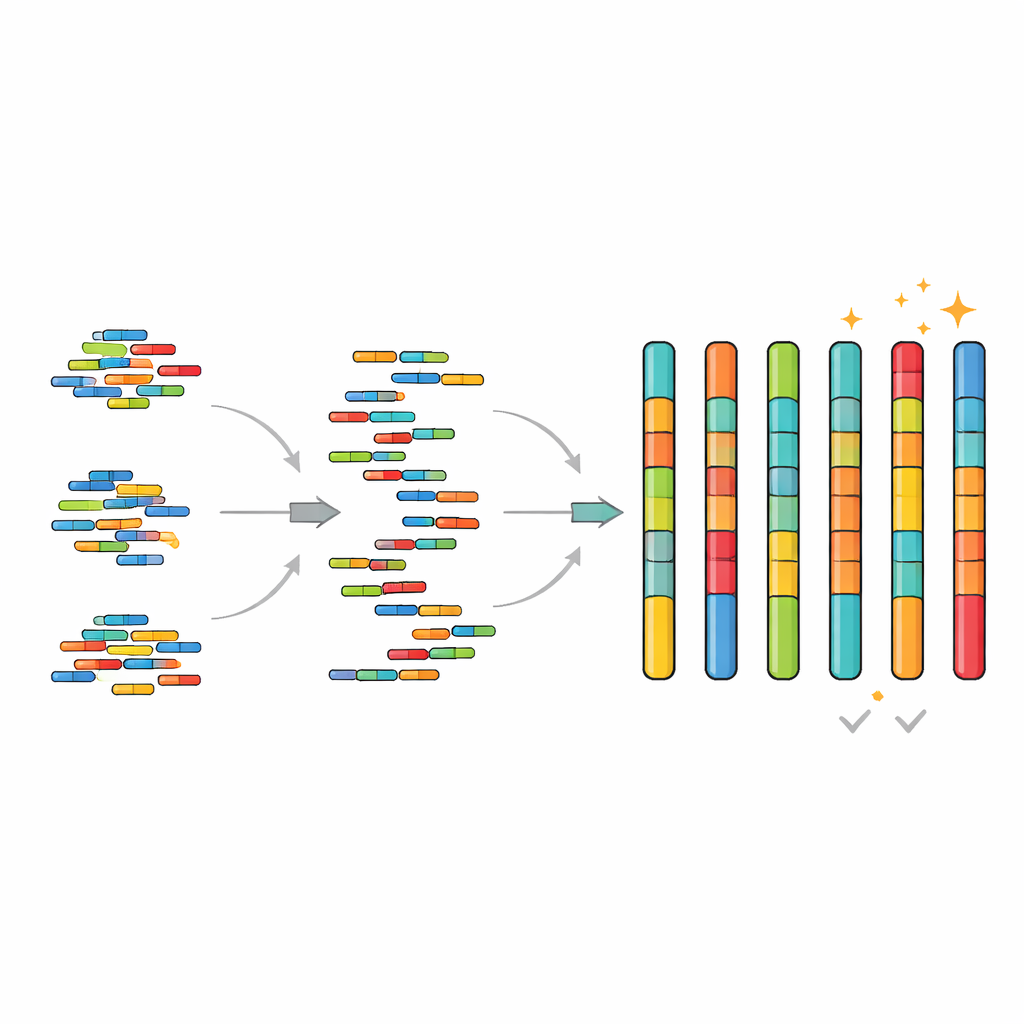
To uncover the species’ genetic blueprint, the team collected young leaves from a carefully preserved plant grown from wild seed. They extracted DNA and used several cutting-edge sequencing technologies, each offering different strengths. Short-read sequencing produced large amounts of highly accurate snippets of DNA, while long-read sequencing captured much longer stretches, which are crucial for piecing the genome together. In addition, they used Hi-C techniques, which detect how different parts of the DNA physically touch inside the cell’s nucleus, providing a kind of 3D map that helps place fragments onto full-length chromosomes.
Building a High-Quality Genome Map
Using these data, the researchers assembled the P. scopulorum genome into eight chromosome-length pieces, matching the species’ actual chromosome count. The final genome size was about 248.6 million DNA “letters,” and the assembly contained relatively few breaks, indicating long, continuous stretches of sequence. They then assessed quality with widely used benchmarks that check how many expected core genes are present and intact. The assembly captured about 97% of these single-copy marker genes, with very few missing, showing that the genome is both complete and reliable. Another measure focused on repeated DNA elements, particularly a type called long terminal repeats; the resulting score placed this genome firmly at modern reference standard.
What the Genome Reveals About the Cherry
Beyond simply assembling the DNA, the team identified and cataloged its contents. Nearly 45% of the genome consisted of repetitive sequences, including several types of mobile genetic elements that have shaped the genome over time. They predicted 32,717 protein-coding genes and were able to assign functions to 99.41% of them using multiple international databases. They also mapped hundreds of RNA genes involved in basic cell functions. When the researchers compared the P. scopulorum genome with those of ornamental and sweet cherries, they found strong one-to-one correspondence along the chromosomes, confirming both the accuracy of the new assembly and the close evolutionary ties within the cherry family.
Opening Doors for Better Cherries
For non-specialists, the key message is that scientists now have a complete, well-tested DNA map of a hardy, wild mountain cherry. This reference genome will help researchers pinpoint genes linked to cold tolerance, fruit quality, disease resistance, and other traits that breeders care about. It also adds an important piece to the puzzle of how cherry species evolved and adapted to different environments. While you may never taste P. scopulorum’s bitter fruit, its genetic information could quietly contribute to future cherry trees that are more resilient, productive, and better suited to a changing climate.
Citation: Guo, T., Li, X., Zhu, D. et al. Chromosome-scale reference genome assembly and annotation of Prunus scopulorum. Sci Data 13, 634 (2026). https://doi.org/10.1038/s41597-026-06657-x
Keywords: wild cherry genome, Prunus scopulorum, chromosome-scale assembly, fruit tree breeding, plant adaptation