Clear Sky Science · en
A Labrador PeptideAtlas and DIA spectral assay library - resources for proteomics research in dogs
Why Dog Proteins Matter to Us
Dogs share our homes, our habits, and often even our health problems. As veterinarians and scientists look for better ways to keep dogs healthy and living longer, they increasingly turn to the tiny molecular workers inside every cell: proteins. This study focuses on Labrador retrievers and creates two large-scale maps of their proteins, giving researchers a powerful set of tools to understand disease, aging, and wellness in dogs—and, by extension, to learn more about human health too.
Looking Inside the Dog’s Body
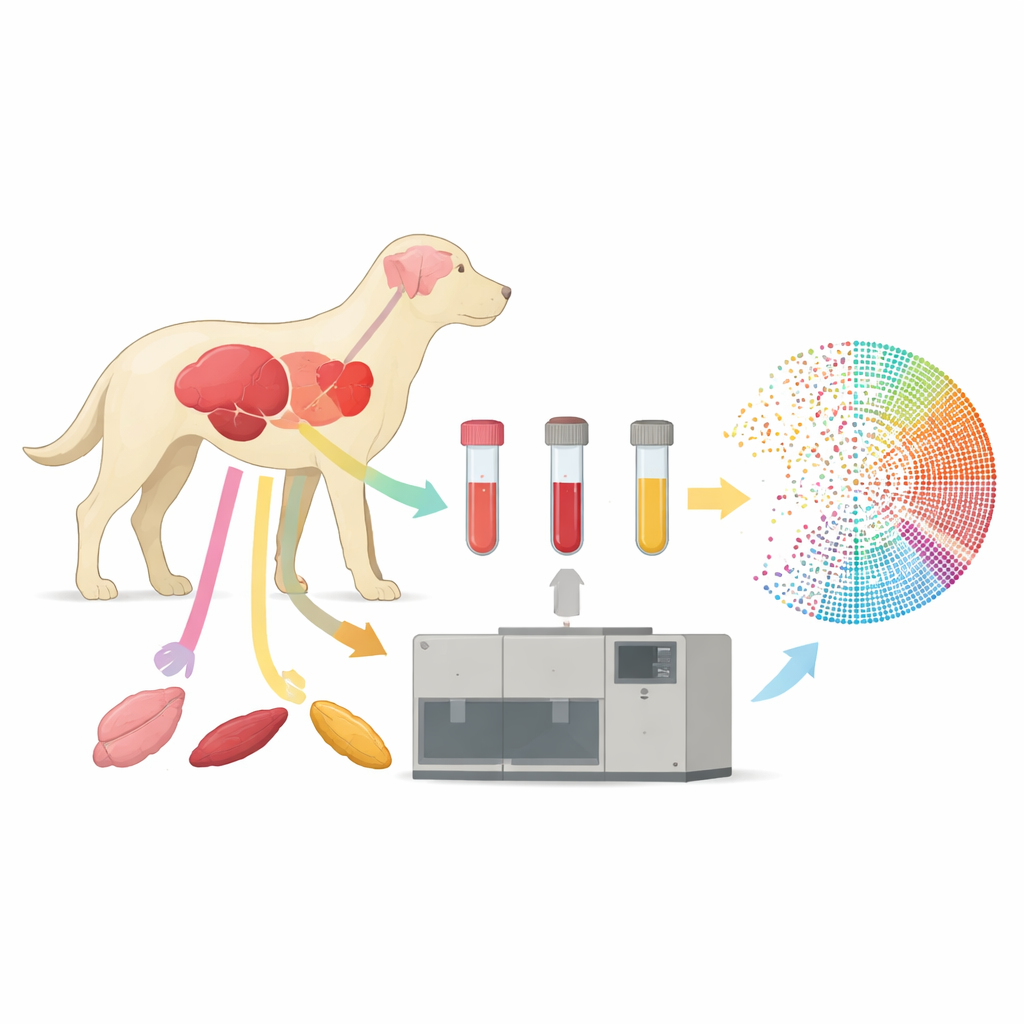
Proteins are the main doers in living cells. They build structures, relay signals, repair damage, and drive chemical reactions. To understand what is happening in an organ such as the brain or kidney, it is not enough to know the DNA sequence; we also need to know which proteins are present and in what amounts. The authors collected samples from many parts of the Labrador body—thirteen different tissues, plus blood plasma and urine—from several dogs. By comparing organs that handle very different jobs, such as thinking (brain), filtering waste (kidney), digesting food (intestine, stomach), or pumping blood (heart), they aimed to capture a broad picture of what the "dog proteome"—the full set of dog proteins—really looks like in real life.
Turning Complex Samples into Protein Maps
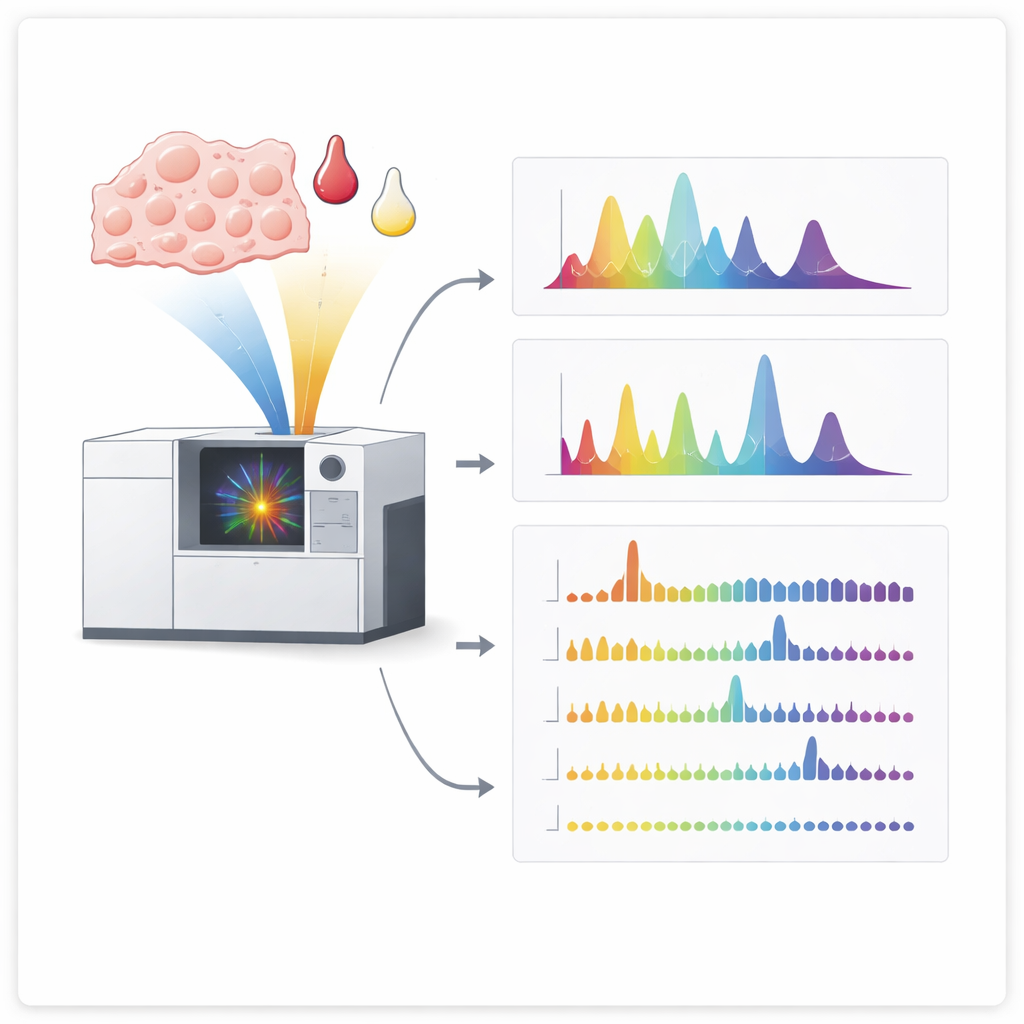
To read out these proteins, the team used advanced mass spectrometry, a technology that can weigh and count thousands of molecules at once. First, proteins from each sample were chopped into smaller pieces called peptides. These peptides were then fed into two closely related measurement modes. In one mode, the instrument selectively zooms in on individual peptide signals, which is useful for discovering what is there. In the other, it measures everything within a series of defined windows, which is better for making repeatable, quantitative comparisons. The scientists processed the raw data with specialized software that checks and rechecks every match between a measured signal and a proposed peptide, keeping only those identifications that pass very strict error thresholds.
Building the Labrador Protein “Atlas”
The first major product of this work is a Labrador PeptideAtlas—a curated reference collection of peptide and protein identifications in dogs. From more than 13.7 million measured spectra across 138 instrument runs, the atlas confidently catalogs over 10,000 proteins from the core set of genes listed for Labradors in major reference databases, representing roughly half of the predicted dog proteome. The atlas keeps track of which proteins were seen in which tissues, how many different peptides support each one, and how much sequence coverage was achieved. For some organs, such as kidney and brain, thousands of unique proteins were observed, including many that appeared only in a single tissue type. Researchers can now look up a protein of interest and quickly see whether it has ever been detected in dogs before and in what biological context.
A Library for Fast, Repeatable Measurements
The second key resource is a large “spectral assay library” tailored to a measurement style called data-independent acquisition. This library acts like a Rosetta stone: for more than 120,000 distinct peptides linked to nearly 11,800 proteins (about 56% of the predicted dog proteome), it stores the characteristic patterns of fragment signals and their typical behavior in the instrument. When new samples are measured, software uses this library to pick out and quantify peptides with high confidence, even from very complex mixtures. The authors showed that, using this library, they could reliably quantify more than 10,000 proteins across tissues and hundreds in plasma, and that shorter, faster measurement runs still captured most of the information. This makes large, high-throughput dog studies more practical and cost‑effective.
What This Means for Dog Health and Beyond
In everyday terms, this study delivers two open, reusable tools that turn raw, noisy protein measurements in dogs into clear, trustworthy information. The Labrador PeptideAtlas gives a first, broad map of where many proteins show up in the body, while the spectral assay library lets researchers track thousands of these proteins accurately across many samples and time points. Together, they lay the groundwork for discovering protein signatures of disease, monitoring how dogs age, and testing how diet or treatment affects their biology. Because dogs share our environment and many of our illnesses, these resources do not just help veterinarians—they also create new opportunities to learn about human health through our closest animal companions.
Citation: Kusebauch, U., Sun, Z., Midha, M.K. et al. A Labrador PeptideAtlas and DIA spectral assay library - resources for proteomics research in dogs. Sci Data 13, 524 (2026). https://doi.org/10.1038/s41597-026-06647-z
Keywords: dog proteomics, Labrador retriever, protein atlas, mass spectrometry, biomarker discovery