Clear Sky Science · en
A dataset of radiocarbon dates from Holarctic mammal collagen purified with high-quality chemistry
Why Old Bones Still Matter Today
Across Eurasia and North America, the Ice Age giants—mammoths, wild horses, bison, cave bears and more—vanished in a wave of extinctions that reshaped life on Earth. To understand why they disappeared, scientists rely on a kind of natural clock hidden in their bones: radiocarbon. But those clocks can be wrong if the chemistry is sloppy. This paper introduces MEGA14C, a massive, carefully vetted collection of more than eleven thousand high-quality dates from large mammals, designed to give researchers a far sharper timeline of past climates, human arrivals and extinctions.
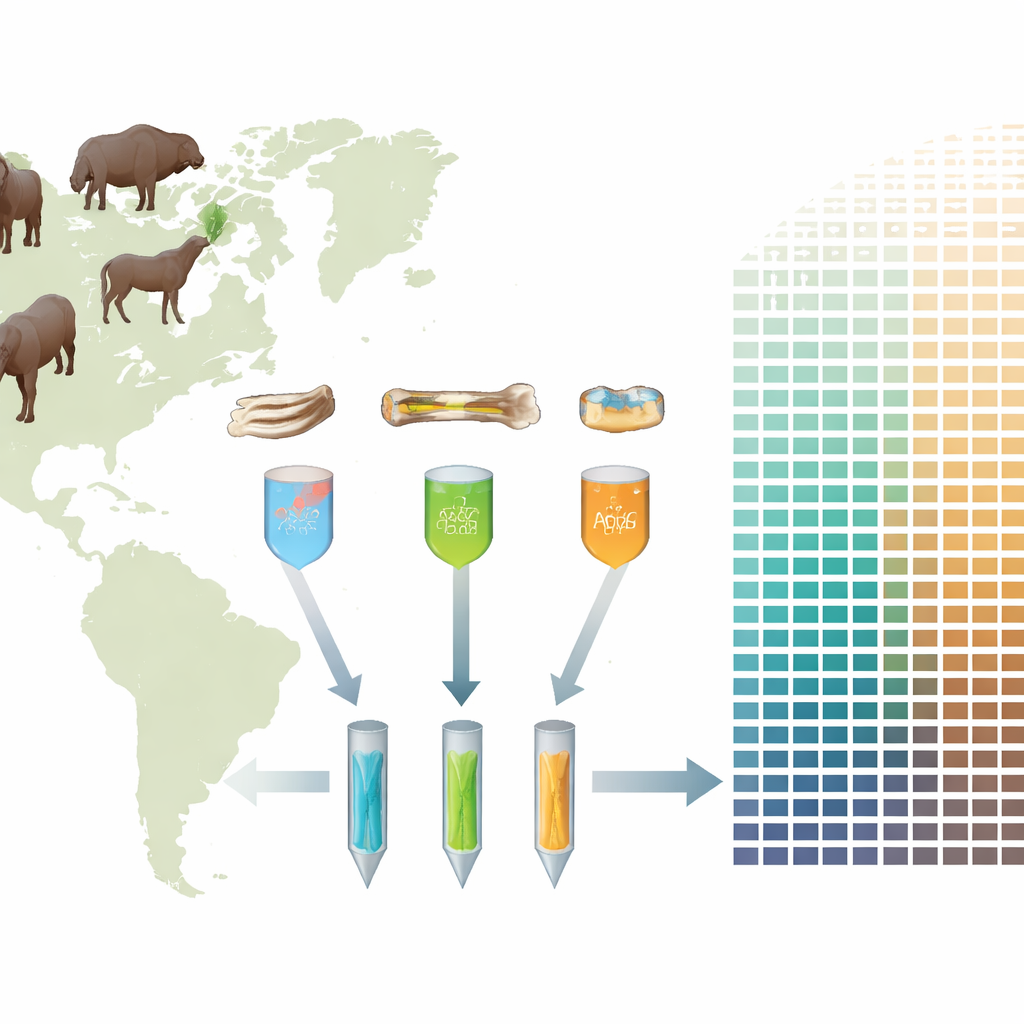
Reading Time in the Bones
Radiocarbon dating measures the tiny traces of radioactive carbon left in once-living tissue to estimate how long ago an animal died, up to about 50,000 years. For Ice Age mammals, that usually means analyzing collagen, the protein that helps give bones their structure. The catch is that after burial, bones soak up foreign carbon from soil, water, glues and preservatives. If these extra ingredients are not removed, the measured age can be wrong by thousands of years—making mammoths seem to outlive their true extinction or suggesting people hunted animals that were actually long gone. The authors argue that without knowing exactly how bone samples were chemically cleaned, any story built from those dates rests on shaky ground.
Building a Trustworthy Global Catalogue
The MEGA14C project set out to assemble a dataset where the chemistry behind each date is as transparent as the number itself. The team focused on large mammals from the last 50,000 years across the northern continents and only included bones whose collagen was prepared using three of the most reliable methods in use today. These protocols add extra purification steps to a standard collagen extraction, aiming to strip away recent or ancient contaminants and leave only original bone carbon. To find such records, the authors combed through more than 5,000 publications and specialized date lists, spanning decades of archaeological and paleontological work.
The Hidden Work Behind the Numbers
A major surprise was how often published studies reported radiocarbon dates but said little or nothing about the chemistry behind them. To fill those gaps, the first author spent over 30,000 hours and sent more than 100,000 emails, tracking down researchers, museums, funding agencies and radiocarbon laboratories. For 21% of the dates in MEGA14C, details of the bone pretreatment came only from these personal exchanges or from internal laboratory archives. Each record in the dataset carries up to 53 separate pieces of information—from species identity and whether it is wild or domesticated, to where the specimen was found, how it was prepared, and whether genetic sequences are available—so that future users can judge reliability for themselves.
What the Dataset Contains
In total, MEGA14C includes 11,715 radiocarbon dates covering 8 mammal orders, 23 families, 78 genera, 133 species and 18 subspecies, with over a quarter coming from extinct animals. A handful of genera—such as horses, cattle, mammoths, reindeer, bison, bears, deer, wolves, woolly rhinoceros and pigs—account for the bulk of records, reflecting both their abundance in the fossil record and their importance in debates about extinction and domestication. Most dates come from Eurasia, and nearly two-thirds fall within the last 20,000 years, a critical window that spans the peak of the last Ice Age, the spread of humans into new regions and the transition into our current, warmer Holocene epoch. Many entries also link radiocarbon ages to ancient DNA and isotope measurements, allowing researchers to connect population histories, diets and environments to precise timelines.
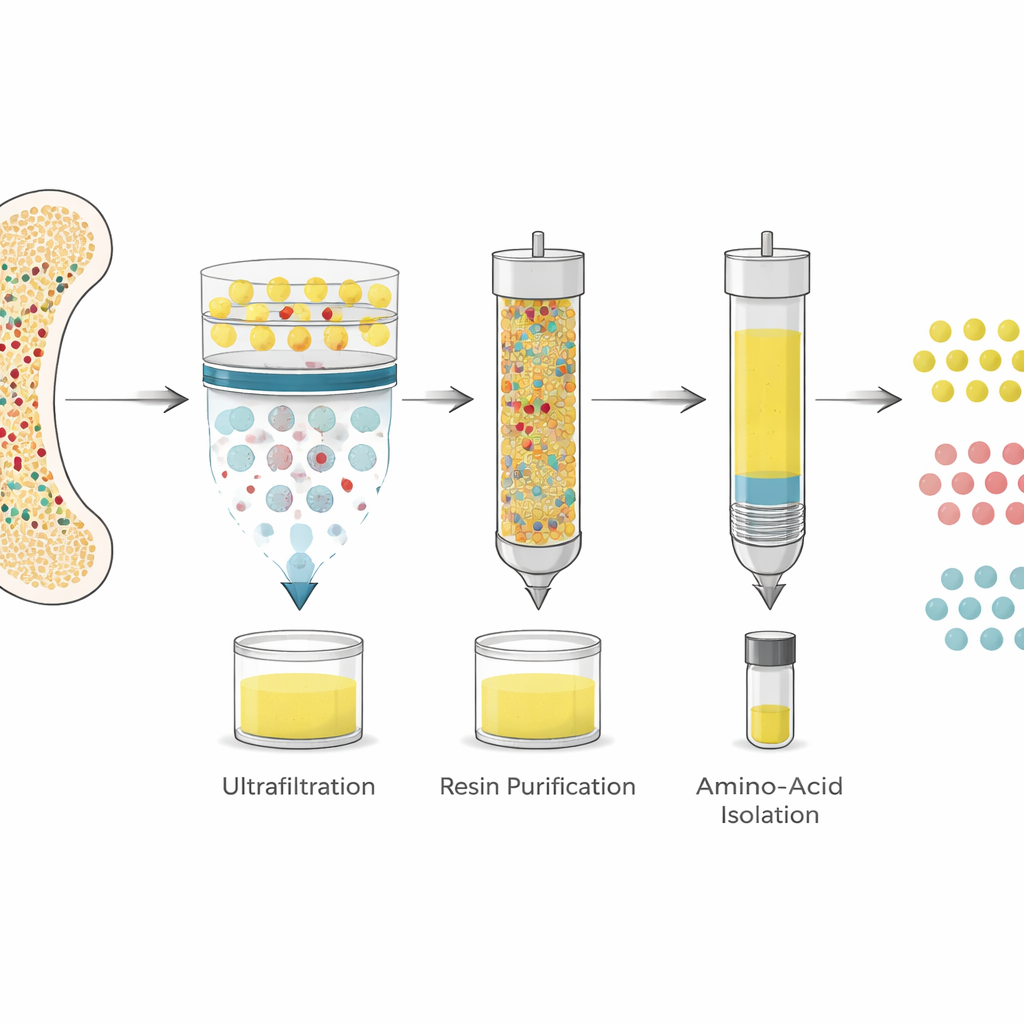
Sorting Strong Dates from Weak Ones
Even with top-tier chemistry, not all dates are equal. The authors therefore graded records into reliability categories based on issues such as suspected contamination, poor collagen quality or contradictions with the geological setting. Some dates are flagged as unreliable and should no longer be used; others are to be treated with caution. This level of self-critique is rare in large compilations but crucial, the authors argue, because big datasets can mislead if they quietly mix robust and dubious measurements. To help users work with the data, the team provides open-source software that lets anyone filter records by taxon, region, time period or reliability and then convert radiocarbon ages into calendar years using modern calibration curves.
What This Means for Our View of the Past
For non-specialists, the key message is simple: when we ask whether climate shifts, human hunting or disease wiped out the Ice Age giants, the answers depend on the quality of the clocks we read in their bones. MEGA14C offers one of the most carefully cleaned and fully documented collections of such clocks assembled to date. By insisting on transparent chemistry and clear reporting standards, the authors provide a firmer foundation for testing ideas about extinction, domestication and ecosystem change—and a model for how other fields might turn scattered, imperfect data into reliable tools for understanding Earth’s past and guiding conservation in its future.
Citation: Herrando-Pérez, S., Mitchell, K.J., Southon, J.R. et al. A dataset of radiocarbon dates from Holarctic mammal collagen purified with high-quality chemistry. Sci Data 13, 556 (2026). https://doi.org/10.1038/s41597-026-06562-3
Keywords: radiocarbon dating, Ice Age megafauna, paleontology data, extinction timelines, ancient DNA