Clear Sky Science · en
The chromosome-scale genome assembly, annotation of Bischofia polycarpa (H. Lév.) Airy Shaw, Phyllanthaceae
A Tree With Hidden Stories
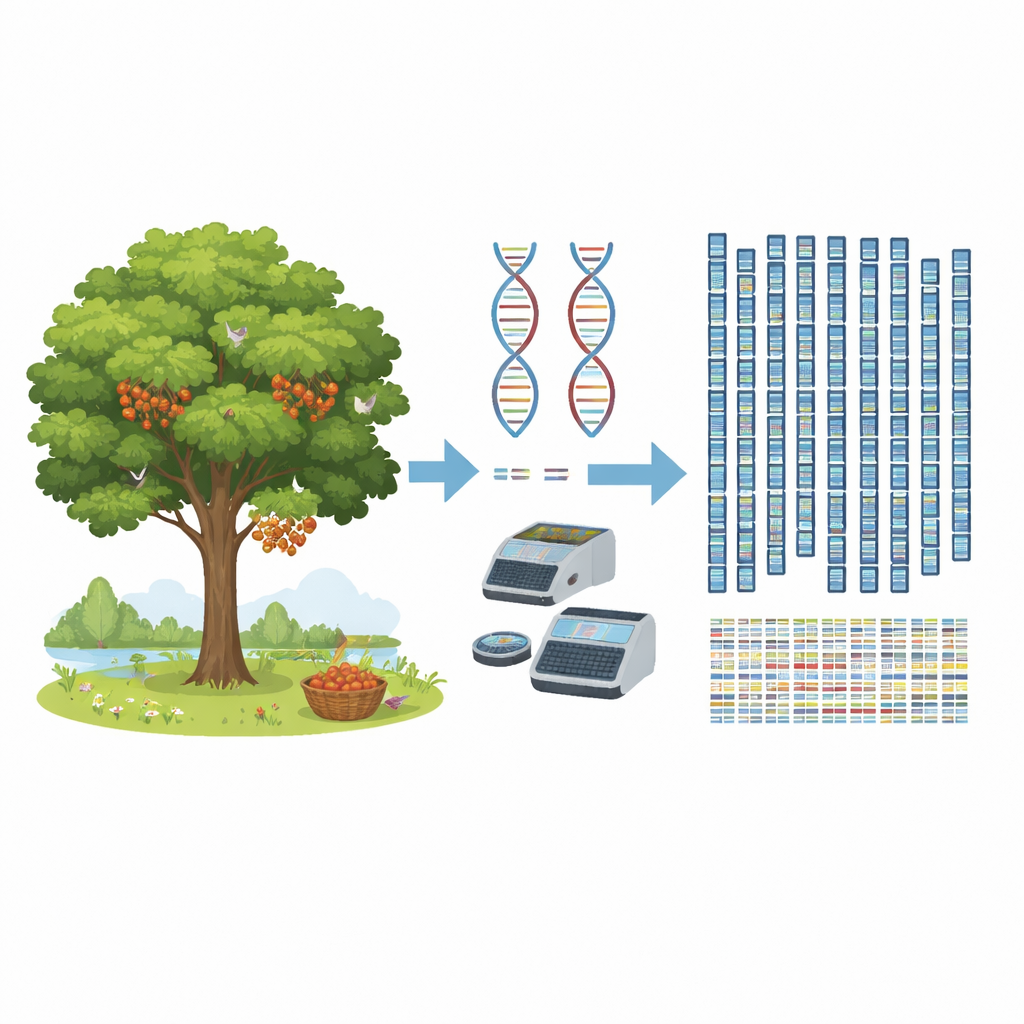
Bischofia polycarpa is a tall deciduous tree found across parts of China, valued for its striking autumn leaves, its use in traditional medicine, and oily fruits rich in heart‑healthy fats. Those same fruits hang on the branches through the cold months, feeding wild birds when other food is scarce. Yet, until now, scientists knew almost nothing about this tree’s genetic blueprint. This study delivers that missing piece: a high‑quality, chromosome‑level map of the tree’s DNA, opening the door to new work on conservation, breeding, and understanding how this species thrives in its environment.
Why This Tree Matters
B. polycarpa belongs to the Phyllanthaceae family, a diverse group of mostly tropical shrubs and trees with more than 2,000 species. Many of them are important as ornamentals, foods, and sources of traditional remedies, but only a handful have had their genomes decoded. Without these reference genomes, it is difficult to improve varieties, study how species are related, or uncover the genetic roots of useful traits such as disease resistance or valuable plant chemicals. By focusing on B. polycarpa, the authors not only highlight a tree with clear ecological and medicinal importance, but also fill a gap in the genetic catalog of this understudied plant family.
Capturing the Genetic Blueprint
To build the genome, researchers started with young leaves from carefully selected, genetically identical plants. They extracted DNA and read it using several state‑of‑the‑art sequencing technologies. Short, highly accurate DNA snippets from an Illumina machine helped estimate the overall genome size and complexity. Longer, very precise reads from a PacBio HiFi system allowed them to stitch together big blocks of the genome, while a Hi‑C technique captured how pieces of DNA sit next to each other inside the cell’s nucleus. Think of the short reads as close‑up snapshots, the long reads as wide‑angle shots, and Hi‑C as a 3D map of how all the pages of a massive book are folded and shelved.
From Fragments to Chromosomes
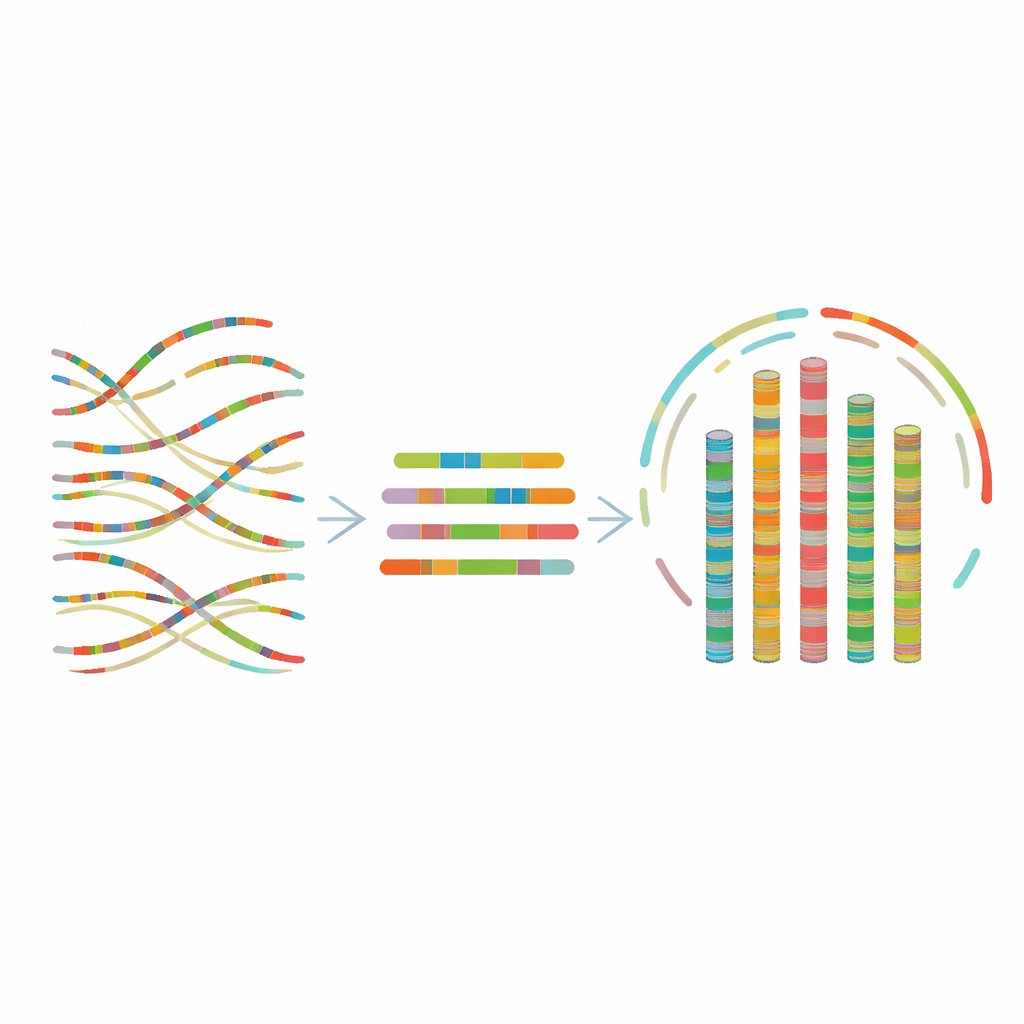
Using specialized software, the team assembled the PacBio HiFi reads into long stretches of DNA, then used the Hi‑C data to organize these stretches into full chromosomes. The final assembly spans about 586 million DNA letters, with nearly all of it neatly assigned to 34 chromosomes, confirming the species’ diploid nature (2n = 68). Quality checks showed that more than 95% of a standard set of core plant genes were present and intact, and almost all of the original reads could be mapped back onto the assembled genome. In other words, the researchers not only gathered the pages of the book but also placed them in the right order, with very few gaps.
What the Genome Reveals Inside
Once the overall structure was in place, the authors turned to the contents. They combined evidence from the tree’s own RNA (which shows which genes are active), comparisons with related species, and computer predictions to identify 32,554 protein‑coding genes. Remarkably, over 96% of these genes could be matched to known functions or families, providing clues about the tree’s metabolism, growth, and defenses. The researchers also found that about 63% of the genome consists of repetitive DNA, much of it made of mobile elements that copy and paste themselves around the genome. These repeats, once dismissed as “junk,” play key roles in shaping genome size and evolution.
A New Starting Point for Future Work
This study does not attempt to tie specific genes to traits like leaf color, oil content, or bird‑friendly fruit persistence. Instead, it delivers the essential reference map others will use to ask those questions. With a complete and carefully checked genome now publicly available, scientists can explore how B. polycarpa fits into the evolutionary tree of its relatives, pinpoint genes involved in valuable compounds, and design better strategies for breeding or conservation. For anyone interested in how a single species can support both ecosystems and human health, this new genome offers a powerful lens on the hidden instructions that make B. polycarpa such a useful and resilient tree.
Citation: Xin, G., Wang, G., Liu, B. et al. The chromosome-scale genome assembly, annotation of Bischofia polycarpa (H. Lév.) Airy Shaw, Phyllanthaceae. Sci Data 13, 565 (2026). https://doi.org/10.1038/s41597-026-06554-3
Keywords: plant genome, Bischofia polycarpa, Phyllanthaceae, chromosome assembly, medicinal tree