Clear Sky Science · en
Direct RNA sequencing and signal alignment reveal RNA structure ensembles in a eukaryotic cell
Why the shapes of RNA matter
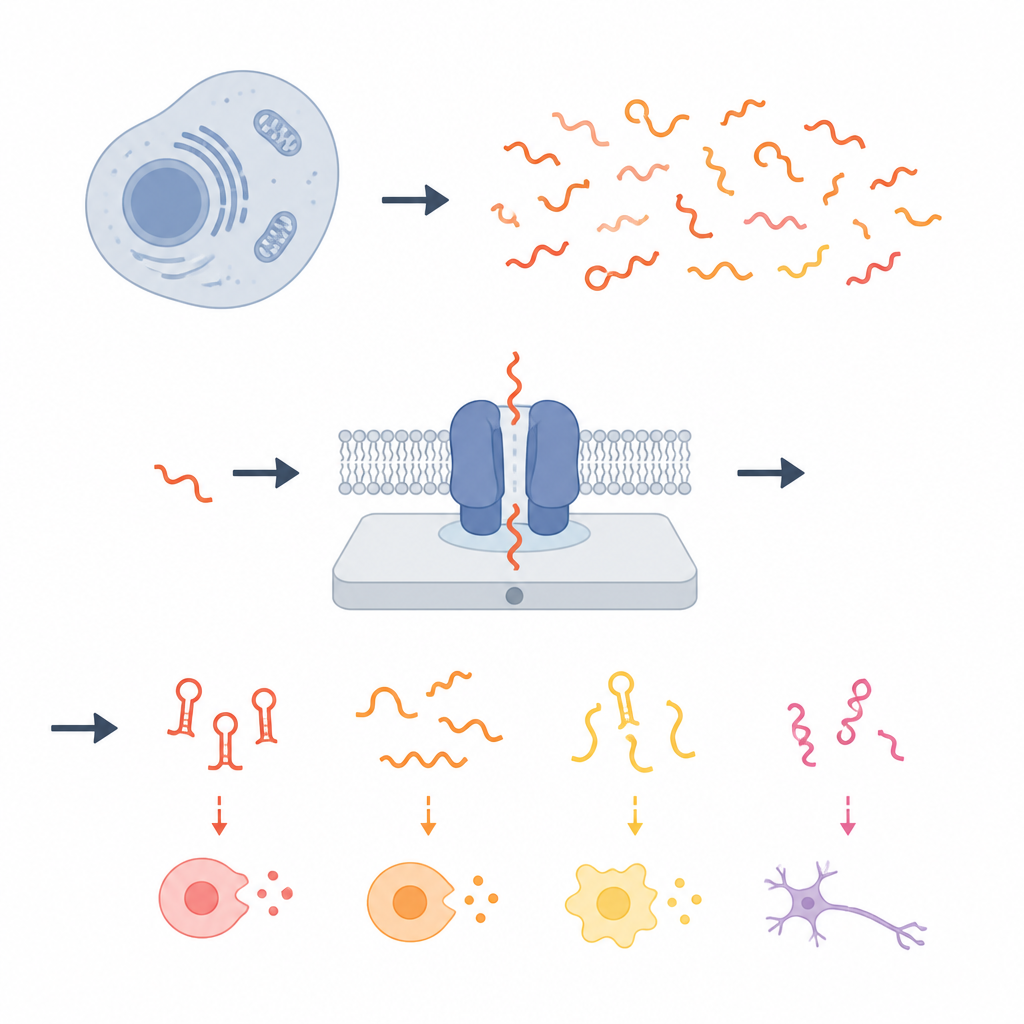
Inside every cell, RNA molecules do far more than carry genetic messages; they twist and fold into shapes that can tune how genes are turned into proteins. This study introduces a way to watch those shapes one molecule at a time inside living systems, revealing that many RNAs do not adopt a single form but instead shift among multiple structures that can influence viruses and fungal pathogens.
A new way to read folded RNA
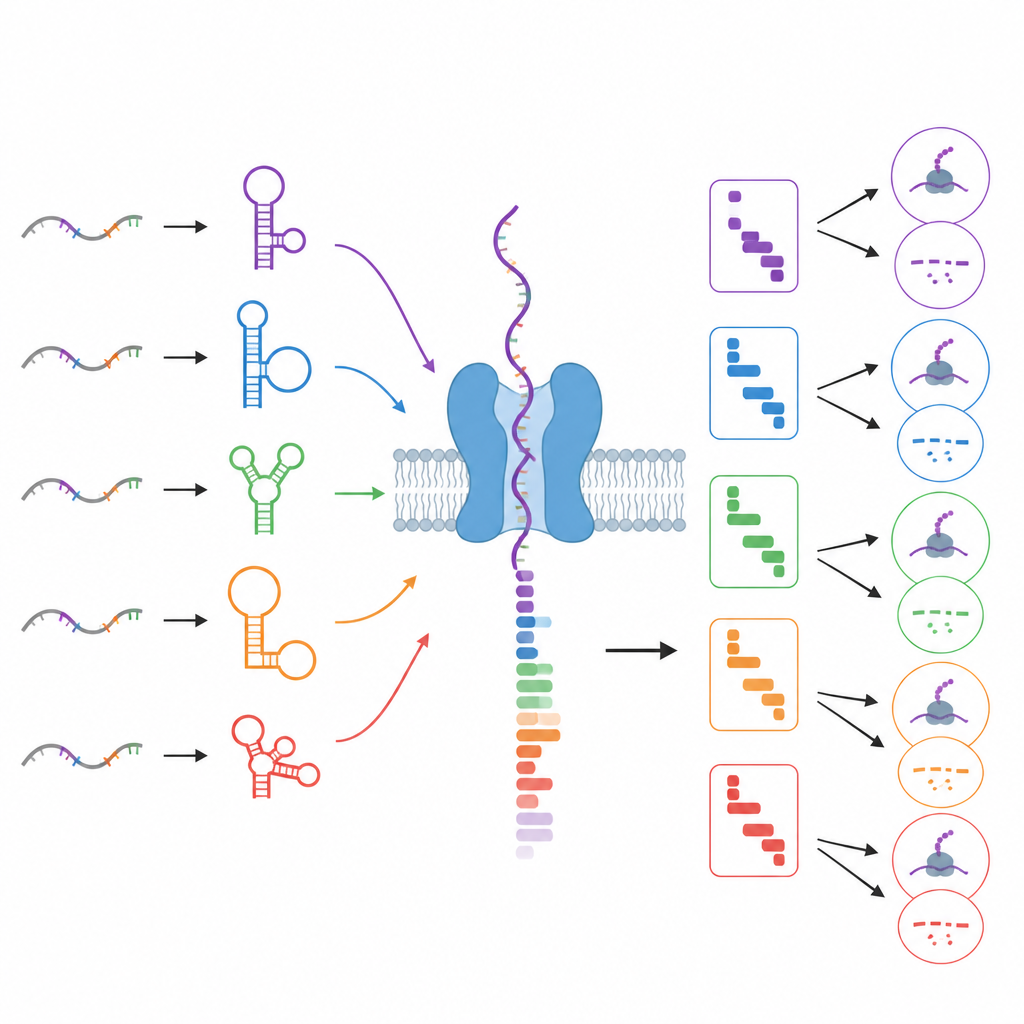
The authors built an approach called sm-PORE-cupine that combines a chemical "highlighter" for flexible parts of RNA with a technology that threads single RNA strands through tiny pores while measuring electrical signals. The chemical probe marks exposed regions along each RNA, and as the marked strand passes through the pore, those marks subtly alter the signal. By analyzing these signal changes along the length of individual molecules, the method recovers a structural fingerprint for each RNA without first turning it into DNA.
Turning noisy signals into clear patterns
Heavily marked RNAs can be difficult for standard software to read, so the team added a second analysis step that aligns raw electrical traces directly, rather than relying only on letter-by-letter matches. This alignment, based on time-warping of the signal, rescues a substantial fraction of reads that would otherwise be discarded, especially those with many chemical marks that carry strong structural information. The researchers then use a statistical clustering strategy to sort thousands of single-molecule fingerprints into groups, each group representing a distinct common folding pattern, or structural population, within the cell.
Revealing hidden diversity in viral RNA
To test their method, the scientists first showed that it can cleanly separate known structural states of short regulatory RNAs called riboswitches, which change shape when they bind small molecules. They then turned to the genome of SARS-CoV-2, the coronavirus that causes COVID-19. Focusing on the tail end of the viral genome, where many shorter viral RNAs are produced, they found that this region is especially structurally diverse. The same stretch of sequence can fold into at least two major shapes, and the relative share of these shapes shifts among different viral subgenomic RNAs, hinting that alternative folds may fine-tune how each viral RNA behaves during infection.
How fungal RNAs respond to heat
The authors next applied sm-PORE-cupine to the transcriptome of Candida albicans, a fungus that can switch from a yeast form to an invasive filamentous form when temperature rises. They compared RNAs folded inside cells and in test tubes at both cooler and warmer conditions. RNAs were generally more structurally uniform in the test tube, suggesting that the crowded, protein-rich interior of the cell favors a broader mix of shapes. In the fungus, coding regions tended to be more structurally varied than tail regions, and RNAs that break down quickly were more single stranded and structurally uniform. When cells were warmed, many RNAs showed a shift toward more homogeneous folding, consistent with heat partially melting complex structures.
RNA tails as temperature sensors
A closer look at specific fungal RNAs uncovered segments in their 3′ tails that change structural mixtures with temperature and correlate with changes in protein output. For two such genes, inserting these tail segments behind a reporter enzyme was enough to alter protein production in a temperature-dependent way in a test-tube translation system. These results suggest that some RNA tails may act as simple thermometers, shifting their shape with heat and thereby tuning how efficiently the cell makes protein from those messages.
What this work tells us
This study shows that many RNAs in viruses and fungi exist as shape ensembles rather than single fixed forms and that these shifting structures can be linked to how much protein is made and how quickly messages decay. By reading out RNA shape molecule by molecule with nanopore devices, sm-PORE-cupine adds a powerful tool for connecting the physical form of RNA to its function in infection, stress responses and beyond.
Citation: Wang, J., Han, J., Tan, W.T. et al. Direct RNA sequencing and signal alignment reveal RNA structure ensembles in a eukaryotic cell. Nat Methods 23, 914–923 (2026). https://doi.org/10.1038/s41592-026-03069-y
Keywords: RNA structure, nanopore sequencing, SARS-CoV-2, Candida albicans, gene regulation