Clear Sky Science · en
Elraglusib and chemotherapy in metastatic pancreatic ductal adenocarcinoma: a randomized controlled phase 2 trial
Why this study matters to patients and families
Pancreatic cancer is one of the deadliest cancers, and most people are diagnosed only after it has already spread. Current drug combinations can slow the disease for some, but survival gains have been modest. This study tested whether adding a new medicine called elraglusib to a commonly used chemotherapy pair could help people with metastatic pancreatic cancer live longer without adding unmanageable side effects.
A new partner for standard treatment
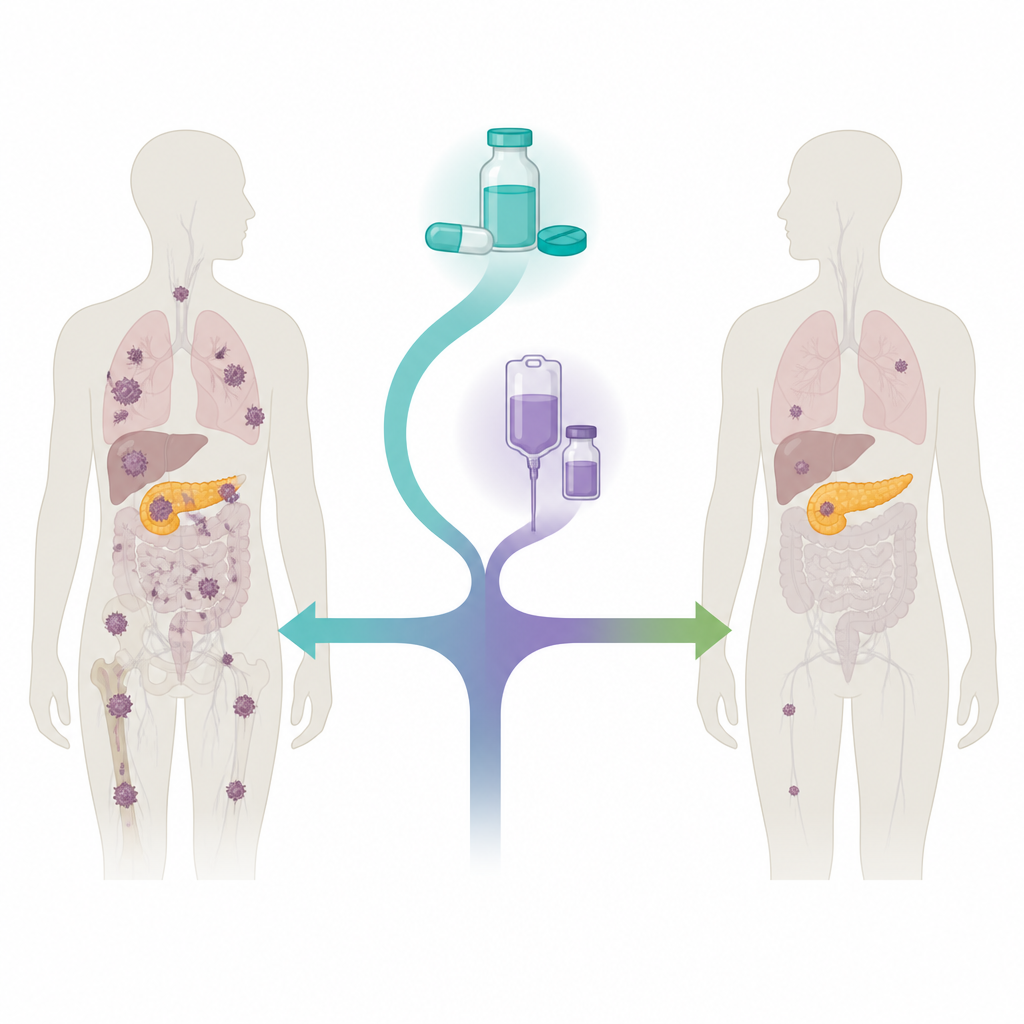
The trial focused on metastatic pancreatic ductal adenocarcinoma, the most common form of pancreatic cancer. Standard first treatment often includes a drug duo called gemcitabine plus nab-paclitaxel. Researchers designed an international phase 2 clinical trial to see if adding elraglusib, a drug that blocks a protein involved in cancer cell growth and immune escape, could improve outcomes for people receiving their first treatment for advanced disease. Patients were randomly assigned to get standard chemotherapy alone or the same chemotherapy together with weekly infusions of elraglusib.
More people lived longer with the new combination
In the main analysis, 155 patients received elraglusib with chemotherapy and 78 received chemotherapy alone. By the time the data were analyzed, patients getting the three-drug combination lived a median of 10.1 months, compared with 7.2 months for those on standard treatment alone. That translates into a 38 percent lower risk of death during the study period for people who received elraglusib. One year after starting treatment, about 44 percent of patients in the elraglusib group were still alive, compared with about 22 percent in the chemotherapy only group. This survival advantage appeared within the first two months and persisted throughout follow up, including in people with cancer spread to the liver and in those with different baseline risk factors.
Side effects and daily impact
As with most cancer drugs, the improved survival came with added side effects. Nearly all patients in both groups experienced some treatment related problems. The combination group had higher rates of low white blood cell counts, which can increase infection risk, and more fatigue. A unique side effect linked to elraglusib was brief visual disturbance, including changes in color and contrast perception, which typically lasted less than an hour and did not appear to cause lasting eye damage. Serious side effects and treatment related deaths occurred in both groups at similar overall rates, and many patients were able to continue therapy with dose adjustments and supportive care, suggesting that the safety profile, while demanding, was manageable for this very sick population.
Clues from the immune system
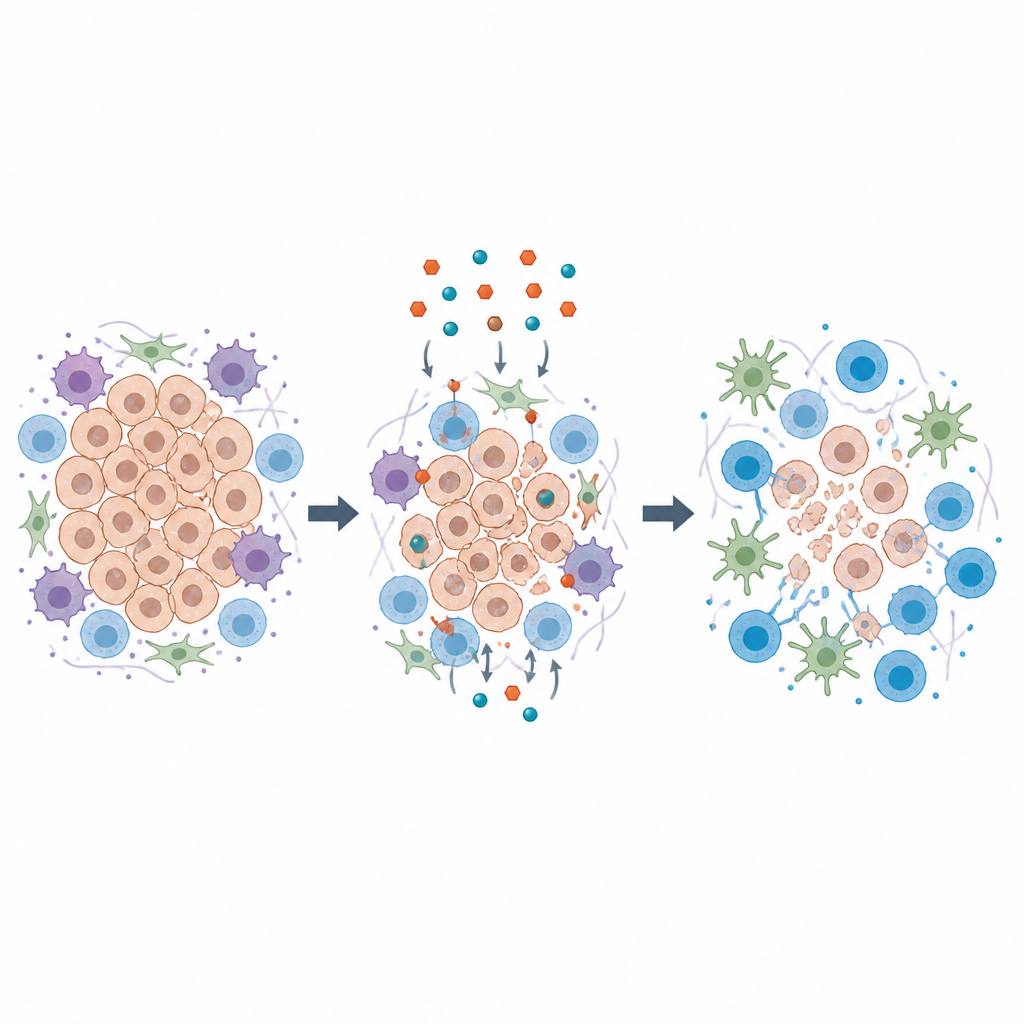
Beyond counting months of survival, the researchers looked for biological signs that might explain who benefits most. In a small set of tumor samples taken before and after treatment, patients who received elraglusib with chemotherapy showed marked increases in cancer killing immune cells inside their tumors and decreases in suppressive immune cells that can shield cancer from attack. Blood tests also suggested that certain immune related proteins measured before treatment, including the signal CXCL2 and a death inducing protein family called TRAIL ligands, were linked to better survival only in the elraglusib group. These findings are early and based on limited numbers, but they hint that the new drug may help reawaken the body’s own defenses against pancreatic cancer.
What this means for future care
This study shows that adding elraglusib to standard gemcitabine and nab-paclitaxel can extend survival for people with newly diagnosed metastatic pancreatic cancer, with side effects that can usually be monitored and managed. The benefit does not appear to come simply from longer or more intense chemotherapy, but likely from a combination of direct effects on cancer cells and improved immune activity within tumors. While this is still an intermediate sized trial and not yet the final word, the results are strong enough that a larger phase 3 study is being planned. If those results confirm these findings, elraglusib based combinations could become a new first line option and a backbone for pairing with other treatments in this hard to treat cancer.
Citation: Mahalingam, D., Shroff, R.T., Carneiro, B.A. et al. Elraglusib and chemotherapy in metastatic pancreatic ductal adenocarcinoma: a randomized controlled phase 2 trial. Nat Med 32, 1794–1804 (2026). https://doi.org/10.1038/s41591-026-04327-4
Keywords: metastatic pancreatic cancer, elraglusib, gemcitabine nab paclitaxel, cancer immunotherapy, clinical trial