Clear Sky Science · en
Enhanced dynamic risk stratification of smoldering multiple myeloma
Why watching a "quiet" cancer matters
Some people are told they have smoldering multiple myeloma, a blood condition that is not yet cancer but can turn into it. For many, it stays quiet for years. For others, it suddenly worsens and damages bones, kidneys, or blood counts. Doctors urgently need better ways to tell who is truly at high risk so that they can offer early treatment to the right patients while sparing others from unnecessary drugs.
From single snapshots to a moving picture
Today, most doctors judge the risk of progression from smoldering myeloma to active myeloma using single "snapshot" readings of blood and bone marrow tests at clinic visits. These include the amount of abnormal protein made by plasma cells, a ratio of light chain proteins in the blood, and how crowded the bone marrow is with these cells. While helpful, these scores ignore how a patient’s tests have been changing over time and often rely on bone marrow biopsies, which are invasive and not always repeated regularly.

Following four key blood signals over time
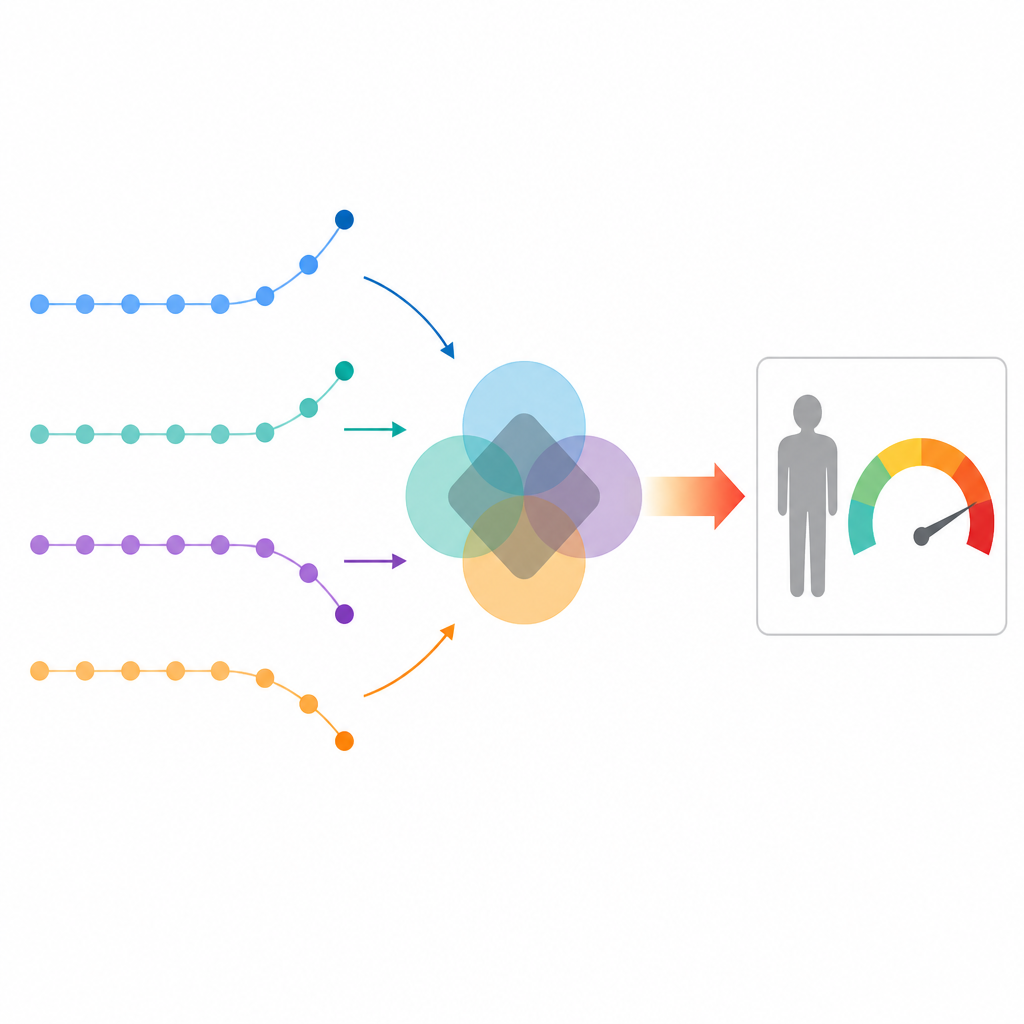
The researchers behind this study brought together records from 2,344 people with smoldering myeloma treated at seven centers in the United States and Europe. For each person, they collected repeated measurements of routine blood tests and, when available, bone marrow and genetic data. They then asked which patterns over time best signaled that a patient was likely to develop full-blown myeloma within the next few years. Four time based changes stood out. A small but steady rise in the abnormal M protein, a large rise in the free light chain ratio, a noticeable climb in creatinine (a kidney marker), and a drop in hemoglobin (reflecting worsening anemia) each independently signaled higher short term risk when they crossed specific thresholds over periods ranging from one to two years.
Building a dynamic risk tool for the clinic
Using these insights, the team created a risk calculator called PANGEA-SMM. Instead of looking only at the latest lab results, PANGEA-SMM combines the current levels of M protein, free light chain ratio, creatinine, age, and, when available, bone marrow findings with whether any of the four key markers have recently taken a concerning turn. The tool estimates the chance that a person will develop active myeloma within two years and groups them into low, intermediate, or high risk categories. Importantly, this risk can be updated at each visit as new blood tests come in, turning routine monitoring into a moving picture rather than a series of isolated snapshots.
Sharper distinction between low and high risk
When the researchers tested PANGEA-SMM in five independent patient groups, it more accurately ranked who would progress sooner compared with widely used scores like the 20/2/20 and International Myeloma Working Group models. People labeled high risk by PANGEA-SMM were more likely to develop active myeloma within two years than those labeled high risk by older methods, while low risk patients were still very unlikely to progress quickly. The model also performed well even when bone marrow data or long test histories were missing and could be improved further when certain genetic changes in the cancer cells were available.
What this means for patients and doctors
For patients living with the uncertainty of smoldering myeloma, this work offers a way to use familiar blood tests more intelligently. By paying attention not just to how high the numbers are but to how quickly they are changing, PANGEA-SMM helps doctors better identify who needs early, more intensive care and who can be safely observed. Because it is available as a free online calculator, the tool can be used around the world and updated as new kinds of tests are added. In simple terms, the study shows that tracking the direction and speed of change in a few routine lab results can give a clearer picture of future cancer risk than static thresholds alone.
Citation: Chabrun, F., Schwartz, D.E., Gentile, S. et al. Enhanced dynamic risk stratification of smoldering multiple myeloma. Nat Med 32, 1745–1753 (2026). https://doi.org/10.1038/s41591-026-04304-x
Keywords: smoldering multiple myeloma, risk prediction, biomarker trends, early cancer detection, clinical decision tools