Clear Sky Science · en
Long-term risk of death after tuberculosis diagnosis and treatment
Why this infection still matters after it is cured
Tuberculosis is often seen as a disease of the past or a problem confined to faraway places. Yet millions of people still fall ill every year, and most public health plans focus on making sure patients finish their course of treatment. This study asks a simple but unsettling question: after someone survives tuberculosis, is their risk of dying truly back to normal, or does the disease leave a long shadow on their health?
Following millions of people over many years
To answer this, researchers turned to Brazil, a country with both a large burden of tuberculosis and detailed nationwide records. They drew on a database that tracks more than 100 million low income Brazilians and linked it with national tuberculosis and death registries. From this vast resource, they created two main comparison groups. One paired each person newly diagnosed with tuberculosis with a similar person who never had the disease. The other paired people who had successfully completed treatment with matched tuberculosis free counterparts. The pairs were closely matched on age, sex, race, city, housing and other social factors to make the comparisons as fair as possible. 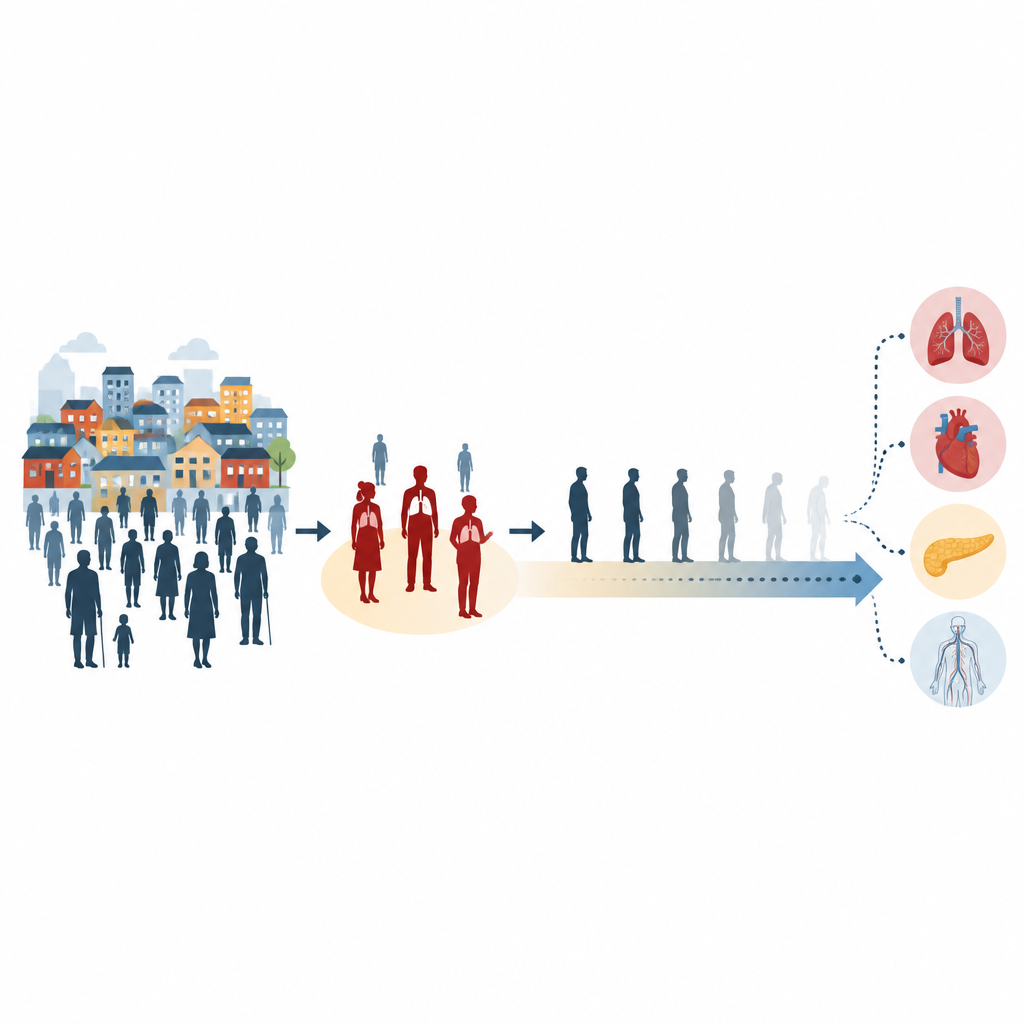
Death risk stays high long after diagnosis
The team then followed these pairs for up to 14 years, looking in particular at deaths from "natural" causes that were not due to tuberculosis itself, HIV or accidents. Among people with a recent diagnosis, the risk of dying from such causes in the first month was dozens of times higher than in their matched peers, reflecting the danger of active disease. That extreme early risk fell over time but never returned to baseline. Even 14 years after diagnosis, people who had once had tuberculosis were about twice as likely to die from natural causes as similar people who never had it, amounting to roughly 15,000 extra deaths per 100,000 individuals.
Even after treatment, the danger does not disappear
One might expect that successfully finishing treatment would erase most of this added danger. Instead, the study found that people who had completed therapy still faced a persistently higher death rate than their peers. Shortly after treatment ended, their risk of dying from natural causes was almost three times higher than in the comparison group. Over the following years that gap narrowed but remained substantial, with about 8,000 additional deaths per 100,000 people over 14 years. The excess deaths were spread across several major disease categories, including heart and blood vessel problems, breathing illnesses, hormone and metabolism disorders such as those linked to diabetes, and various cancers.
Clues to what drives the long shadow of tuberculosis
The patterns in the data offer clues about why this infection continues to claim lives long after the bacteria have been cleared. Lasting damage to the lungs may leave survivors more vulnerable to chronic breathing problems and future infections. Long term inflammation triggered by the original illness may strain the heart and blood vessels or contribute to the growth of tumors, especially in the lungs and digestive system. The study also highlights close ties between tuberculosis and diabetes, with people who had both conditions showing especially high excess death rates. On top of these biological effects, social factors appear to matter: deaths from external causes such as violence were also more common, hinting at the role of stigma, poverty and mental distress. 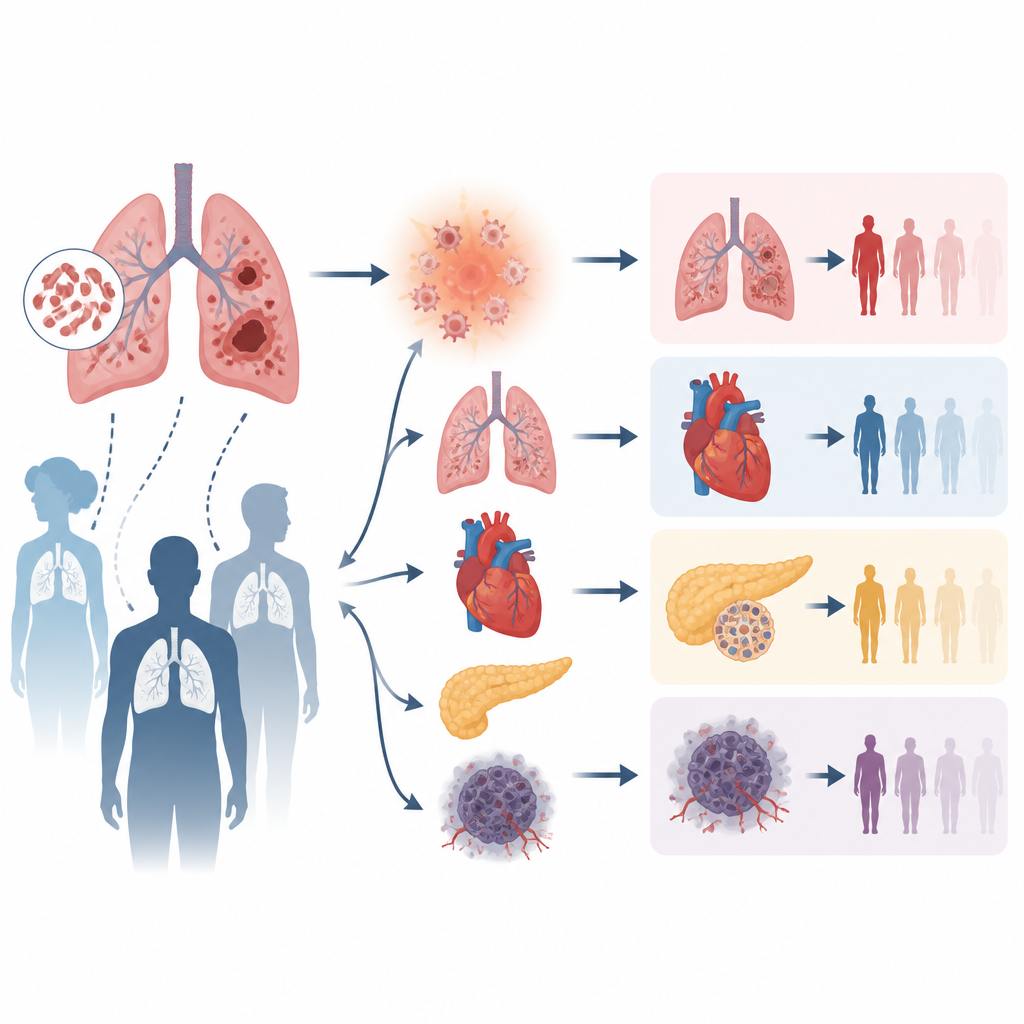
What this means for patients and health systems
For people living with or recovering from tuberculosis, the message is that cure is not the end of the story. This research shows that the disease can leave a lasting mark on the body and on life chances, even many years later. For health services, it suggests that care should not stop when the final pill is swallowed. Instead, regular follow up that checks lung function, heart health, blood sugar and possible signs of cancer, alongside support for mental health and social needs, could help reduce the hidden toll revealed in this study.
Citation: Cerqueira-Silva, T., Boaventura, V.S., Paixão, E.S. et al. Long-term risk of death after tuberculosis diagnosis and treatment. Nat Med 32, 1927–1934 (2026). https://doi.org/10.1038/s41591-026-04294-w
Keywords: tuberculosis survivors, long term mortality, post TB health, chronic disease risk, Brazil cohort study