Clear Sky Science · en
Liquid biopsy for the diagnosis of EBV-positive Burkitt’s lymphoma in endemic areas
Why a blood test for cancer in children matters
For families in parts of sub-Saharan Africa, a child’s swollen jaw or belly can be the first sign of Burkitt’s lymphoma, a fast-growing blood cancer that is often linked to Epstein–Barr virus infection. Cure rates can be high when treatment starts quickly, but many hospitals lack the specialist labs needed for a firm diagnosis. This study asks a simple question with big consequences: can a carefully designed blood test stand in for complex tissue analysis and help doctors decide, within days rather than months, which children have this cancer and need urgent care?
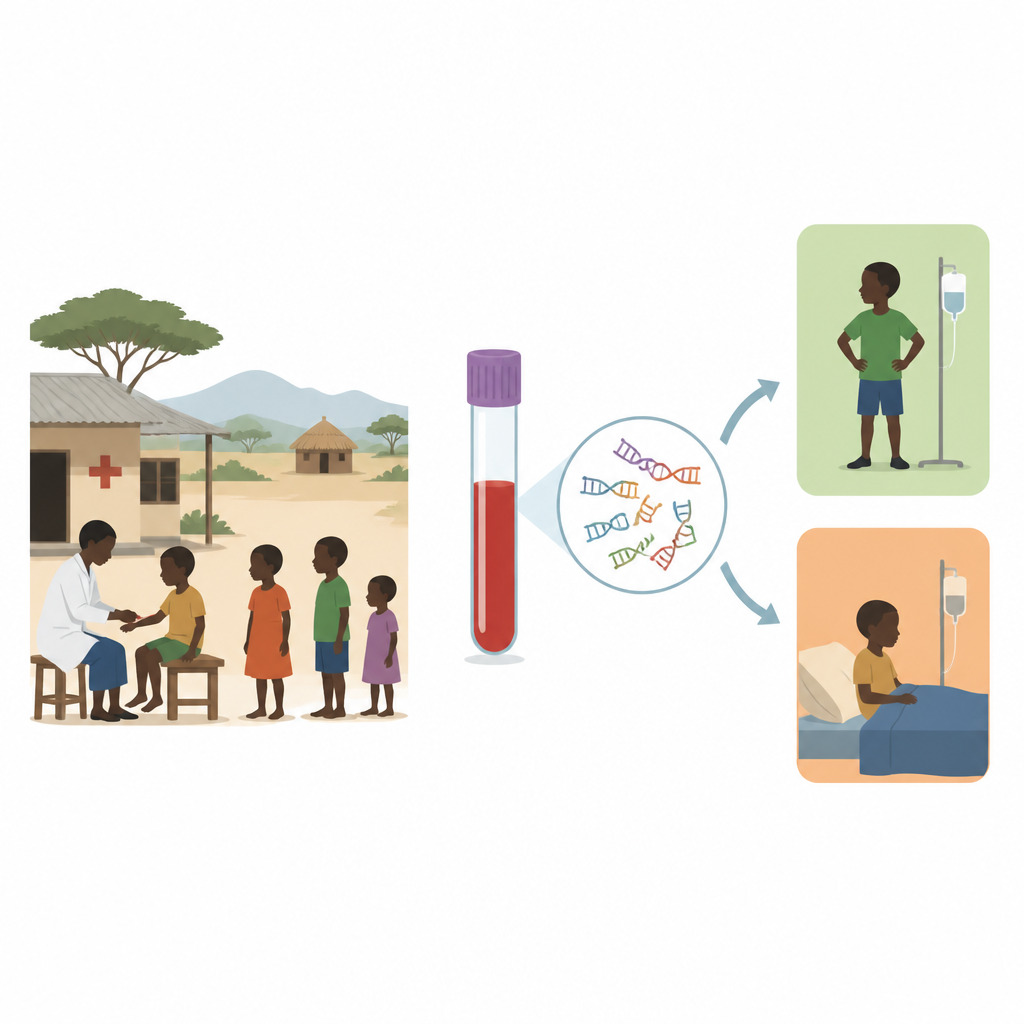
The challenge of spotting a dangerous cancer in time
Burkitt’s lymphoma is one of the most common childhood cancers in regions where malaria and Epstein–Barr virus are widespread. Standard diagnosis relies on removing a piece of tumor, preparing it in a pathology lab and running a series of special stains and genetic tests. In many low-income settings, there are too few pathologists, equipment is scarce and supplies such as antibodies can run out. As a result, diagnosis often rests on a basic microscope stain that cannot clearly separate Burkitt’s lymphoma from other lymphomas or even from non-cancerous conditions. Children may wait weeks or months for answers, and some never receive a definitive result.
A new look at cancer through a simple blood draw
The researchers tested an alternative approach called liquid biopsy in 377 children and young adults with suspected lymphoma treated at four hospitals in Tanzania and Uganda. Instead of cutting out a piece of tumor, they collected blood and isolated tiny fragments of DNA released by tumor cells and by Epstein–Barr virus into the bloodstream. Using targeted sequencing, they searched these fragments for patterns strongly linked to Burkitt’s lymphoma, including characteristic changes in a growth gene called MYC, signs that MYC has fused with antibody genes, and specific features of Epstein–Barr virus DNA such as its amount, fragment sizes and diversity. These molecular clues were combined with simple clinical information like age, tumor site and a routine blood enzyme to build computer models that estimate the chance a patient has Burkitt’s lymphoma.
How well the blood test performed in real patients
In the first phase of the study, 212 participants had both liquid biopsy and the best pathology diagnosis that local labs could provide after intensive training and support. The team compared six different models and found that the most complete one, which merged blood-based DNA signals with key clinical features, reached very high accuracy. It correctly distinguished Burkitt’s lymphoma from other diagnoses in most cases, with a sensitivity of about 86% and a specificity of 95%. A second, independent group of 56 patients served to test the model under real-world conditions, where it performed even better. Importantly, the strongest drivers of accuracy were the DNA features rather than the bedside observations alone, showing that the blood test was adding crucial information, not just echoing what clinicians already knew.
Speeding decisions in busy hospital teams
To see how this technology might change care, the researchers built it into weekly meetings where doctors, pathologists and scientists discussed each new patient. Often, the blood test result was ready before the tissue sample could even be processed. In 42% of patients, the liquid biopsy was the only diagnostic result available at the first meeting. Among children who truly had Burkitt’s lymphoma, more than half received their initial diagnosis from the blood test alone at that stage. When both methods were compared head to head in 58 patients, the median time from sample arrival in the lab to final report was about 6.5 days for liquid biopsy versus nearly 47 days for the full tissue workup. This time gain is critical for a cancer that can double in size within days.
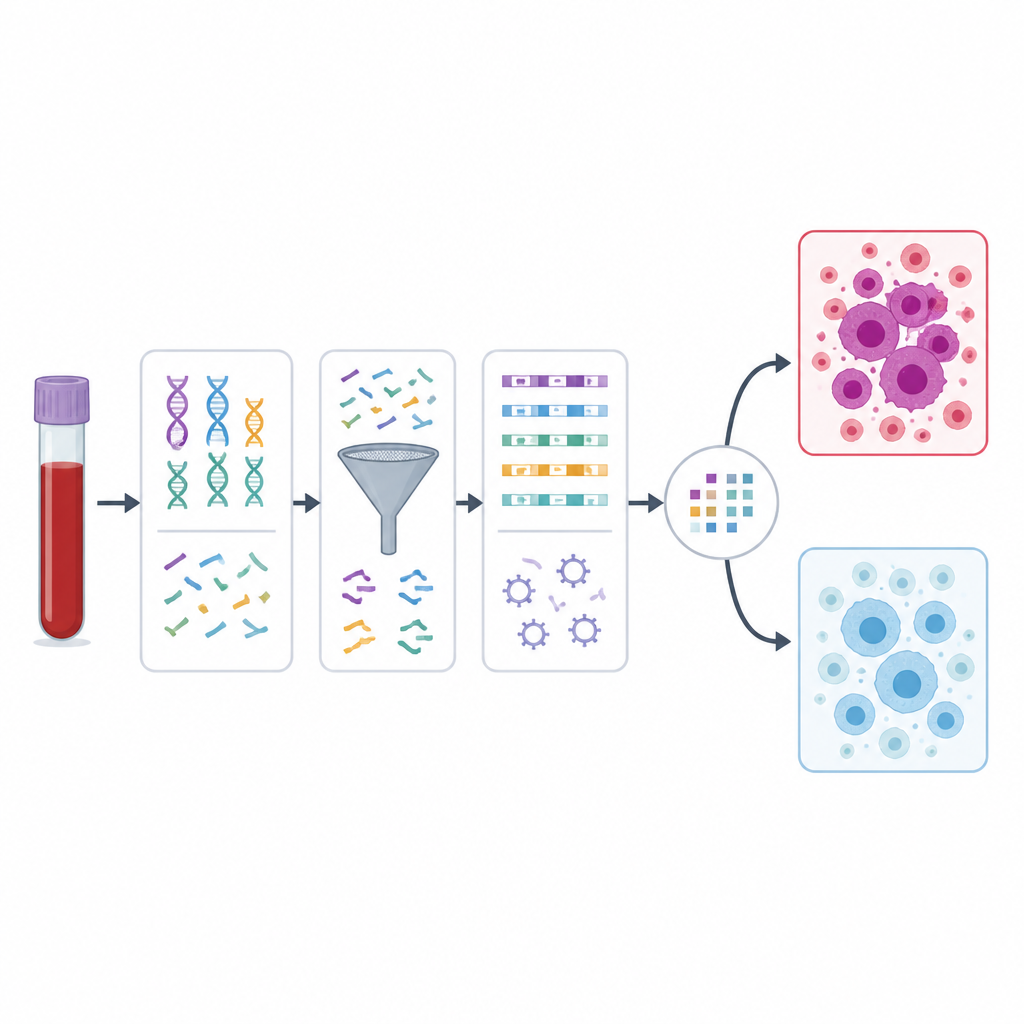
What this means for children and health systems
The study shows that a carefully constructed blood test can rapidly and accurately flag Epstein–Barr virus–positive Burkitt’s lymphoma in settings where traditional pathology is slow or fragile. Liquid biopsy cannot yet replace tissue analysis for every case, especially when other lymphoma types or non-cancerous diseases are possible, and costs remain higher than standard pathology. But as sequencing becomes cheaper and is shared across multiple diseases, this approach could help frontline hospitals in endemic regions start the right treatment much sooner, reducing dangerous delays for children facing an aggressive yet often curable cancer.
Citation: Chamba, C., Christopher, H., Josephat, E. et al. Liquid biopsy for the diagnosis of EBV-positive Burkitt’s lymphoma in endemic areas. Nat Med 32, 1754–1762 (2026). https://doi.org/10.1038/s41591-026-04291-z
Keywords: Burkitt lymphoma, liquid biopsy, Epstein Barr virus, childhood cancer, sub Saharan Africa