Clear Sky Science · en
An atlas of exposome–phenome associations in health and disease risk
Why Your Everyday Surroundings Matter
We all know that our genes influence our health, but our daily surroundings—what we eat, breathe, touch and do—may be just as important. This study set out to chart that entire landscape of non-genetic influences, sometimes called the “exposome,” and how it links to measurable aspects of health, from cholesterol levels to lung function and even markers of aging. By turning scattered findings into a single, massive map, the researchers show which everyday exposures seem most tied to disease risk, which ones barely move the needle and how this knowledge could sharpen health predictions alongside DNA tests.
Taking a Wide-Angle Look at Environment and Health
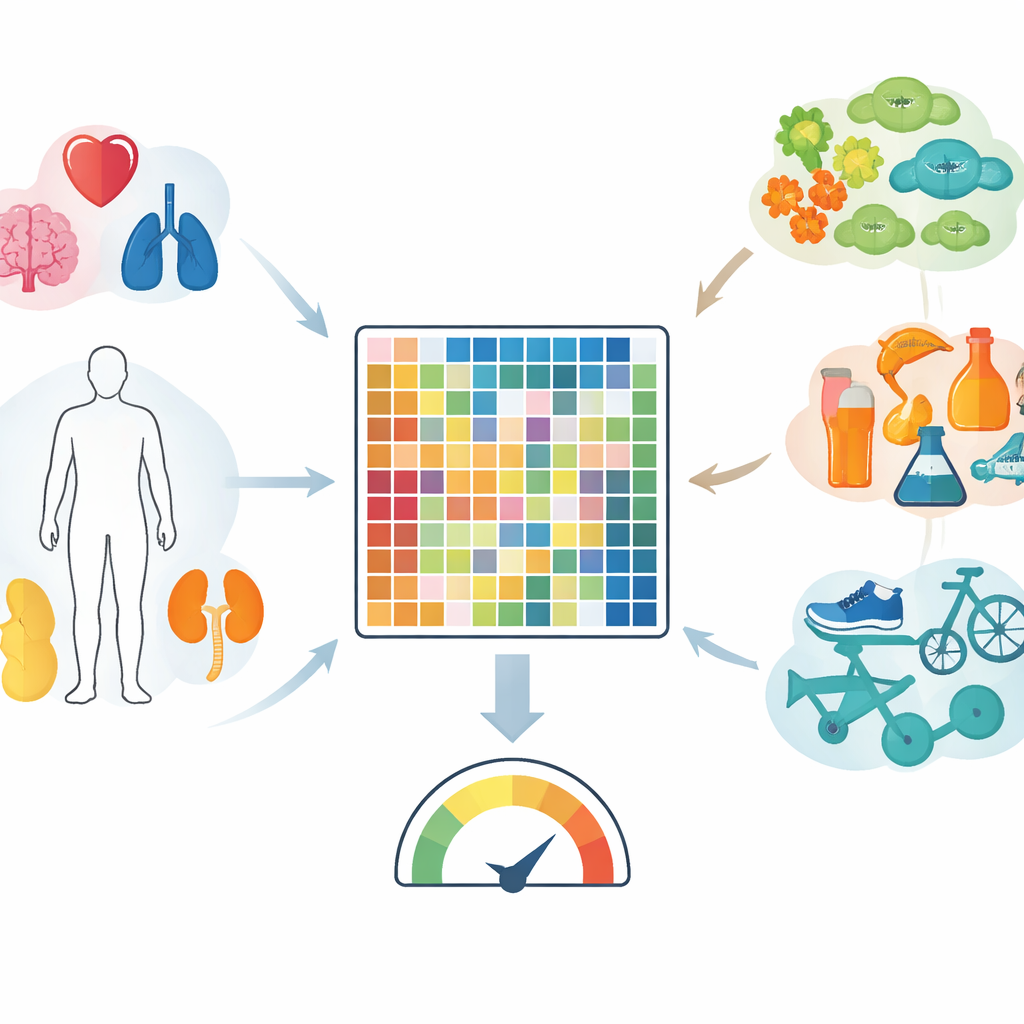
Instead of focusing on one chemical or one habit at a time, the team built an “atlas” that systematically connects hundreds of exposures with hundreds of health measures in a large, nationally representative US survey (NHANES). They examined 619 indicators of environmental and lifestyle exposure—covering diet, smoking, pollutants, infections and more—against 305 clinical traits such as blood fats, blood sugar, kidney function, body size and lung performance. Using consistent statistical methods and data from ten independent survey waves spanning nearly two decades, they created a grid of over 100,000 exposure–health pairs. For each pair, they estimated how strong the association was, how much variation it explained and how often it reappeared across separate samples of the population.
Where the Strongest Signals Show Up
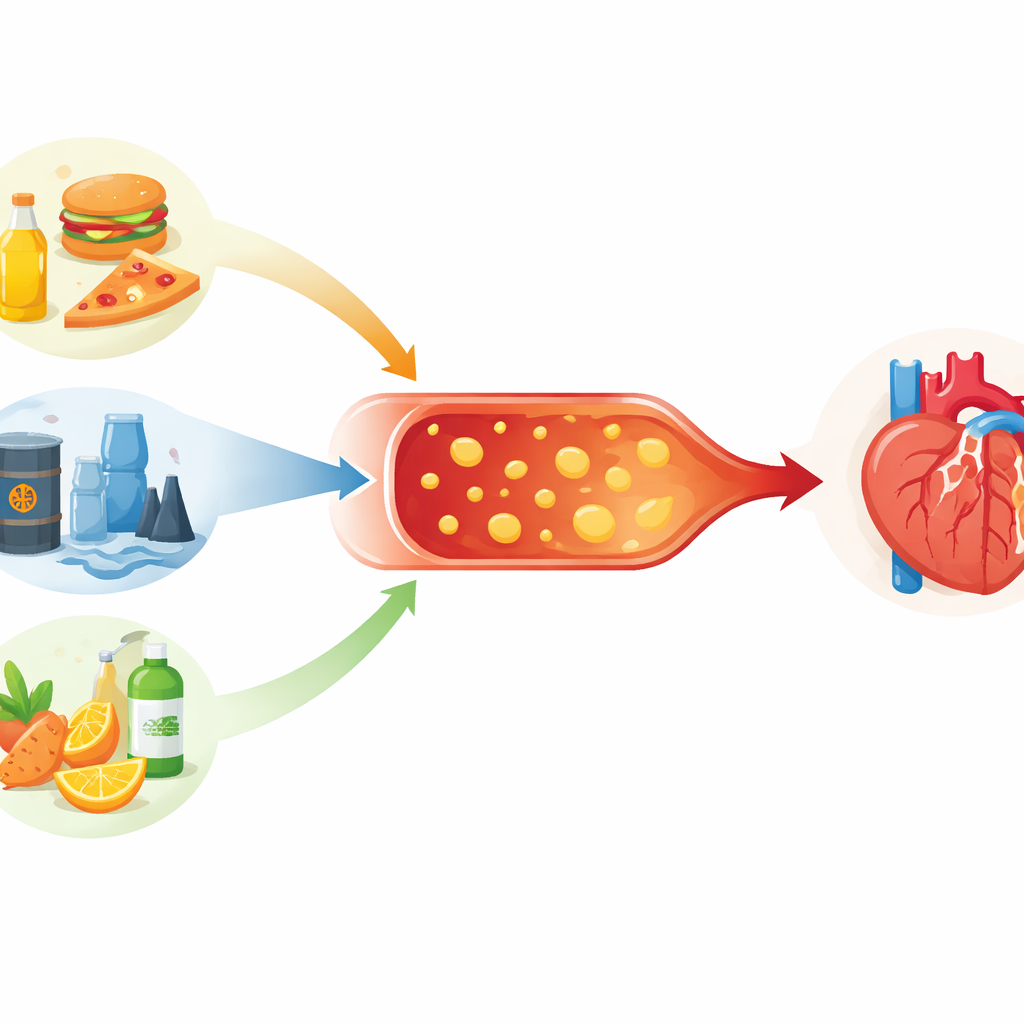
The clearest and most repeatable links clustered in a familiar set of health areas: body weight and size, cholesterol and other blood lipids, blood sugar control and lung function. Nutrient levels measured directly in blood and fat-loving industrial pollutants showed especially consistent relationships with body mass index, glycated hemoglobin (a marker of long-term blood sugar) and detailed cholesterol profiles. Among all traits, triglycerides—a type of blood fat used to gauge heart disease risk—stood out: when the researchers considered multiple exposures together, they could explain more than 40% of the differences in triglyceride levels between people. Key contributors included industrial trans fats, long-lasting banned pollutants and certain forms of vitamin E, suggesting that the chemical and dietary context around blood fats matters greatly for cardiovascular risk.
Smoke, Lungs and the Power of Better Measurement
The atlas also refines what we know about smoking and lung function. While simple smoking status and short-lived nicotine breakdown products did relate to lower lung capacity, a tobacco-specific carcinogen that lingers in the body for weeks showed a stronger and more stable link to reduced forced expiratory volume in one second (FEV1), a standard test of how much air you can blow out. This pattern fits with biology: markers that average exposure over longer periods better capture the damage that accumulates in the lungs. Similar themes appeared in other domains. Nutrients captured by blood tests had much clearer links to health than nutrients estimated from people recalling what they ate, which tended to be noisy and explained very little variation on their own.
Many Small Nudges Instead of a Few Big Culprits
One of the most striking findings is that most single exposures, taken alone, had only modest effects on any given health measure. Yet when the team combined multiple environmental factors into “poly-exposomic” profiles, these bundles could explain as much variation in key traits as modern genome-wide scores that summarize the impact of millions of genetic variants. In some cases—such as triglycerides and several blood and metabolic markers—the combined exposome actually outperformed genetics. At the same time, the exposures themselves formed a dense web: pollutants, dietary factors and smoking markers were often correlated with one another and tended to affect many traits at once, making it difficult to point to a single villain and declare it the sole cause of disease.
From Association Maps to Practical Use
To help other researchers and clinicians, the authors released their methods as open-source software and built an online Phenome–Exposome Atlas where anyone can explore the associations, their strength and how well they repeat across survey years. They caution that their work is observational and mostly captures snapshots in time, so it cannot by itself prove cause-and-effect. Many parts of the exposome, including lifetime exposures and cancer-related outcomes, remain poorly measured. Still, by showing that carefully measured environmental factors can rival genes in explaining who has high triglycerides, poor lung function or accelerated biological aging, this atlas points to a future in which precision medicine does not stop at DNA. Instead, it suggests that integrating better exposure measurements—especially objective biomarkers of diet, pollutants and smoking—into long-term studies and risk calculators could help pinpoint which aspects of our everyday environment are most worth changing to prevent disease.
Citation: Patel, C.J., Ioannidis, J.P.A. & Manrai, A.K. An atlas of exposome–phenome associations in health and disease risk. Nat Med 32, 1501–1510 (2026). https://doi.org/10.1038/s41591-026-04266-0
Keywords: exposome, environmental health, cardiometabolic risk, triglycerides, precision medicine